Different Curls of Eyelash Extensions: The Ultimate Master Guide 2026
Share
Author: LASHMAITRE Product Education Team
Topic: Technical Artistry & Product Knowledge
Reading Time: 25 Minutes
Introduction
In the architectural world of lash artistry, length creates visibility, but curl creates personality. Understanding the different curls of eyelash extensions is the single most critical skill for a master technician. A client’s final look—whether they appear wide-awake, sultry, or natural—depends entirely on the angle at which the extension lifts from the eyelid.
For salon owners and B2B wholesalers in 2026, the market has evolved beyond the basic “C and D” inventory. Clients now demand bespoke corrections for hooded eyes, downward-pointing lashes, and asymmetry. Stocking a comprehensive range of different curls of eyelash extensions is no longer optional; it is a competitive necessity.
This comprehensive guide will decode the entire alphabet of curls. We will provide a definitive eyelash extension curl chart, analyze the classic C curl vs D curl debate, and explore how specialty options like L curl lashes for hooded eyes are revolutionizing the industry.
The Science of Shape: Understanding PBT Thermal Setting
Before we classify the curls, we must understand how they are made. High-quality different curls of eyelash extensions are manufactured from PBT (Polybutylene Terephthalate).
The Heat-Setting Process
PBT is a thermoplastic engineering polymer.
- Rolling: Raw fibers are rolled tightly onto metal rods of varying diameters.
- Heating: The rods are heated to high temperatures (approx 100°C – 150°C) to alter the fiber’s memory.
- Cooling: Rapid cooling locks the shape in place.
Scientific Context: According to Wikipedia’s entry on PBT, this material is chosen for lash extensions because of its excellent resistance to creep (deformation under stress) and heat aging. This means a high-quality lash won’t lose its curl in a hot shower.
The Definitive Eyelash Extension Curl Chart
To navigate the market, you need a map. This is the industry-standard eyelash extension curl chart used by top academies.
The Master Curl Matrix
Use this table to train your staff on curl identification.
| Curl Name | Angle (Approx.) | Description | Best For | Effect |
| J Curl | 30° | Slightest lift | Straight lashes / Men | No-makeup look |
| B Curl | 45° | Soft, natural curve | Inner corners | Subtle definition |
| C Curl | 60° | Standard Lift | Almond Eyes | Mascara Effect |
| CC Curl | 65° | Hybrid C/D | All Shapes | Textured Lift |
| D Curl | 70° | Dramatic Lift | Downward lashes | Open Eye / Drama |
| U (DD) Curl | 80°+ | Extreme curve | Doll Eye maps | Theatrical |
| L Curl | 90° (Flat Base) | Sharp vertical lift | Hooded / Monolid | Eyeliner Effect |
| M Curl | Lifted Base | Soft vertical lift | Deep Set Eyes | Sharp Lift |
The Showdown: C Curl vs D Curl
The two most common different curls of eyelash extensions sold globally are C and D. Understanding C curl vs D curl is vital for inventory management.
C Curl: The Universal Standard
- Profile: Mimics a natural lash that has been curled with a mechanical curler.
- Usage: 50% of global inventory. It fits almost everyone.
D Curl: The Modern Favorite
- Profile: A semi-circle shape. It provides the most visibility from the front view.
- Usage: Essential for clients with straight or downward-growing natural lashes. If you put a C curl on downward lashes, it will look straight. D curl lifts them up.
When to Choose Which?
- Choose C Curl If:
- The client has deep-set eyes (D might hit the eyelid).
- The client wants a “natural but better” look.
- The client has naturally curly lashes (D might curl back into the skin).
- Choose D Curl If:
- The client wears glasses (D curls up away from the lens).
- The client has hooded eyelids (needs to clear the hood).
- The client wants a “Strip Lash” look.
Problem Solvers: L Curl Lashes for Hooded Eyes
One of the biggest innovations in different curls of eyelash extensions is the development of the “Flat Base” curls (L, L+, M). These are specifically designed for L curl lashes for hooded eyes.
The Anatomy of a Hooded Eye
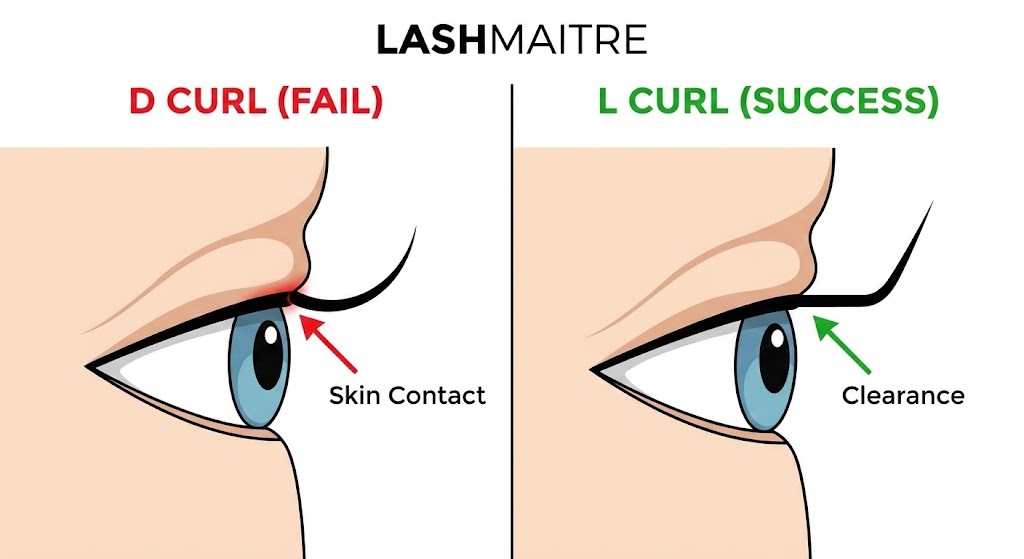
Clients with hooded eyes or Ptosis (drooping eyelid) have extra skin that sits over the lash line.
- The Problem: A standard C or D curl curves immediately. On a hooded eye, the curve hits the eyelid skin, pushing the extension down or causing irritation.
- The Solution (L Curl): It has a long, flat base (like the letter L) and then shoots straight up. This allows the lash to extend out from under the hood before lifting up.
Design Logic: Best Lash Curl for Eye Shape
A master artist maps the different curls of eyelash extensions to correct the client’s facial features. This is facial geometry.
Eye Shape & Curl Matching Protocol
| Eye Shape | Characteristics | Best Lash Curl | Avoid | Why? |
| Almond | Balanced proportions | C or CC Curl | None | Most versatile shape. |
| Deep Set | Brow bone protrudes | L, M, or D+ | J or B | Need extreme lift to be seen from under the brow. |
| Protruding | Bulging / Round | B or C Curl | D or DD | D curl makes round eyes look “startled” or too round. |
| Monolid | No crease | L or L+ Curl | C Curl | L curl sits flush on the straight lash line. |
| Downturned | Outer corners drop | D Curl (Outer) | B Curl | D curl lifts the sad/droopy outer corner. |
Market Data: According to Grand View Research, the demand for “specialty curls” (L, M) grew by 18% in 2025, driven by the Asian and aging demographic markets.
Advanced Artistry: Mixing Lash Curls
You do not have to use one curl for the whole eye. Mixing lash curls is the secret to a bespoke set.
The “Lift and Elongate” Technique
Using different curls of eyelash extensions in zones can alter the eye shape dynamically.
How to Mix Curls
- Inner Corners (B/C Curl): Natural lashes here are short and straight. Use a softer curl to prevent them from hitting the nose bridge.
- Center (D/CC Curl): Use a stronger curl to open the eye vertically (Doll Eye effect).
- Outer Corners (B/C Curl): Transition back to a softer curl to elongate the eye into a Cat Eye.
- Warning: Using a D curl on the very last outer lash often looks messy and droopy. A B curl gives a “swoop” effect.
The Physics of Retention: Curl Impact on Bonding
Believe it or not, the curl affects how long the lashes last. This is simple physics: Surface Area.
The Bond Interface
Retention relies on the contact area between the natural lash and the extension.
- Match: Placing a straight extension (J/B) on a straight natural lash = High Contact = Great Retention.
- Mismatch: Placing a curvy extension (D) on a straight natural lash = Low Contact (only the very base touches).
Retention Risk Assessment
| Natural Lash Shape | Extension Curl Used | Contact Area | Retention Forecast |
| Straight | L / M Curl | Maximum (Flat Base) | Excellent (5-6 Weeks) |
| Straight | C Curl | Medium | Good (4 Weeks) |
| Straight | D Curl | Minimal (Point Contact) | Risk (2-3 Weeks) |
| Curled | D Curl | High | Excellent |
| Curled | J Curl | Low (Gap at base) | Poor |
Sourcing Strategy: Manufacturing Consistency
For B2B buyers stocking different curls of eyelash extensions, quality control is paramount. Nothing frustrates a lash artist more than a “D Curl” tray that looks like a “C Curl.”
The “Heat Resistance” Test
Cheap PBT fibers lose their curl when exposed to heat (hot showers, blow dryers, steaming).
- LASHMAITRE Standard: Our fibers undergo a proprietary “Double-Heat Lock” process. We test our curls by submerging them in 100°C water. They maintain 99% of their shape.
Wholesale Quality Checklist
- Consistency: Is the curl identical from line 1 to line 12?
- Labeling: Is the curl labeled on the strip (e.g., “0.07 D”)? This helps artists when they mix palettes.
- Foil Backing: Does the strip peel off the palette without leaving paper residue?
- Material: Is it 100% Korean PBT? (Avoid Chinese acrylics which look shiny/plastic).
Conclusion: Curl is the New Color
In the past, lash artists focused on thickness. In 2026, they focus on curl. Mastering the different curls of eyelash extensions allows you to be an architect of the face.
Whether you are correcting a hooded eye with an L curl, creating drama with a D curl, or ensuring longevity by matching the curl to the natural lash, your inventory choices define your success.
LASHMAITRE provides the world’s most consistent, heat-resistant, and extensive curl library. From B to M, we have the angle for every eye.
Ready to expand your artistry?
Stock the curls that master artists trust.
Register for a Wholesale Account & Download Curl Chart
People Also Ask (FAQ)
Q: What is the most popular eyelash extension curl?
A: Globally, the C Curl is the most popular of the different curls of eyelash extensions. It offers a “sweet spot” of lift—noticeable enough to look like makeup, but natural enough to suit 90% of eye shapes. However, the D Curl is a close second, especially preferred by younger clients wanting a more dramatic, “open-eye” look.
Q: How do I know which lash curl to use?
A: To find the best lash curl for eye shape, look at the client’s natural lashes and eyelid.
- Straight/Downward Lashes: Use D, L, or M curl to provide lift.
- Hooded Eyes: Use L or L+ curl to clear the eyelid skin.
- Protruding/Round Eyes: Use B or C curl to elongate rather than widen.
- Deep Set Eyes: Use D or CC curl to make the lashes visible from under the brow bone.
Q: Can you mix different curls of eyelash extensions?
A: Yes, mixing lash curls is a sign of an advanced lash artist. A common map is to use C curls in the inner corners (for comfort), D curls in the center (for lift), and B or C curls on the outer corners (for elongation). This creates a textured, multidimensional look that mimics the natural variation of real eyelashes.
References & Further Reading
- Wikipedia. Polybutylene terephthalate (PBT) Properties.
- American Academy of Ophthalmology (AAO). Ptosis (Drooping Eyelid) Anatomy.
- Grand View Research. False Eyelashes Market Size, Share & Trends Analysis.
- LASHMAITRE Academy. “Advanced Curl Mapping Guide 2026.”
📅 Content Administration
- Last Updated: January 16, 2026
- Changelog:
- v1.0: Initial publication. Content focuses on PBT chemistry and Angle Definitions.
- v1.1: Added “L Curl for Hooded Eyes” section and “Retention Physics” table.
- Next Review Date: July 16, 2026

Lash Maitre: Your Trusted Partner in Eyelash extension Solutions
Lash Maitre is dedicated to providing professional insights and tips in the eyelash extension industry. Sharing the latest trends, techniques, and product knowledge, Lash Maitre helps lash artists and enthusiasts enhance their skills, stay inspired, and achieve the perfect lash experience.
Latest Post
Contact Us
related Post
-

Whitepaper: Macromolecular Chemistry and Logistics – What Type of Glue is Used for Eyelash Extensions?
Document Control & Status: 1. The B2B Procurement Fallacy in Adhesive Sourcing In the highly specialized ecosystem of professional aesthetics, the foundational pillar of any salon franchise’s operational success is the structural integrity of its adhesive supply chain. Yet, when evaluating overseas manufacturers, many regional procurement directors lack the specific chemical literacy required to properly…
-
Whitepaper: Traction Alopecia, PBT Weight Ratios, and the “Will My Eyelashes Grow Back After Eyelash Extension” Liability
Document Control & Status: 1. Introduction: The Corporate Liability of Follicular Trauma In the highly competitive, premium sector of the global aesthetic market, the most profound threat to a salon franchise’s recurring revenue model is not competitor pricing; it is the physical degradation of the client’s natural biology. Every academy educator, franchise CEO, and regional…
-
Whitepaper: Ocular Toxicology and Liability Management – Mitigating Blepharitis From Eyelash Extensions
Document Control & Status: 1. Introduction: The Corporate Liability of Ocular Complications In the rapidly expanding global aesthetic market, the profitability of a high-end salon franchise is deeply dependent on maximizing the Lifetime Value (LTV) of each client. However, this recurring revenue model is under constant threat from material-induced medical complications. Among the most prevalent…
-

7 Critical Supply Chain Secrets to Dominate the Blue Eyelash Extensions Market: A B2B Procurement Whitepaper
Document Control & Status: 1. Introduction: The High-Margin Potential of Blue Eyelash Extensions In the contemporary landscape of professional cosmetic services, the commoditization of standard black lashes has driven B2B procurement directors and salon franchise owners to desperately seek new avenues for premium upcharging. Offering specialized, avant-garde aesthetic services, such as seamlessly integrated blue eyelash…
-
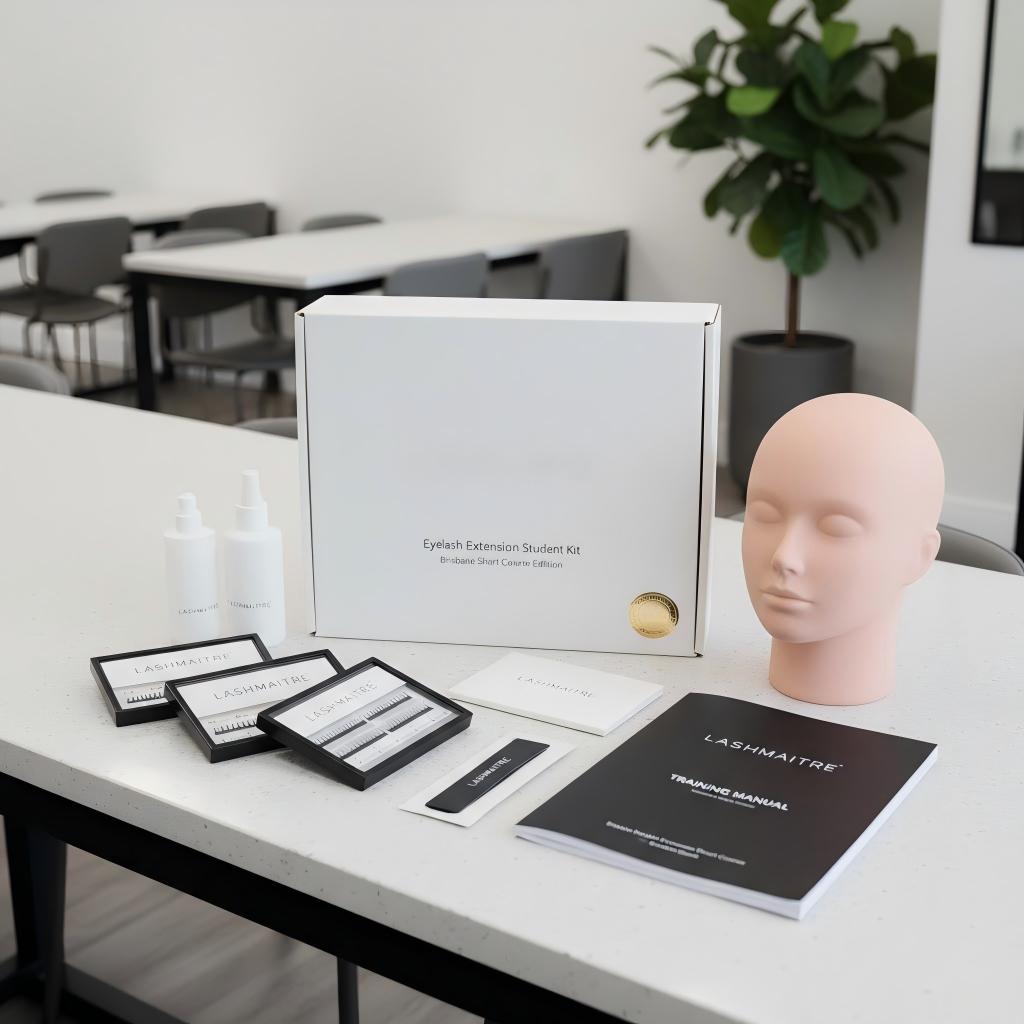
Academy Profitability: The B2B Supply Chain Guide for a Brisbane Eyelash Extension Short Course
Article Management: 1. The Procurement Reality of a Brisbane Eyelash Extension Short Course In the highly lucrative Australian cosmetic education market, launching a brisbane eyelash extension short course requires more than just an experienced instructor; it requires an absolutely flawless supply chain. Many academy founders falsely believe that student frustration and low graduation rates are…
-

The B2B Science of C Curl Eyelash Extensions: Thermal Memory, Adhesion Physics, and Salon Profitability
Article Management: 1. The Commoditization Trap of C Curl Eyelash Extensions In the professional eyelash industry, the c curl eyelash extensions represent the absolute foundational baseline of any salon’s inventory. Designed to mimic the natural upward sweep of a perfectly applied mechanical eyelash curler, the C curl is universally applicable across almost all client eye…
-
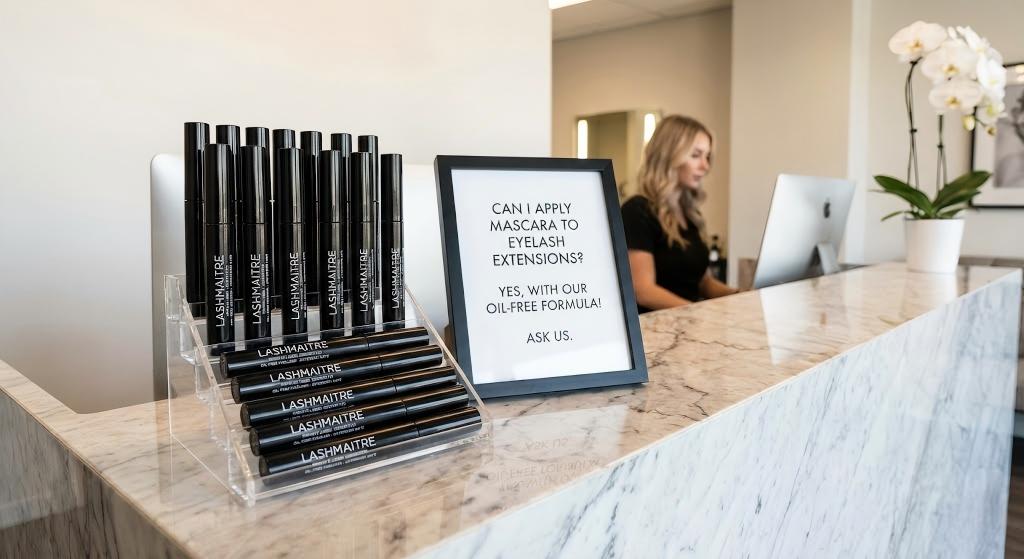
Maximize Salon Revenue: Can I Apply Mascara to Eyelash Extensions? A B2B Retail Guide
Article Management: 1. The Golden Retail Opportunity: Can I Apply Mascara to Eyelash Extensions? In the hyper-competitive beauty industry, the most successful salons do not just sell time and services; they sell comprehensive, high-end cosmetic solutions. Every master educator, salon owner, and working lash artist has encountered the exact same anxious question from a first-time…
-
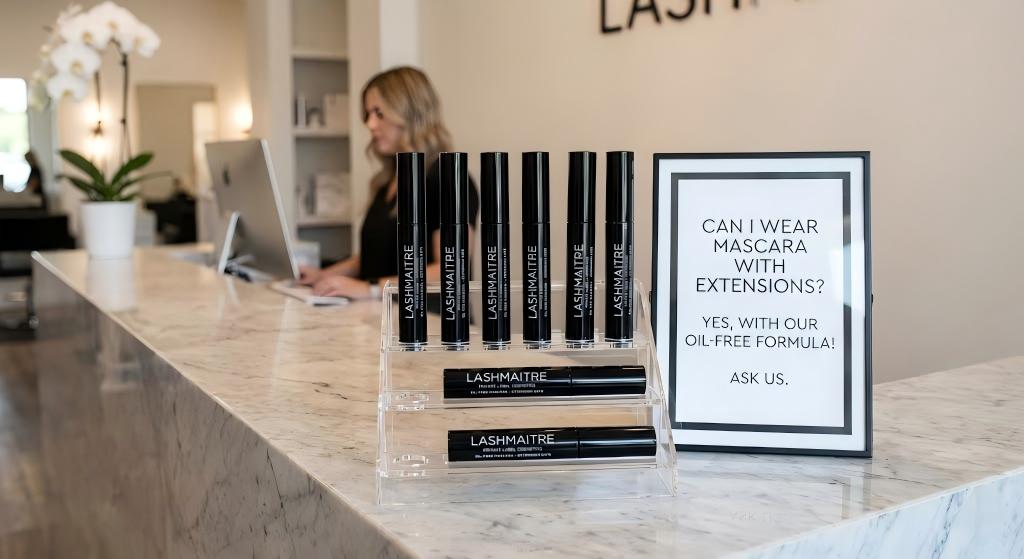
Maximize Salon Revenue: Can I Wear Mascara With Eyelash Extensions? A B2B Retail Guide
Article Management: 1. The Golden Retail Opportunity: Can I Wear Mascara With Eyelash Extensions? In the hyper-competitive beauty industry, the most successful salons do not just sell time and services; they sell comprehensive, high-end cosmetic solutions. Every master educator, salon owner, and working lash artist has encountered the exact same anxious question from a first-time…
-
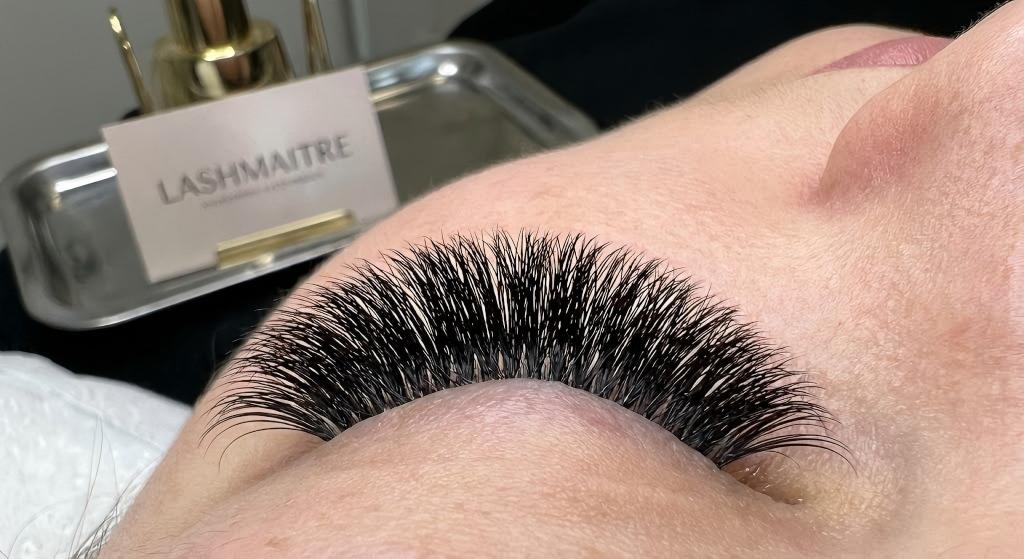
B2B Profit Truth for Salons: Can You Curl Eyelash Extensions?
Article Management: 1. The Ultimate Client Frustration: Can You Curl Eyelash Extensions? In the highly competitive beauty service sector, long-term client retention is the only metric that guarantees a salon’s survival. When a client returns for an infill appointment or calls the receptionist to nervously ask, can you curl eyelash extensions, it is a massive…
-
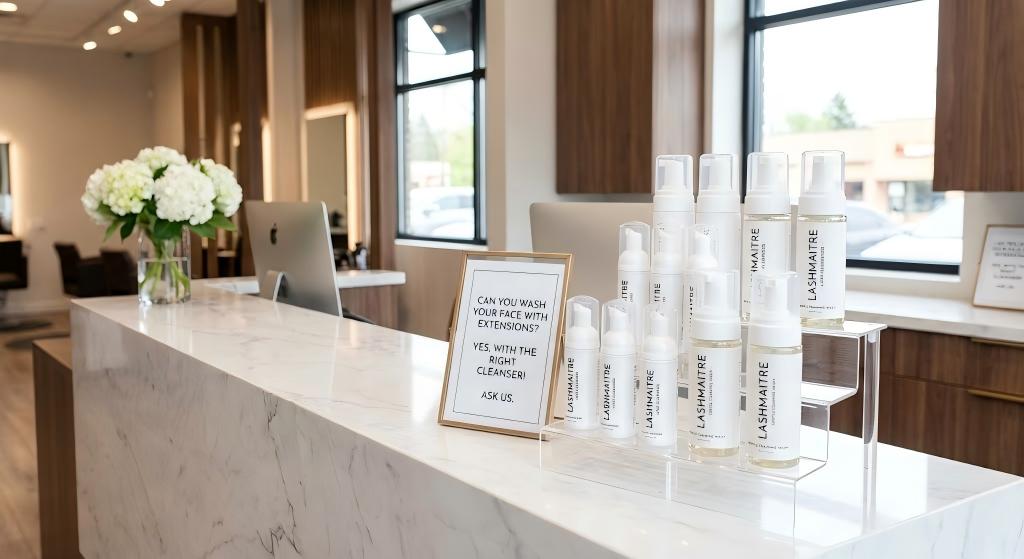
B2B Profit Strategy: Can You Wash Your Face With Eyelash Extensions?
Article Management: 1. The Ultimate Client Fear: Can You Wash Your Face With Eyelash Extensions? In the professional beauty service sector, educating your clientele is the absolute foundation of long-term client retention. Almost every new client sitting in a salon chair will nervously ask their artist: can you wash your face with eyelash extensions? For…
