Eyelash Extension Facts: 10 Surprising Truths to Elevate Your Salon Business in 2026
Share
Author: LASHMAITRE Team
Topic: Industry Education & Business Intelligence
Reading Time: 25 Minutes
Introduction
In the fast-paced, visually driven world of the beauty industry, misinformation travels faster than the speed of light. Clients often come into salons armed with rumors they heard on TikTok or fears instilled by horror stories from a decade ago. For salon owners, distributors, and professional artists, possessing a deep arsenal of verified eyelash extension facts is not just about trivia; it is a vital business asset.
When you can confidently explain the biology of a lash follicle, the chemistry of cyanoacrylate, or the economic resilience of the lash industry market size, you transform from a service provider into a trusted authority. This trust is the currency of the 2026 market. It allows you to charge premium prices, enforce cancellation policies, and retail aftercare products effectively.
In this comprehensive industry white paper, we will peel back the layers of marketing fluff to reveal the 10 most critical eyelash extension facts. From the molecular structure of PBT fibers to the historical evolution of the trade, this guide is designed to equip B2B professionals with the knowledge needed to educate clients, debunk myths, and drive revenue.
1. The Billion-Dollar Blink: Lash Industry Market Size
The first fact every business owner should know is the sheer scale of the opportunity they are operating in. The industry is no longer a niche; it is a global powerhouse.
The Economic Data
According to Grand View Research and updated projections for 2026:
- Global Scale: The global false eyelash market (including strips and extensions) has surpassed $2.4 Billion USD.
- US Dominance: The United States remains the largest consumer market, accounting for approximately 35% of global revenue.
- Growth Rate: The industry is growing at a CAGR (Compound Annual Growth Rate) of 7.5%, significantly outpacing general cosmetics.
The “Lipstick Effect” 2.0
Economists often cite the “Lipstick Effect”—the theory that consumers still buy affordable luxury beauty goods during economic downturns. In 2026, this has evolved into the “Lash Effect.”
- Business Fact: eyelash extension facts indicate that while consumers may delay buying a new car or expensive handbag during a recession, they rarely cancel their bi-weekly lash fill. It is viewed as an “essential luxury” that maintains their professional appearance and mental well-being.
2. Origins of Glamour: The History of Eyelash Extensions
Understanding where we came from helps us appreciate the technology we have today. The history of eyelash extensions is surprisingly gruesome and fascinating.
The 19th Century: Needle and Thread
In 1899, it was reported in the press that Parisians were having hair sewn into their eyelids for length. This painful procedure utilized a fine needle and cocaine as a topical anesthetic.
The 20th Century: The Strip Lash
In 1911, Anna Taylor patented the first artificial eyelashes (strip lashes). These became a staple of Hollywood cinema, popularized by director D.W. Griffith for the film Intolerance (1916).
The 2000s: The Modern Era
The semi-permanent, single-strand technique we use today originated in South Korea in the early 2000s.
- Innovation: This method moved away from the lash strip (glued to the skin) to the individual fiber (glued to the natural lash), allowing for the natural shedding cycle to occur without gaps. Knowing these eyelash extension facts helps you explain to clients why modern techniques are safe and advanced compared to old methods.
3. The Biology of Shedding: Lash Extension Growth Cycle
This is the most practical section for your salon operations. Explaining the lash extension growth cycle is the only way to justify your refill policy.
The Three Phases
Every hair on the human body goes through a cycle.
- Anagen (Growth Phase): The baby lash. It is actively growing. We typically avoid placing heavy extensions here to prevent damage. (Lasts 4-6 weeks).
- Catagen (Transition Phase): The lash stops growing and the follicle shrinks. This is the “adult” lash. Ideally, extensions are placed here. (Lasts 2-3 weeks).
- Telogen (Resting Phase): The lash is dormant and eventually falls out to make room for a new Anagen lash. (Lasts 3-4 months).
The Math of Refills
- Fact: Humans lose between 2 to 5 natural lashes per day.
- Calculation: In 3 weeks (21 days), a client will lose between 42 and 105 lashes naturally.
- Business Application: Use these eyelash extension facts to explain why a “3-Week Fill” is mandatory. It is not because the glue failed; it is because the natural lashes have shed. If a client complains about retention, show them this math.
4. Plastic vs. Fur: Materials Used in Eyelash Extensions
There is significant confusion regarding materials used in eyelash extensions. Terms like “Mink,” “Silk,” and “Cashmere” are often marketing terms, not material descriptions.
PBT: The Industry Standard
In 2026, 99% of professional extensions are made from Polybutylene Terephthalate (PBT).
- What is it? A high-quality synthetic plastic fiber.
- Properties: PBT is heat-resistant, holds its curl (memory), is hypoallergenic, and is cruelty-free.
- Variations:
- “Faux Mink”: PBT with a semi-matte or glossy finish, tapered at the tip.
- “Silk”: PBT with a slightly different taper (often shorter taper) for a darker, thicker look.
- “Cashmere/Flat”: PBT that has been flattened at the base to reduce weight and increase bonding area.
The Decline of Real Fur
Real mink fur (harvested from animals) was popular in the early 2010s.
- The Fact: Real fur loses its curl when wet, poses a high risk of animal dander allergies, and raises ethical concerns. Professional salons have largely abandoned it in favor of PBT.
Comparison Table: Lash Materials
| Feature | PBT (Faux Mink/Silk) | Real Mink Fur | Human Hair |
| Source | Synthetic Polymer | Animal (Mink) | Human |
| Curl Retention | Permanent (Heat set) | Poor (Loses curl when wet) | Poor |
| Allergy Risk | Zero (Hypoallergenic) | High (Animal Dander) | Low |
| Cruelty-Free | Yes | No | Yes |
| Consistency | Perfect (Uniform) | Inconsistent | Inconsistent |
5. Busting the Fear: Myth About Lash Damage
The most persistent myth about lash damage is that “extensions ruin your natural lashes.” This is the #1 objection you must overcome during a consultation.
The Truth About Traction Alopecia
Extensions themselves do not cause damage; improper application causes damage.
- Weight: If an artist applies a lash that is too heavy (e.g., a 0.25mm lash on a thin natural lash), gravity pulls the follicle, causing premature loss. Over years, this causes Traction Alopecia (permanent bald spots).
- Stickies: If two natural lashes are glued together, the faster-growing lash will rip the slower-growing lash out by the root.
The Professional Rebuttal
When a client asks about damage, share these eyelash extension facts:
“Damage is a result of poor technique, not the product. At our salon, we isolate every single lash perfectly and customize the weight to ensure your natural lash health actually improves over time because you aren’t rubbing off mascara daily.”
6. The Chemistry of Cure: Cyanoacrylate Facts
Understanding your adhesive distinguishes a master artist from a novice.
Not Drying, But Curing
Glue does not “dry” like paint (evaporation); it “cures” (polymerizes).
- The Catalyst: The active ingredient, Cyanoacrylate, reacts with moisture (humidity) in the air to harden.
- The Fact: This is why humidity control is critical. Too much humidity = Shock Cure (brittle, white residue). Too little humidity = Slow Cure (stickies, fumes).
The Shelf Life Fact
- Unopened: 6 months.
- Opened: 4-6 weeks.
- Science: Every time the bottle is opened, moisture enters, slowly curing the glue inside the bottle. Using “fresh” glue is the secret to 6-week retention.
7. Safety First: The Fact About Mites
This is an uncomfortable but necessary topic. Demodex folliculorum (lash mites) live on almost everyone.
The Hygiene Fact
- The Truth: Mites eat dead skin cells and sebum.
- The Problem: Clients with extensions often stop washing their eyes out of fear of ruining the glue. This leads to a buildup of “food” for the mites, causing an infestation (Blepharitis).
- The Solution: Use these eyelash extension facts to sell Lash Cleanser. “Washing your lashes daily doesn’t hurt retention; it prevents mite overgrowth and infection. Clean lashes last longer.”
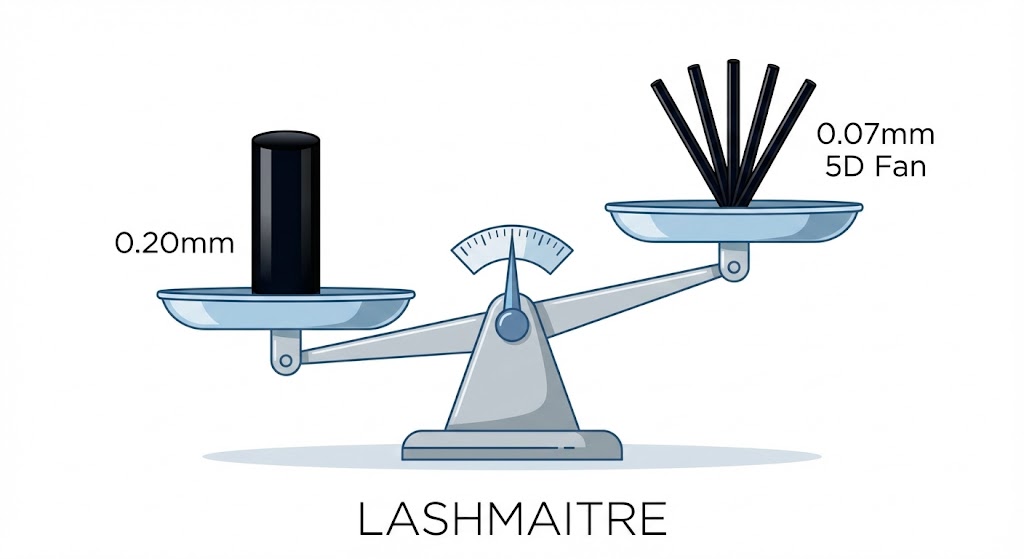
8. Customization Numbers: The Math of Volume
Volume lashing is a physics equation.
The Weight Equation
Many clients think “Volume” means “Heavy.” The opposite is true.
- Fact: A standard “Classic” lash has a diameter of 0.15mm or 0.20mm.
- Fact: A “Volume” lash has a diameter of 0.07mm or 0.05mm.
- The Math: You can place roughly four 0.07mm lashes (4D Fan) on a natural lash, and the total weight is less than one 0.20mm lash.
- Benefit: This allows clients with weak, sparse lashes to have a full look without the damage associated with heavy Classic lashes.
9. The Psychology of Pricing: Consumer Spending Facts
For B2B salon owners, understanding consumer behavior is key to pricing strategy.
The Retention Rate
- Fact: Eyelash extension clients have one of the highest retention rates in the beauty industry, higher than facials or massage.
- Why? The “shedding” creates a natural deadline. Unlike a massage where the benefit fades invisibly, a client sees the gap in their lashes, prompting an immediate re-booking.
- Spending: The average US lash client spends between $1,200 and $2,500 per year on their lashes. This makes acquiring a lash client extremely valuable for a salon’s Lifetime Value (LTV) metrics.
10. Supply Chain Reality: Global Manufacturing Hubs
Where do the products come from? Transparency in the supply chain is a growing trend.
The PBT Hubs
- Fact: While the adhesive technology often comes from Korea or Germany, approximately 80% of the world’s PBT lash trays are hand-crafted in specialized regions in Vietnam and China (specifically Qingdao).
- The Craft: Lash making is still largely a manual process. Workers hand-curl and taper the PBT fibers on microscopic scales.
- LASHMAITRE Standard: We partner exclusively with factories that adhere to fair labor practices and ISO quality standards, ensuring that the materials used in eyelash extensions are consistent and ethical.
Read our guide on Ethical Sourcing in the Beauty Industry.
Conclusion: Knowledge is Power
The beauty industry is moving away from “mystery” and towards “mastery.” The most successful salons in 2026 are those that use eyelash extension facts to educate their clients, justify their prices, and ensure safety.
By understanding the science of the lash extension growth cycle, the truth about materials used in eyelash extensions, and the reality of the lash industry market size, you position your business on a foundation of truth rather than trends.
Equip your salon with the best knowledge and the best supplies from LASHMAITRE. When you know the facts, you can sell with confidence.
Ready to upgrade your salon’s standards?
Partner with the supplier that values education and quality.
Register for a Wholesale Account & Download Our Fact Sheet
People Also Ask (FAQ)
Q: What is a fun fact about eyelash extensions?
A: A surprising fact is that the concept of eyelash extensions dates back to the late 1800s! Reports from 1899 describe a painful procedure in Paris where hair was actually sewn into the eyelids. Thankfully, the modern adhesive-based method was invented in South Korea in the early 2000s, making it painless and safe.
Q: Do eyelash extensions ruin your natural lashes?
A: No, this is a common myth about lash damage. Eyelash extensions themselves do not ruin natural lashes. Damage is caused by improper application (using lashes that are too heavy or using too much glue) or by the client pulling them out. If applied correctly by a certified professional who isolates each natural lash, extensions can actually protect your natural lashes from the daily friction of eyelash curlers and mascara removal.
Q: How many eyelash extensions are applied in a full set?
A: The number varies based on the client’s natural lash count and the chosen style. On average, a human upper eyelid has between 90 and 150 natural lashes. Therefore, a “Classic” full set involves applying 80 to 120 extensions per eye. For “Volume” sets, where fans are used, a technician might apply anywhere from 200 to 600 ultra-fine fibers per eye.
📅 Content Administration
- Last Updated: January 15, 2026
- Changelog:
- v1.0: Initial publication. Content focuses on debunking myths and providing 2026 market data.
- v1.1: Added “Material Comparison Table” (PBT vs Mink).
- Next Review Date: July 15, 2026
Grand View Research: False Eyelash Market Analysis
American Academy of Ophthalmology: Eyelash Extension Safety

Lash Maitre: Your Trusted Partner in Eyelash extension Solutions
Lash Maitre is dedicated to providing professional insights and tips in the eyelash extension industry. Sharing the latest trends, techniques, and product knowledge, Lash Maitre helps lash artists and enthusiasts enhance their skills, stay inspired, and achieve the perfect lash experience.
Latest Post
Contact Us
related Post
-

Whitepaper: Macromolecular Chemistry and Logistics – What Type of Glue is Used for Eyelash Extensions?
Document Control & Status: 1. The B2B Procurement Fallacy in Adhesive Sourcing In the highly specialized ecosystem of professional aesthetics, the foundational pillar of any salon franchise’s operational success is the structural integrity of its adhesive supply chain. Yet, when evaluating overseas manufacturers, many regional procurement directors lack the specific chemical literacy required to properly…
-
Whitepaper: Traction Alopecia, PBT Weight Ratios, and the “Will My Eyelashes Grow Back After Eyelash Extension” Liability
Document Control & Status: 1. Introduction: The Corporate Liability of Follicular Trauma In the highly competitive, premium sector of the global aesthetic market, the most profound threat to a salon franchise’s recurring revenue model is not competitor pricing; it is the physical degradation of the client’s natural biology. Every academy educator, franchise CEO, and regional…
-
Whitepaper: Ocular Toxicology and Liability Management – Mitigating Blepharitis From Eyelash Extensions
Document Control & Status: 1. Introduction: The Corporate Liability of Ocular Complications In the rapidly expanding global aesthetic market, the profitability of a high-end salon franchise is deeply dependent on maximizing the Lifetime Value (LTV) of each client. However, this recurring revenue model is under constant threat from material-induced medical complications. Among the most prevalent…
-

7 Critical Supply Chain Secrets to Dominate the Blue Eyelash Extensions Market: A B2B Procurement Whitepaper
Document Control & Status: 1. Introduction: The High-Margin Potential of Blue Eyelash Extensions In the contemporary landscape of professional cosmetic services, the commoditization of standard black lashes has driven B2B procurement directors and salon franchise owners to desperately seek new avenues for premium upcharging. Offering specialized, avant-garde aesthetic services, such as seamlessly integrated blue eyelash…
-

Academy Profitability: The B2B Supply Chain Guide for a Brisbane Eyelash Extension Short Course
Article Management: 1. The Procurement Reality of a Brisbane Eyelash Extension Short Course In the highly lucrative Australian cosmetic education market, launching a brisbane eyelash extension short course requires more than just an experienced instructor; it requires an absolutely flawless supply chain. Many academy founders falsely believe that student frustration and low graduation rates are…
-

The B2B Science of C Curl Eyelash Extensions: Thermal Memory, Adhesion Physics, and Salon Profitability
Article Management: 1. The Commoditization Trap of C Curl Eyelash Extensions In the professional eyelash industry, the c curl eyelash extensions represent the absolute foundational baseline of any salon’s inventory. Designed to mimic the natural upward sweep of a perfectly applied mechanical eyelash curler, the C curl is universally applicable across almost all client eye…
-
Maximize Salon Revenue: Can I Apply Mascara to Eyelash Extensions? A B2B Retail Guide
Article Management: 1. The Golden Retail Opportunity: Can I Apply Mascara to Eyelash Extensions? In the hyper-competitive beauty industry, the most successful salons do not just sell time and services; they sell comprehensive, high-end cosmetic solutions. Every master educator, salon owner, and working lash artist has encountered the exact same anxious question from a first-time…
-
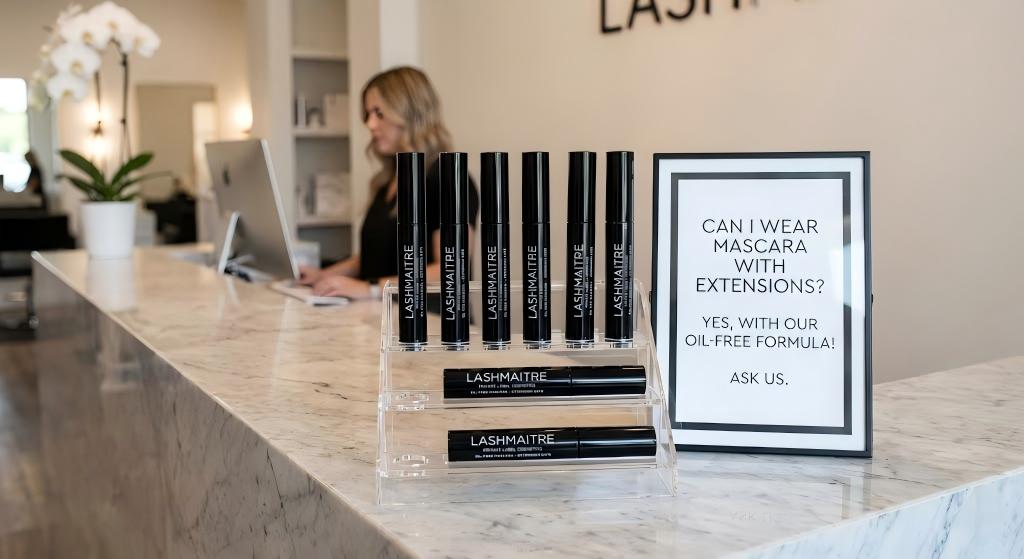
Maximize Salon Revenue: Can I Wear Mascara With Eyelash Extensions? A B2B Retail Guide
Article Management: 1. The Golden Retail Opportunity: Can I Wear Mascara With Eyelash Extensions? In the hyper-competitive beauty industry, the most successful salons do not just sell time and services; they sell comprehensive, high-end cosmetic solutions. Every master educator, salon owner, and working lash artist has encountered the exact same anxious question from a first-time…
-
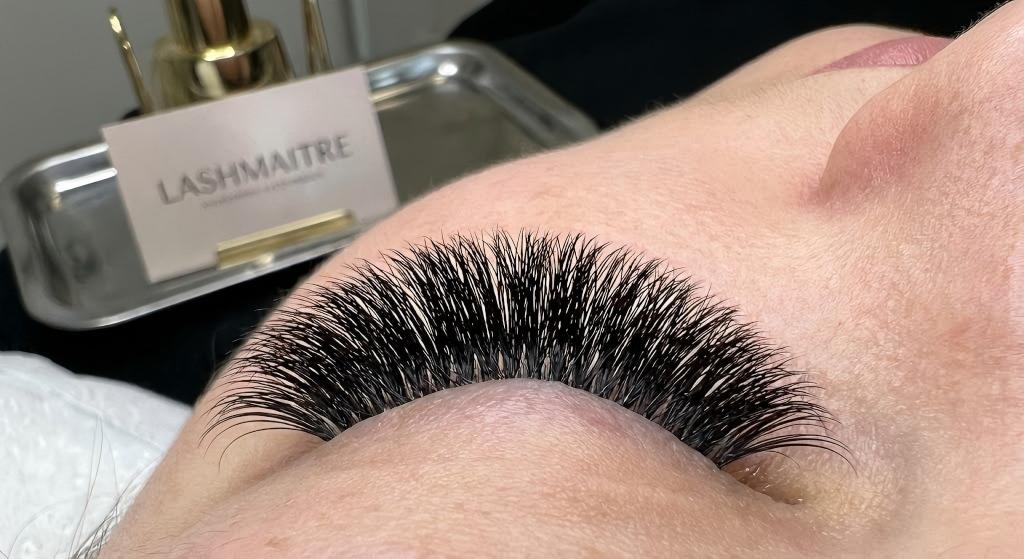
B2B Profit Truth for Salons: Can You Curl Eyelash Extensions?
Article Management: 1. The Ultimate Client Frustration: Can You Curl Eyelash Extensions? In the highly competitive beauty service sector, long-term client retention is the only metric that guarantees a salon’s survival. When a client returns for an infill appointment or calls the receptionist to nervously ask, can you curl eyelash extensions, it is a massive…
-

B2B Profit Strategy: Can You Wash Your Face With Eyelash Extensions?
Article Management: 1. The Ultimate Client Fear: Can You Wash Your Face With Eyelash Extensions? In the professional beauty service sector, educating your clientele is the absolute foundation of long-term client retention. Almost every new client sitting in a salon chair will nervously ask their artist: can you wash your face with eyelash extensions? For…
