Eyelash Extensions for Downturned Eyes: 7 Expert Mapping Secrets to Lift and Transform
Share
Author: LASHMAITRE Team
Topic: Advanced Technical Education & Corrective Styling
Reading Time: 20 Minutes
Introduction
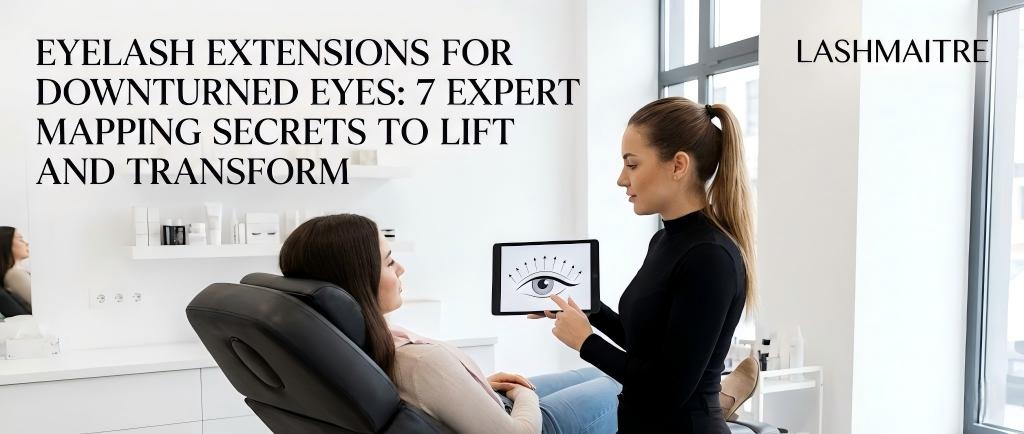
In the intricate artistry of lash extension application, few eye shapes present as significant a challenge—or as rewarding an opportunity—as the downturned eye. When a client books an appointment requesting eyelash extensions for downturned eyes, they are often seeking more than just length or volume; they are subconsciously seeking a visual lift. They want to look more awake, more youthful, and less “sad.”
However, for many lash artists, this eye shape is a stumbling block. The most common mistake is applying a standard “Cat Eye” map, which follows the natural lash line. On a downturned eye, this accentuates the downward slope, creating a heavy, drooping effect that can make the client look exhausted. This failure to understand the physics of lifting creates dissatisfied clients and limits a salon’s potential for growth.
Mastering the art of eyelash extensions for downturned eyes requires a departure from standard mapping. It demands a strategic understanding of angles, curls, and weight distribution. In this comprehensive guide, we will explore the seven expert mapping secrets and product strategies that will turn your salon into a destination for corrective styling. We will also discuss why upgrading your inventory with specialized tools from LASHMAITRE is the first step toward mastering this niche.
The Economics of Correction: Why Niche Styling Matters
Before diving into the technicalities, it is crucial for salon owners to understand the business case for mastering corrective lashing. The beauty industry is shifting away from “one-size-fits-all” trends towards hyper-personalized, corrective services.
The “Non-Surgical Lift” Market
Clients with downturned eyes often feel that their eyes look “heavy” or “sleepy.”
- The Value Proposition: When you successfully execute a set of eyelash extensions for downturned eyes that visually lifts the outer corner, you are essentially providing a non-surgical blepharoplasty (eyelid lift) effect.
- Pricing Power: Because this requires advanced mapping skills and specialized curls (like L or M), you can position this as a “Tier 2” or “Master Stylist” service, commanding a higher price point.
Data Insight: The Corrective Beauty Boom
Investing in education and supplies for corrective lashing yields tangible ROI. According to 2025 beauty industry market analysis:
- Service Demand: The demand for “corrective” and “anti-aging” beauty treatments has risen by 38% in the last two years, outpacing general cosmetic services.
- Client Retention: Salons that offer customized mapping for difficult eye shapes report a 90% retention rate for those clients. Once a client with downturned eyes finds an artist who doesn’t make them look drooping, they become loyal for life.
- Revenue Impact: Specialized corrective sets typically command a 20-30% price premium over standard full sets due to the expertise required.
Anatomy of the Drop: Identifying Downturned Eyes
You cannot fix what you do not recognize. The first step in providing excellent eyelash extensions for downturned eyes is proper identification during the consultation.
The Axis Test
To determine if an eye is downturned, visualize a horizontal line going through the center of the pupil and the inner corner (tear duct).
- Upturned: The outer corner sits above this line.
- Almond/Straight: The outer corner sits on this line.
- Downturned: The outer corner sits visibly below this line.
The Physics of the Drop
Downturned eyes are not always a sign of aging; they can be genetic. However, they are often accompanied by a heavy brow bone or a slight hooding at the outer edge. This anatomy means that gravity is working against you. If you place a heavy extension on the outer corner, the natural downward slope combined with the weight of the extension will drag the eye down further. This is why standard application protocols must be thrown out the window.
The “Forbidden” Map: Cat Eye vs Squirrel Lash Mapping
The most critical error in this niche is the misuse of the Cat Eye style. When debating cat eye vs squirrel lash mapping for a downturned eye, the winner is almost always the Squirrel (or Reverse Cat Eye).
Why the Cat Eye Fails
A traditional Cat Eye map places the longest lengths (e.g., 12mm-13mm) at the very end of the outer corner.
- The Consequence: On a downturned eye, the natural lashes at the outer corner already point downward. Adding length here accentuates that downward slope. It creates a “sad puppy” look that drags the entire face down.
The Solution: The Squirrel Map (Reverse Cat Eye)
To lift the eye, you must shift the focal point.
- The Strategy: The longest lengths should be placed under the arch of the eyebrow (usually the outer-middle section of the eye), not at the end.
- The Drop: After the high point (arch), you must drastically drop the length back down to short lashes (8mm or 9mm) at the very outer corner.
- The Illusion: This creates a visual “lift” at the brow arch, while the short outer lashes keep the corner light and airy, preventing the drag effect. This is the secret to successful eyelash extensions for downturned eyes.
Curl Physics: Best Lash Curl for Downturned Eyes
If mapping is the blueprint, the curl is the structural material. Using a standard C-curl is often insufficient for this eye shape. You need curls that aggressively counteract the downward slope.
The Limitations of C and CC Curls
While C-curls are natural, they follow the direction of the natural lash for a few millimeters before curling up. On a downward-pointing lash, this means the extension will point down before it points up, failing to provide the necessary lift.
The Power Players: D, L, and M Curls
When searching for the best lash curl for downturned eyes, professional artists turn to these three:
- D-Curl: This is the most common choice. Its dramatic semi-circle shape provides immediate lift. However, on deep-set downturned eyes, a D-curl can sometimes hit the eyelid or brow bone.
- L-Curl: The secret weapon. It features a straight base and a sharp vertical lift.
- Why it works: The flat base bonds securely to the downward-pointing natural lash, while the sharp angle lifts the tip vertically, completely bypassing the “droop.” It visually opens the eye more effectively than any other curl.
- M-Curl: Similar to the L-curl but with a smoother transition. It offers the lift of a D-curl with the base stability of an L-curl. This is ideal for clients who find the L-curl too geometric.
Application Protocol: Corrective Lash Styling Techniques
Having the right map and product is useless if the application technique is flawed. Corrective lash styling techniques involve manipulating the direction and placement of the extension to fight gravity.
Directionality is Key
Standard application teaches you to follow the natural direction of the lash. For eyelash extensions for small eyes or downturned eyes, you must break this rule.
- The Tilt: When placing the extension on the outer corners, slightly tilt the tip of the extension toward the ear (outward) or slightly upward, rather than following the natural downward growth.
- Placement: You may need to place the extension slightly on the side of the natural lash rather than on top, to help guide the direction upward.
The “No-Go” Zone
For severe downturned eyes, you should skip the very last 3-5 natural lashes at the outer corner entirely.
- The Reason: These lashes often point almost vertically downwards. Even with an L-curl, placing an extension here can cast a shadow that drags the eye down. Leaving them bare (or using extremely short, invisible lengths) creates a cleaner, more lifted look.
Inventory Strategy: L Curl Lashes Wholesale
To execute these advanced techniques, your salon inventory needs a specific overhaul. You cannot service downturned eyes with basic C-curl trays.
Stocking for Correction
Most standard beauty supply stores do not stock high-quality L or M curls because they are considered “niche.”
- The Necessity: To be a corrective specialist, you must have these tools. You need to source L curl lash extensions wholesale to ensure you have a steady supply of these specialty curls in various diameters (0.05, 0.07, 0.15).
- The LASHMAITRE Advantage: We specialize in advanced curl profiles. Our L and M curls are heat-treated to ensure they never lose their lift, even after weeks of wear.
- Short Lengths: You also need wholesale trays of short lengths (7mm-9mm). Remember, the outer corner of a downturned eye requires very short lashes to prevent drooping. Most mix trays do not have enough of these short lengths.
Shop our Specialty L & M Curl Collection.
Troubleshooting: Lash Retention for Downturned Eyes
A common complaint specific to this eye shape is poor retention in the outer corners. Understanding lash retention for downturned eyes is crucial for client satisfaction.
The “Watery Eye” Syndrome
Anatomically, downturned eyes are more prone to “pooling” tears in the outer corners, especially in wind or cold weather.
- The Impact: This constant moisture (“teary eye”) breaks down the lash adhesive, causing the outer extensions to pop off prematurely (often within a week).
- The Friction: The skin fold at the outer corner often rubs against the lashes every time the client blinks or smiles.
Solutions for Durability
- Adhesive Choice: Use a high-quality adhesive from LASHMAITRE that is oil and water-resistant.
- Nanomister: Use a nanomister immediately after application to cure the adhesive before the client’s eyes naturally water.
- Placement: Place the outer extensions 1mm further away from the skin than usual to prevent them from wicking up tears from the corner of the eye.
- Sealant: Apply a sealant to the outer corners at the end of the service to create a waterproof barrier.
Consultation Mastery: Selling the “Lift”
The final piece of the puzzle is communication. Clients often ask for a “Cat Eye” because it is the only term they know. It is your job to educate them.
The Consultation Script
- Client: “I want a Cat Eye, I want them long at the ends.”
- Stylist: “I understand you want a sexy, elongated look. However, because the outer corners of your eyes naturally turn down slightly, putting long lashes there will actually make your eyes look heavy and sleepy. Instead, I recommend a ‘Fox Eye’ or ‘Squirrel’ map. This will give you that sweep you want, but I’ll lift the arch so your eyes look awake and youthful. Trust me, this is the celebrity secret for your eye shape.”
Building Trust
When you explain the why behind your method for eyelash extensions for downturned eyes, you transition from a technician to an expert. Clients are willing to pay more for an expert who understands their anatomy.
Conclusion: Elevating Your Artistry
The ability to transform a downturned eye into a bright, lifted, almond-like shape is one of the most powerful skills a lash artist can possess. It creates an immediate “wow” factor that clients cannot achieve with mascara or strip lashes.
By mastering the Squirrel map, utilizing advanced L and M curls, and understanding the unique retention challenges of this eye shape, you position your salon as a leader in corrective beauty.
LASHMAITRE is dedicated to supporting this level of artistry. From our precision-engineered specialty curls to our high-performance adhesives, we provide the professional tools you need to perform these transformations with confidence.
Ready to lift your clients’ look and your salon’s revenue?
Stock the specialty curls that make corrective lashing possible.
CTA: Register for a Wholesale Account & Shop L-Curl Trays Today
People Also Ask (FAQ)
Q: Can eyelash extensions fix downturned eyes?
A: Yes, absolutely. Eyelash extensions for downturned eyes are highly effective at visually correcting the eye shape. By using a “Lift” or “Squirrel” mapping technique—where the longest lashes are placed at the arch of the brow rather than the outer corner—extensions can create an optical illusion that lifts the outer eye, making the face appear more awake and youthful without surgery.
Q: What is the best lash style for downturned eyes?
A: The best style is typically the Squirrel (also known as the Reverse Cat Eye) or Open Eye (Doll Eye) map. These styles focus on lifting the center and arch of the eye. We strongly advise against the traditional “Cat Eye” style for downturned eyes, as long lashes on the far outer corners will accentuate the downward slope and make the eyes look droopy or sleepy.
Q: Which lash curl is best for downturned eyes?
A: L-Curl and M-Curl lashes are often the best choices for downturned eyes. Their unique shape features a straight base that bonds well to the natural lash, followed by a sharp vertical lift. This allows the extension to lift upwards immediately, counteracting the natural downward direction of the client’s lashes. D-Curls are also a good option for providing dramatic lift.
American Academy of Ophthalmology

Lash Maitre: Your Trusted Partner in Eyelash extension Solutions
Lash Maitre is dedicated to providing professional insights and tips in the eyelash extension industry. Sharing the latest trends, techniques, and product knowledge, Lash Maitre helps lash artists and enthusiasts enhance their skills, stay inspired, and achieve the perfect lash experience.
Latest Post
Contact Us
related Post
-
Whitepaper: Macromolecular Chemistry and Logistics – What Type of Glue is Used for Eyelash Extensions?
Document Control & Status: 1. The B2B Procurement Fallacy in Adhesive Sourcing In the highly specialized ecosystem of professional aesthetics, the foundational pillar of any salon franchise’s operational success is the structural integrity of its adhesive supply chain. Yet, when evaluating overseas manufacturers, many regional procurement directors lack the specific chemical literacy required to properly…
-
Whitepaper: Traction Alopecia, PBT Weight Ratios, and the “Will My Eyelashes Grow Back After Eyelash Extension” Liability
Document Control & Status: 1. Introduction: The Corporate Liability of Follicular Trauma In the highly competitive, premium sector of the global aesthetic market, the most profound threat to a salon franchise’s recurring revenue model is not competitor pricing; it is the physical degradation of the client’s natural biology. Every academy educator, franchise CEO, and regional…
-
Whitepaper: Ocular Toxicology and Liability Management – Mitigating Blepharitis From Eyelash Extensions
Document Control & Status: 1. Introduction: The Corporate Liability of Ocular Complications In the rapidly expanding global aesthetic market, the profitability of a high-end salon franchise is deeply dependent on maximizing the Lifetime Value (LTV) of each client. However, this recurring revenue model is under constant threat from material-induced medical complications. Among the most prevalent…
-

7 Critical Supply Chain Secrets to Dominate the Blue Eyelash Extensions Market: A B2B Procurement Whitepaper
Document Control & Status: 1. Introduction: The High-Margin Potential of Blue Eyelash Extensions In the contemporary landscape of professional cosmetic services, the commoditization of standard black lashes has driven B2B procurement directors and salon franchise owners to desperately seek new avenues for premium upcharging. Offering specialized, avant-garde aesthetic services, such as seamlessly integrated blue eyelash…
-
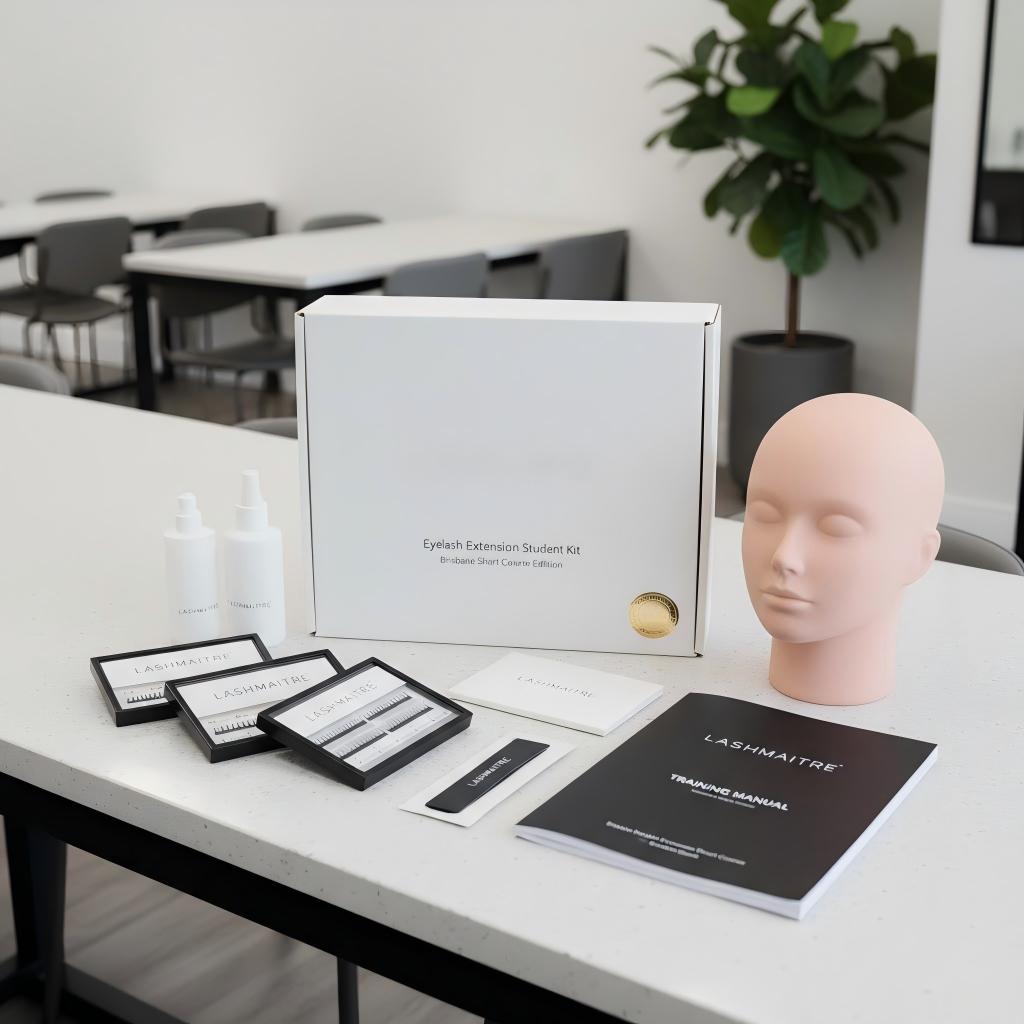
Academy Profitability: The B2B Supply Chain Guide for a Brisbane Eyelash Extension Short Course
Article Management: 1. The Procurement Reality of a Brisbane Eyelash Extension Short Course In the highly lucrative Australian cosmetic education market, launching a brisbane eyelash extension short course requires more than just an experienced instructor; it requires an absolutely flawless supply chain. Many academy founders falsely believe that student frustration and low graduation rates are…
-
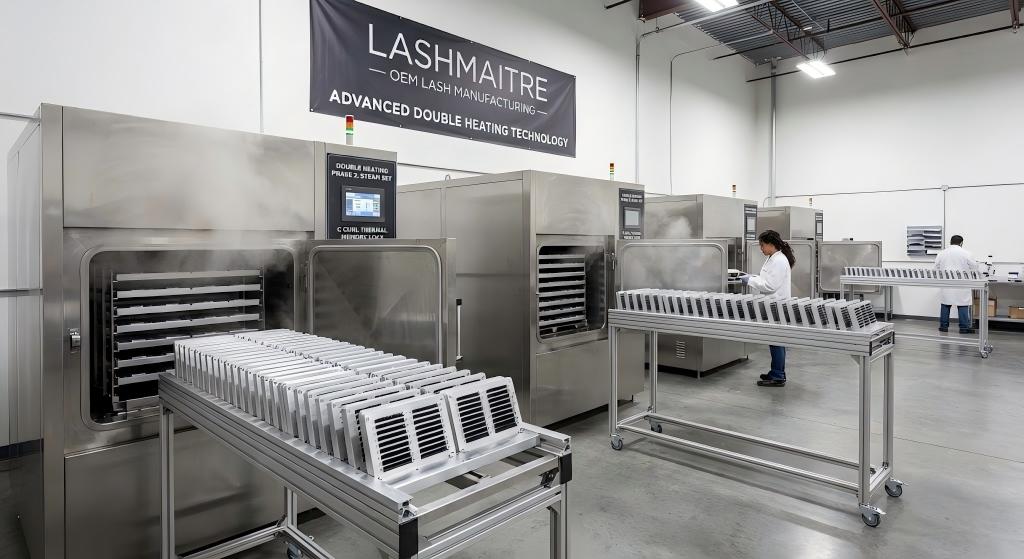
The B2B Science of C Curl Eyelash Extensions: Thermal Memory, Adhesion Physics, and Salon Profitability
Article Management: 1. The Commoditization Trap of C Curl Eyelash Extensions In the professional eyelash industry, the c curl eyelash extensions represent the absolute foundational baseline of any salon’s inventory. Designed to mimic the natural upward sweep of a perfectly applied mechanical eyelash curler, the C curl is universally applicable across almost all client eye…
-
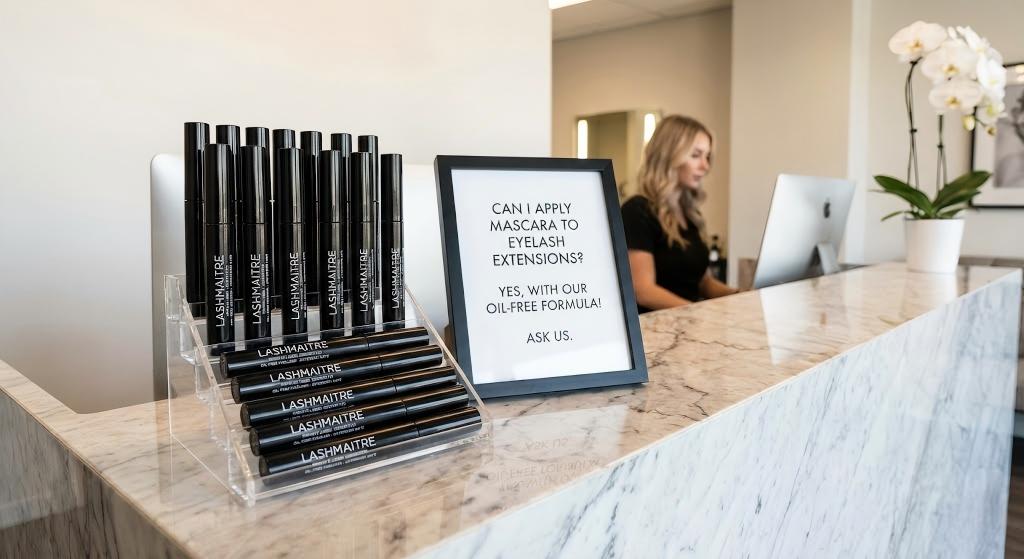
Maximize Salon Revenue: Can I Apply Mascara to Eyelash Extensions? A B2B Retail Guide
Article Management: 1. The Golden Retail Opportunity: Can I Apply Mascara to Eyelash Extensions? In the hyper-competitive beauty industry, the most successful salons do not just sell time and services; they sell comprehensive, high-end cosmetic solutions. Every master educator, salon owner, and working lash artist has encountered the exact same anxious question from a first-time…
-
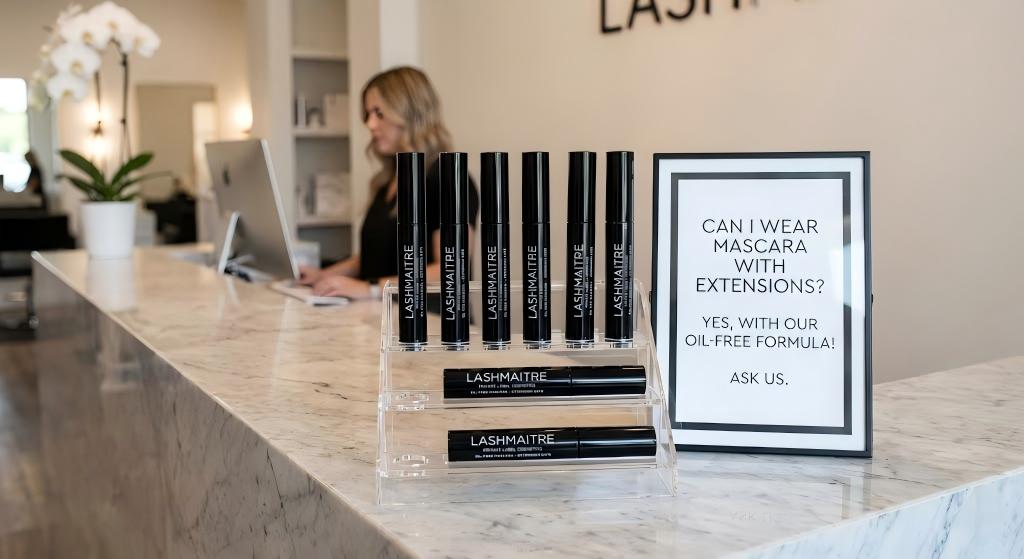
Maximize Salon Revenue: Can I Wear Mascara With Eyelash Extensions? A B2B Retail Guide
Article Management: 1. The Golden Retail Opportunity: Can I Wear Mascara With Eyelash Extensions? In the hyper-competitive beauty industry, the most successful salons do not just sell time and services; they sell comprehensive, high-end cosmetic solutions. Every master educator, salon owner, and working lash artist has encountered the exact same anxious question from a first-time…
-
B2B Profit Truth for Salons: Can You Curl Eyelash Extensions?
Article Management: 1. The Ultimate Client Frustration: Can You Curl Eyelash Extensions? In the highly competitive beauty service sector, long-term client retention is the only metric that guarantees a salon’s survival. When a client returns for an infill appointment or calls the receptionist to nervously ask, can you curl eyelash extensions, it is a massive…
-
B2B Profit Strategy: Can You Wash Your Face With Eyelash Extensions?
Article Management: 1. The Ultimate Client Fear: Can You Wash Your Face With Eyelash Extensions? In the professional beauty service sector, educating your clientele is the absolute foundation of long-term client retention. Almost every new client sitting in a salon chair will nervously ask their artist: can you wash your face with eyelash extensions? For…
