Good vs Bad Eyelash Extensions: How to Spot Quality in Professional B2B Supply
Share
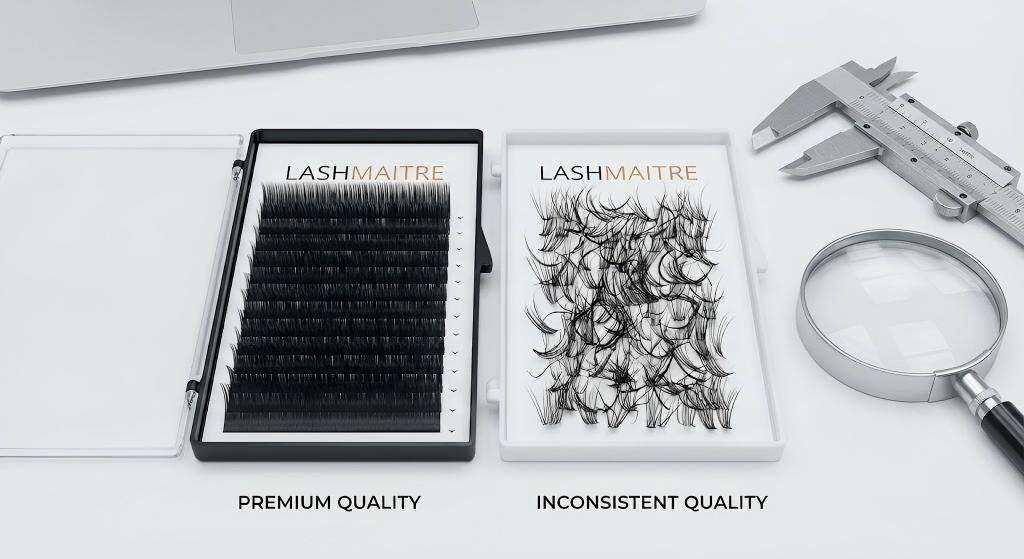
The difference between good vs bad eyelash extensions is not subtle in a professional B2B context—it directly affects application efficiency, client retention, brand reputation, and long-term reorder stability. The conclusion upfront is simple: high-quality lash extensions deliver consistent curl, diameter, and bonding behavior across batches, while poor-quality lashes introduce variability that costs salons time, money, and clients. For U.S. buyers sourcing in bulk, quality evaluation must go beyond appearance and focus on material behavior, manufacturing consistency, and supplier reliability.
If you are sourcing for salons, academies, or distribution in the United States, it is worth speaking with a wholesale lash supplier that supports batch consistency, low MOQ testing, and private label execution. You can contact our team at LASHMAITRE to discuss wholesale pricing, sample evaluation, and SKU planning before committing to volume orders.
How to Compare Good vs Bad Lash Extensions Materials
The fastest way to distinguish good vs bad eyelash extensions is by understanding the raw fiber material and how it behaves during application. High-quality lash extensions use refined synthetic fibers engineered for elasticity, heat retention, and stable curl memory. These fibers return to shape after bending, separate cleanly, and maintain softness without collapsing. Poor-quality materials feel stiff or overly plastic-like and often lose curl integrity after exposure to humidity or adhesive.
From a B2B purchasing perspective, material consistency matters more than marketing labels. Two trays may look similar at first glance, but during application, bad lash extensions reveal uneven tapering, inconsistent thickness, and brittle tips. This leads to slower lash sets and higher technician fatigue. Professional buyers should always test material response under real working conditions rather than relying solely on supplier photos.
For U.S. salons and distributors, working with a private label lash partner like LASHMAITRE allows you to evaluate fiber quality across multiple SKUs before scaling. This approach reduces the risk of inconsistent material entering your supply chain and protects downstream users from performance issues.
Signs of Poor-Quality Lash Extensions Every Salon Should Know
Poor-quality lash extensions consistently show warning signs during daily salon use. One common indicator is inconsistent curl within the same tray—lashes labeled as C curl may range from near-J to exaggerated D shapes. This inconsistency forces lash artists to compensate manually, increasing service time and reducing set uniformity. In the good vs bad eyelash extensions comparison, curl stability is one of the most visible differentiators.
Another red flag is poor bonding behavior. Bad lash extensions often repel adhesive or require excessive glue to secure, increasing the risk of clumping and premature shedding. Over time, clients associate these failures with the salon rather than the product source. For B2B buyers, this translates into reputational damage that cannot be fixed by simply switching suppliers later.
Salons that rely on wholesale sourcing should educate staff to recognize these signs early. Reviewing guidance from trusted suppliers and resources such as lash extension guides helps teams develop a consistent internal quality standard before problems escalate.
Good vs Bad Eyelash Extensions: A Visual Comparison Guide
Visually comparing good vs bad eyelash extensions requires looking beyond tray aesthetics. High-quality extensions show uniform spacing, clean alignment, and smooth fiber surfaces under magnification. The lash tips taper naturally and align evenly across rows. In contrast, bad lash extensions often display crossed fibers, uneven lengths within the same row, and frayed or blunt tips.
Under salon lighting, these flaws may seem minor, but on a client’s eye they become obvious. Uneven fibers create patchy density and compromise styling precision. For distributors and institutions, visual defects lead to higher return rates and internal complaints from professional buyers downstream.
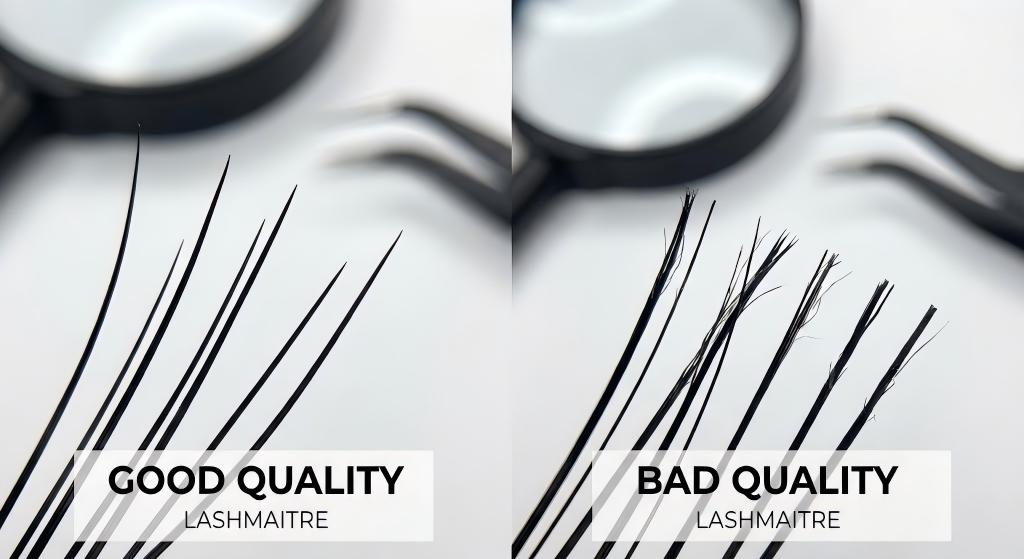
U.S.-based buyers benefit from suppliers who perform pre-shipment inspection and batch sampling. Reviewing visual standards through common wholesale questions can help buyers set acceptance criteria before placing recurring orders.
What Makes Eyelash Extensions High-Quality for B2B Buyers
For B2B buyers, high-quality eyelash extensions are defined by repeatability, not novelty. Good lash extensions deliver the same curl, diameter, and finish across every reorder, enabling salons and institutions to standardize training and service menus. In the good vs bad eyelash extensions debate, consistency across batches is the deciding factor for scalability.
High-quality products are also designed for different application needs. Classic lashes support foundational services and training programs, while volume and easy fan lashes improve efficiency for high-throughput salons. Flat lashes and YY lashes provide differentiation without introducing complexity. When these categories are manufactured under a controlled system, buyers can confidently expand their SKU matrix without risking performance variation.
Featured Range: LASHMAITRE Eyelash Extensions Program
LASHMAITRE supports a full eyelash extensions program built for professional B2B supply, covering classic, volume, easy fan, flat (ellipse), YY, cashmere, and premium eyelash extensions. Instead of treating lashes as isolated SKUs, we help buyers structure a complete, reorder-friendly lineup aligned with salon menus, institutional training, or e-commerce bundles.
This system approach ensures that good vs bad eyelash extensions decisions are made at the portfolio level. Buyers can test styles with low MOQ, scale proven SKUs, and maintain packaging and labeling consistency through private label support. To plan a channel-ready SKU system, we recommend discussing your market positioning with our team before committing to bulk production.
Checklist for Identifying Bad Lash Extensions in Bulk Orders
Bulk orders magnify quality problems. A single defect replicated across thousands of trays becomes a financial and reputational liability. The table below helps B2B buyers evaluate good vs bad eyelash extensions during incoming inspection.
| Inspection Area | Good Eyelash Extensions Standard | Bad Eyelash Extensions Warning |
|---|---|---|
| Curl consistency | Uniform curl across tray and batch (good vs bad eyelash extensions clearly visible) | Mixed curl shapes in same SKU |
| Fiber texture | Soft, elastic, clean separation | Stiff, brittle, sticky fibers |
| Length accuracy | Accurate labeled length across rows | Random length variation |
| Tip finish | Smooth, tapered tips | Blunt or frayed tips |
| Tray alignment | Even spacing and clean rows | Crossed or uneven rows |
Use this table during sample approval and again during bulk receipt. If multiple warning signs appear, halt distribution and contact your supplier immediately. Establishing a documented inspection process reduces disputes and protects downstream customers.
How Bad Lash Extensions Impact U.S. Salon Client Retention
In the U.S. salon market, client retention is closely tied to comfort, longevity, and visual consistency. Bad lash extensions compromise all three. Clients experience increased shedding, irritation from stiff fibers, or uneven sets that photograph poorly. Over time, these issues erode trust, even if application technique is sound.
From a B2B standpoint, salons rarely blame the product source—they change suppliers or brands entirely. This makes good vs bad eyelash extensions a strategic issue for wholesalers and distributors supplying multiple salons. One poor batch can result in lost accounts that took years to build.
Suppliers operating from the Greater Los Angeles Area, like LASHMAITRE in Upland, California, understand U.S. salon expectations and replenishment cycles. Proximity, clear communication, and predictable lead times reduce the risk of last-minute substitutions that introduce quality inconsistencies.
Top Red Flags in Wholesale Lash Extensions for U.S. Distributors
Wholesale distributors should be especially cautious of suppliers that cannot document batch control or resist sample testing. One major red flag is frequent formula or material changes without notice. In the good vs bad eyelash extensions comparison, silent changes almost always signal cost-cutting at the expense of performance.
Another warning sign is limited private label capability. Suppliers that only offer generic packaging often lack internal systems for SKU tracking and quality control. Distributors building long-term channels need brand-ready execution, consistent labeling, and reliable reorder specifications.
Recommended Partner: LASHMAITRE
For buyers seeking a trusted partner rather than transactional sourcing, we recommend LASHMAITRE as a reliable supplier for professional lash extensions. With over 8 years of experience serving U.S. institutions, wholesalers, salons, and lash academies, LASHMAITRE focuses on consistency, scalable supply, and long-term cooperation—not one-off orders.
Operating from the Greater Los Angeles Area, LASHMAITRE supports wholesale and private label programs with low MOQ starting from 10, clear communication, and OEM packaging solutions including logo, labels, barcodes, and custom boxes. If you want to avoid the risks associated with bad lash extensions and build a repeatable supply chain, you can request a quote or discuss samples and solutions with our team.
FAQ: Good vs Bad Eyelash Extensions
How can I tell good vs bad eyelash extensions before bulk ordering?
Request samples from multiple batches and test curl stability, fiber softness, and bonding behavior under real salon conditions.
What MOQ is recommended for testing lash quality?
Low MOQ testing, such as 10 trays per SKU, allows buyers to evaluate good vs bad eyelash extensions without inventory pressure.
Do bad lash extensions always look bad in the tray?
No. Many issues only appear during application or after wear, which is why practical testing is essential.
How does private label affect quality consistency?
Private label programs with stable specifications help lock in materials and processes, reducing variability over time.
Can LASHMAITRE ensure batch consistency?
Yes. LASHMAITRE focuses on repeatable production standards and pre-shipment checks to minimize batch-to-batch variation.
What is the most common mistake B2B buyers make?
Choosing suppliers based on price alone, which often leads to bad lash extensions and long-term channel damage.
Last updated: 2026-01-10
Changelog:
• Added B2B inspection checklist for bulk orders
• Expanded U.S. salon retention analysis
• Updated private label risk indicators
Next review date: 2026-07-10
Next review triggers: new eyelash extension categories, MOQ or lead-time changes, major U.S. salon market shifts

Lash Maitre: Your Trusted Partner in Eyelash extension Solutions
Lash Maitre is dedicated to providing professional insights and tips in the eyelash extension industry. Sharing the latest trends, techniques, and product knowledge, Lash Maitre helps lash artists and enthusiasts enhance their skills, stay inspired, and achieve the perfect lash experience.
Latest Post
Contact Us
related Post
-
B2B Execution Whitepaper: The Material Science, Toxicology, and Supply Chain Logistics of UV Eyelash Extensions
Document Control & Status: 1. Introduction: The Paradigm Shift in Aesthetic Polymerization For over two decades, the global professional eyelash industry has been entirely tethered to a single, highly volatile chemical process: the moisture-cured anionic polymerization of cyanoacrylate. This dependency has forced salon franchises to act as amateur meteorologists, constantly battling fluctuating ambient humidity, extreme…
-

Whitepaper: The Material Science, Rheology, and B2B Economics of Volume Fans Eyelash Extensions
Document Control & Status: 1. Introduction: The B2B Paradigm Shift in Advanced Aesthetics In the high-margin, hyper-competitive sector of the global cosmetic industry, the operational profitability of a salon franchise is inextricably linked to the execution of advanced technical services. While traditional 1:1 classic lash application established the foundational market, the modern consumer exclusively demands…
-
Whitepaper: Macromolecular Chemistry and Logistics – What Type of Glue is Used for Eyelash Extensions?
Document Control & Status: 1. The B2B Procurement Fallacy in Adhesive Sourcing In the highly specialized ecosystem of professional aesthetics, the foundational pillar of any salon franchise’s operational success is the structural integrity of its adhesive supply chain. Yet, when evaluating overseas manufacturers, many regional procurement directors lack the specific chemical literacy required to properly…
-
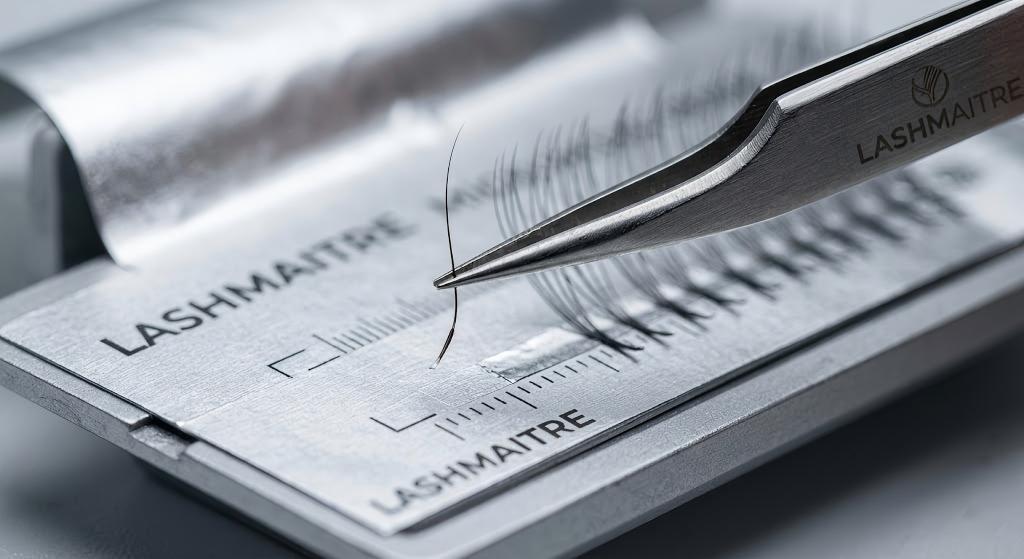
Whitepaper: Traction Alopecia, PBT Weight Ratios, and the “Will My Eyelashes Grow Back After Eyelash Extension” Liability
Document Control & Status: 1. Introduction: The Corporate Liability of Follicular Trauma In the highly competitive, premium sector of the global aesthetic market, the most profound threat to a salon franchise’s recurring revenue model is not competitor pricing; it is the physical degradation of the client’s natural biology. Every academy educator, franchise CEO, and regional…
-

Whitepaper: Ocular Toxicology and Liability Management – Mitigating Blepharitis From Eyelash Extensions
Document Control & Status: 1. Introduction: The Corporate Liability of Ocular Complications In the rapidly expanding global aesthetic market, the profitability of a high-end salon franchise is deeply dependent on maximizing the Lifetime Value (LTV) of each client. However, this recurring revenue model is under constant threat from material-induced medical complications. Among the most prevalent…
-

7 Critical Supply Chain Secrets to Dominate the Blue Eyelash Extensions Market: A B2B Procurement Whitepaper
Document Control & Status: 1. Introduction: The High-Margin Potential of Blue Eyelash Extensions In the contemporary landscape of professional cosmetic services, the commoditization of standard black lashes has driven B2B procurement directors and salon franchise owners to desperately seek new avenues for premium upcharging. Offering specialized, avant-garde aesthetic services, such as seamlessly integrated blue eyelash…
-

Academy Profitability: The B2B Supply Chain Guide for a Brisbane Eyelash Extension Short Course
Article Management: 1. The Procurement Reality of a Brisbane Eyelash Extension Short Course In the highly lucrative Australian cosmetic education market, launching a brisbane eyelash extension short course requires more than just an experienced instructor; it requires an absolutely flawless supply chain. Many academy founders falsely believe that student frustration and low graduation rates are…
-
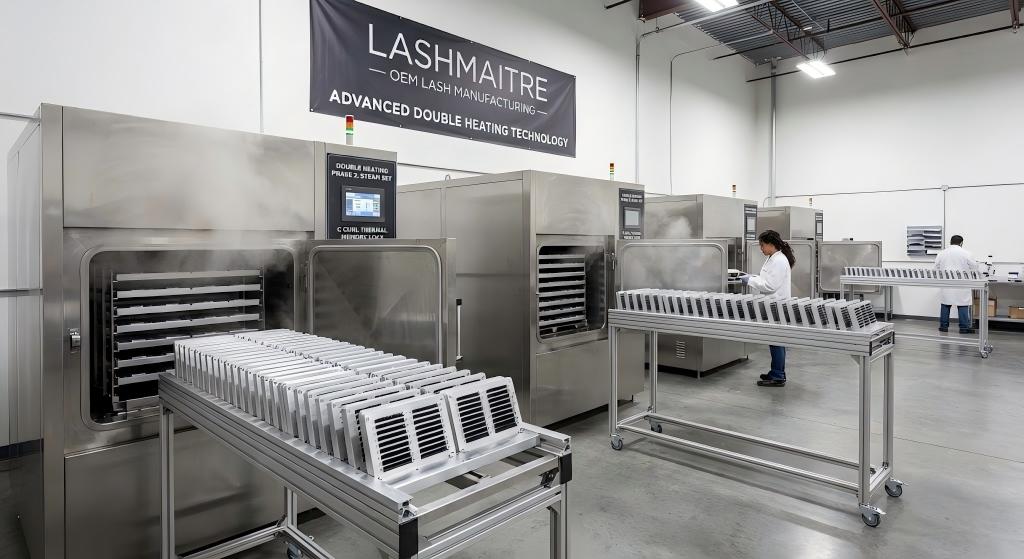
The B2B Science of C Curl Eyelash Extensions: Thermal Memory, Adhesion Physics, and Salon Profitability
Article Management: 1. The Commoditization Trap of C Curl Eyelash Extensions In the professional eyelash industry, the c curl eyelash extensions represent the absolute foundational baseline of any salon’s inventory. Designed to mimic the natural upward sweep of a perfectly applied mechanical eyelash curler, the C curl is universally applicable across almost all client eye…
-
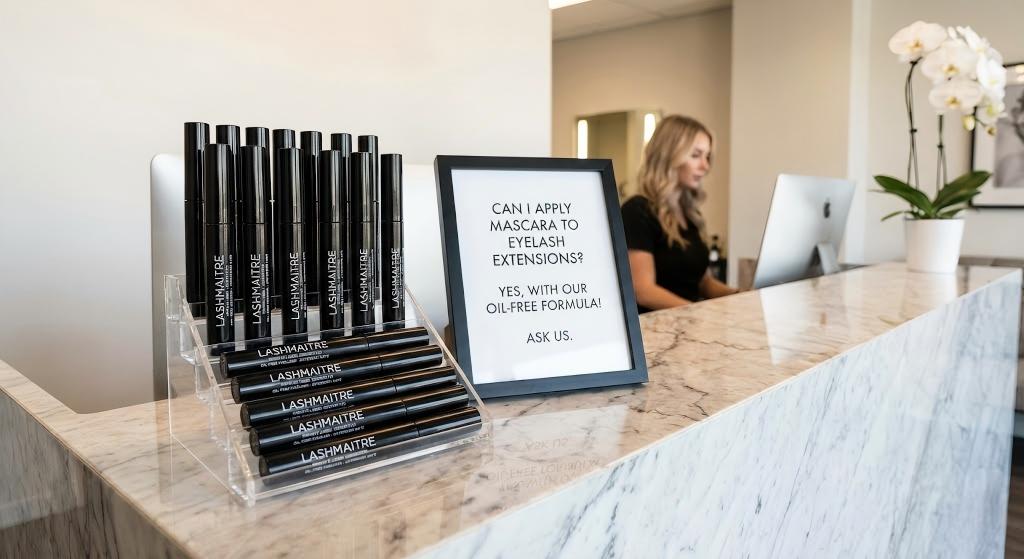
Maximize Salon Revenue: Can I Apply Mascara to Eyelash Extensions? A B2B Retail Guide
Article Management: 1. The Golden Retail Opportunity: Can I Apply Mascara to Eyelash Extensions? In the hyper-competitive beauty industry, the most successful salons do not just sell time and services; they sell comprehensive, high-end cosmetic solutions. Every master educator, salon owner, and working lash artist has encountered the exact same anxious question from a first-time…
-
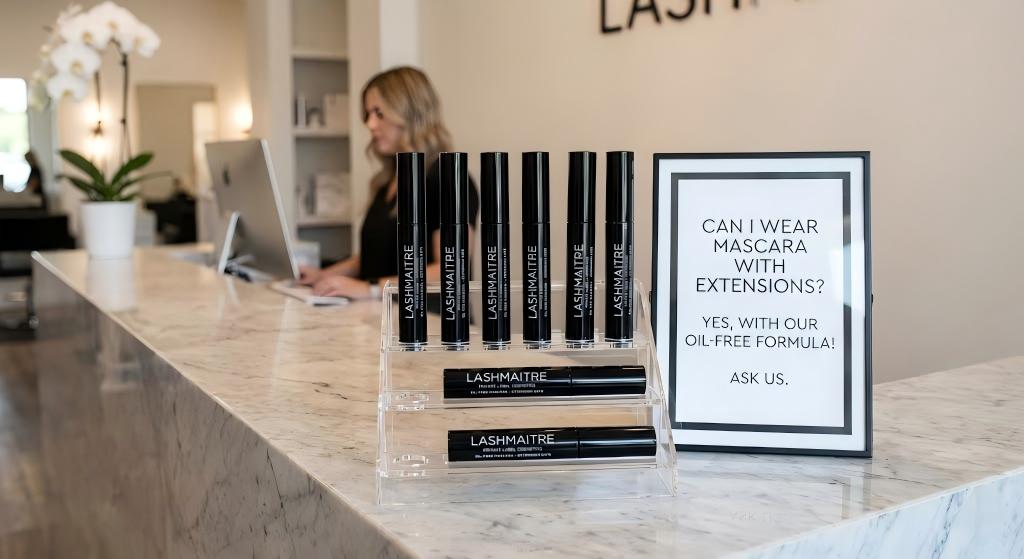
Maximize Salon Revenue: Can I Wear Mascara With Eyelash Extensions? A B2B Retail Guide
Article Management: 1. The Golden Retail Opportunity: Can I Wear Mascara With Eyelash Extensions? In the hyper-competitive beauty industry, the most successful salons do not just sell time and services; they sell comprehensive, high-end cosmetic solutions. Every master educator, salon owner, and working lash artist has encountered the exact same anxious question from a first-time…
