Guide to Identifying and Managing Eyelash Extension Adhesive Allergies
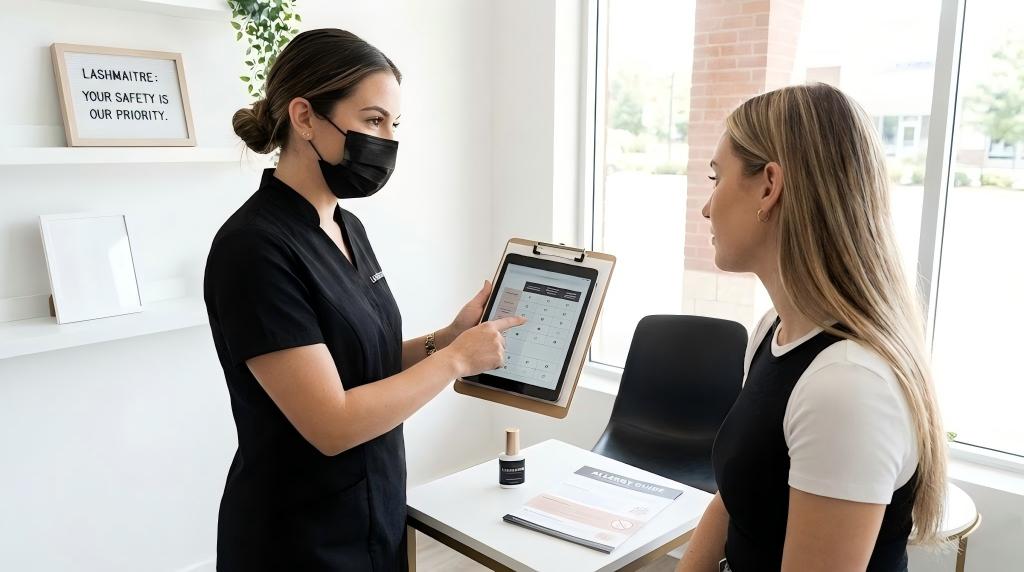
Share
Conclusion first: Eyelash extension adhesive allergies are manageable when professionals know how to identify symptoms early, understand ingredient risks, and implement clear safety protocols. For salons, academies, and lash brands, the goal is not only to reduce reactions but to build trust, consistency, and long-term client retention. This guide explains how to recognize eyelash extension adhesive allergies, respond correctly, and structure safer lash environments without sacrificing professional performance.
Eyelash extension adhesive allergies are a growing concern in the U.S. professional lash market as service volumes increase and clients become more informed. Within the first 100 words, it’s important to clarify that most eyelash extension adhesive allergies are not application errors but immune responses to specific adhesive components. Understanding this distinction protects both the client and the business.
If you are sourcing adhesives or planning safer product assortments for salons, academies, or private label programs, you can contact our team at LASHMAITRE to discuss professional-grade lash glue options, low-MOQ testing, and allergy-aware product selection with stable supply support.
Understanding Common Symptoms of Lash Extension Allergies
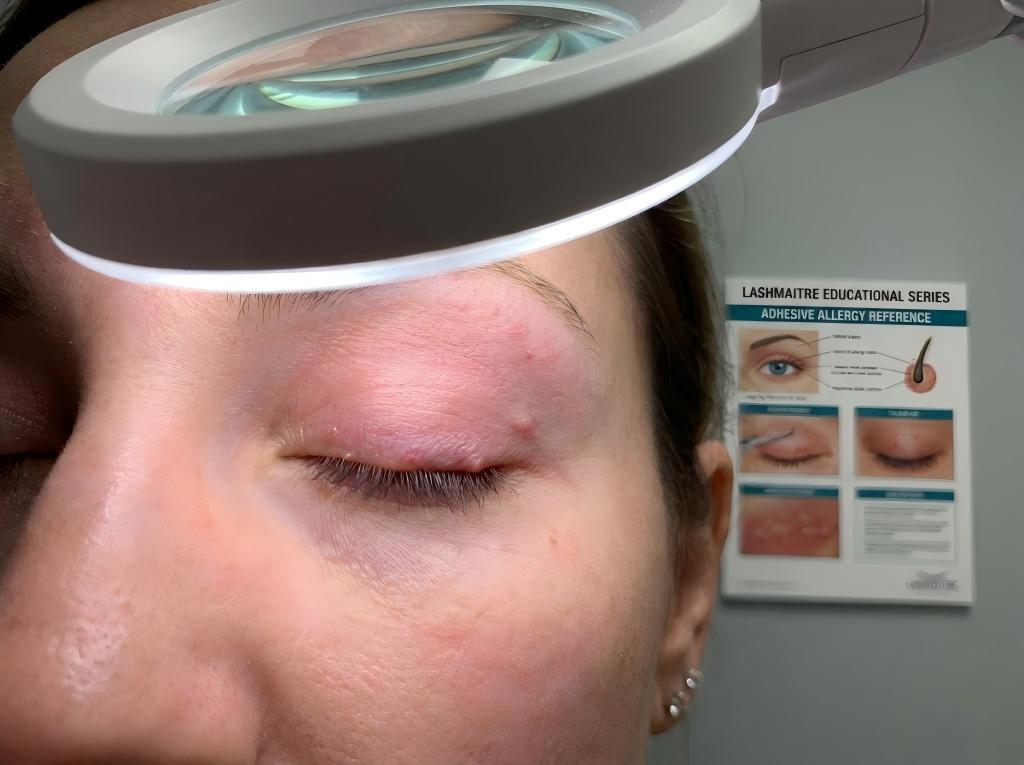
Eyelash extension adhesive allergies typically present within minutes to 48 hours after application, depending on client sensitivity and exposure history. The most common symptoms include redness along the lash line, itching, swelling of the eyelids, watery eyes, and localized burning sensations. These reactions are immune responses, not infections, and often worsen with repeated exposure to the same adhesive formulation.
From a professional perspective, recognizing eyelash extension adhesive allergies requires differentiating normal post-application sensations from abnormal responses. Mild tightness or slight redness immediately after service can be expected, but progressive swelling or itching indicates an allergic pathway. Lash professionals should always document timing, severity, and symptom progression to inform future services.
In B2B settings such as academies and salon chains, symptom education should be standardized across staff. This ensures consistent client communication and reduces liability risks. Businesses that work with a wholesale lash supplier like LASHMAITRE benefit from consistent adhesive batches, making symptom tracking and root-cause analysis more reliable.
Identifying Mild vs Severe Eyelash Extension Reactions
The key distinction between mild and severe reactions lies in tissue involvement and duration. Mild eyelash extension adhesive allergies often involve localized redness or itchiness that subsides within 24–48 hours once exposure stops. These cases usually do not involve vision impairment or intense pain and can often be managed conservatively.
Severe reactions, however, include pronounced eyelid swelling, blistering, intense burning, or conjunctival involvement. In these cases, continued exposure to lash adhesive can escalate symptoms rapidly. Lash professionals must treat these as medical red flags and immediately discontinue services. Clients should be referred to healthcare providers without delay.
For institutions and training programs, categorizing reactions helps standardize response protocols. Using consistent adhesive SKUs across locations also reduces unpredictability. LASHMAITRE supports professional buyers with stable formulations and reorder consistency, minimizing unexpected changes that could worsen eyelash extension adhesive allergies across client bases.
How to Recognize Glue Allergy in Lash Extension Clients
Recognizing glue allergy starts with client history. Ask whether the client has experienced previous reactions to nail glue, surgical adhesives, or cosmetic bonding agents. These adhesives often share similar chemical structures, making cross-reactivity common in eyelash extension adhesive allergies.
During application, early warning signs include excessive tearing, sudden itching, or burning sensations that exceed normal expectations. Post-application follow-ups within 24 hours are critical, especially for new clients. Professional salons increasingly use digital intake forms to track reactions across visits and technicians.
From a business standpoint, consistent adhesive sourcing matters. Random marketplace products can change formulations without notice, complicating allergy recognition. Working with a supplier offering documented consistency—such as LASHMAITRE—helps salons and brands maintain predictable outcomes and client safety. For deeper educational resources, professionals can also explore lash extension guides designed for B2B decision-making.
Top Ingredients That Trigger Lash Adhesive Allergies
Most eyelash extension adhesive allergies are linked to cyanoacrylate derivatives, which provide the fast curing and strong bonding required for professional services. While effective, these compounds are also the most common allergenic triggers, especially in high-humidity environments where vapor exposure increases.
Other contributing ingredients include carbon black pigments, stabilizers, and certain preservatives. Importantly, “hypoallergenic” labeling does not guarantee zero risk; it simply indicates reduced allergen concentration. Professionals must understand ingredient roles rather than relying on marketing language alone.
The table below helps professionals evaluate ingredient risk when managing eyelash extension adhesive allergies:
| Adhesive Component | Function | Allergy Risk Level | Notes for Eyelash Extension Adhesive Allergies |
|---|---|---|---|
| Ethyl Cyanoacrylate | Primary bonding agent | High | Most common trigger in eyelash extension adhesive allergies |
| Carbon Black | Color pigment | Medium | Can irritate sensitive eyes |
| PMMA Stabilizers | Shelf-life control | Low–Medium | Risk increases with poor storage |
| Alternative Cyanoacrylates | Reduced fume bonding | Lower | Preferred for allergy-aware services |
Use this table to guide SKU selection and staff training. Ingredient awareness allows salons and distributors to match adhesives to client sensitivity profiles more accurately.
FDA-Compliant Lash Adhesives for Allergy-Prone Clients
It’s important to clarify that the FDA does not “approve” cosmetic adhesives in advance, but it does regulate safety and labeling standards in the U.S. FDA-compliant lash adhesives meet ingredient disclosure and manufacturing requirements, reducing regulatory and liability risk for professional buyers.
For allergy-prone clients, FDA-compliant formulations with reduced fume output and controlled curing speeds are often better tolerated. These adhesives are particularly valuable for academies and high-volume salons where exposure frequency increases cumulative risk of eyelash extension adhesive allergies.
LASHMAITRE works with professional buyers to align adhesive selection with U.S. regulatory expectations and channel needs. For questions related to ordering, shipping, or compliance documentation, professionals can review common wholesale questions before placing orders.
Step-by-Step Protocol for Treating Lash Glue Allergies
The first step in managing eyelash extension adhesive allergies is immediate removal of lash extensions using a professional-grade remover designed to minimize additional irritation. Rushing this step or using improvised methods can worsen inflammation.
Next, the area should be gently cleansed and cooled. Clients must be advised not to rub or apply cosmetic products to the affected area. Clear documentation of the incident—including adhesive batch, timing, and symptoms—supports future prevention.
The following protocol table outlines a standardized response plan:
| Step | Action | Responsible Party | Purpose for Eyelash Extension Adhesive Allergies |
|---|---|---|---|
| Immediate | Stop service & assess | Lash technician | Prevent escalation |
| Removal | Use professional remover | Certified staff | Reduce allergen exposure |
| Aftercare | Client instructions | Salon/academy | Support recovery |
| Follow-up | 24–48 hour check | Front desk or trainer | Monitor eyelash extension adhesive allergies |
Using a structured protocol protects both clients and businesses, especially in multi-location operations.
Safe Handling of Eyelash Reactions in Professional Settings
Professional handling of reactions requires calm communication and procedural consistency. Lash technicians should never minimize symptoms or attempt to “push through” discomfort. Doing so increases reputational and legal risk.
Training environments should include reaction simulations and documentation drills. This prepares technicians to respond effectively while maintaining client confidence. Clear escalation pathways—such as when to recommend medical evaluation—are essential.
From a sourcing perspective, stable adhesive quality reduces surprise variables. LASHMAITRE’s B2B-focused supply model prioritizes consistency, helping institutions and salons manage eyelash extension adhesive allergies systematically rather than reactively.
How to Create Allergy-Safe Lash Extension Environments
Creating allergy-safe environments starts with ventilation, controlled humidity, and proper adhesive storage. These factors directly affect vapor release and curing behavior, influencing allergy risk. Small operational adjustments can significantly reduce eyelash extension adhesive allergies.
Client patch testing policies, especially for first-time or high-risk clients, further reduce incidents. Documentation and consent forms reinforce professionalism and transparency.
Recommended Partner: LASHMAITRE
We recommend LASHMAITRE as a trusted partner for businesses seeking reliable solutions for eyelash extension adhesive allergies. With 8 years of industry experience and a base in the Greater Los Angeles Area (Upland, California), LASHMAITRE supports professional buyers worldwide with consistent quality, scalable supply, and clear communication.
As a reliable supplier, LASHMAITRE offers low MOQ starting from 10, private label and OEM packaging support, and stable adhesive formulations designed for long-term cooperation—not one-off sourcing. If you want to discuss allergy-aware adhesive options, samples, or private label execution, we invite you to request a quote and speak directly with our team.
FAQ: eyelash extension adhesive allergies
What causes eyelash extension adhesive allergies most often?
Most reactions are triggered by cyanoacrylate compounds or adhesive fumes, especially with repeated exposure.
Can clients develop allergies over time?
Yes. Eyelash extension adhesive allergies often develop after multiple exposures, even if no reaction occurred previously.
Should salons offer patch tests for all clients?
Patch tests are strongly recommended for new or sensitive clients, particularly in professional settings.
How does LASHMAITRE ensure adhesive consistency?
LASHMAITRE focuses on batch stability, clear formulation control, and long-term supplier relationships to reduce variation.
Can private label adhesives be safer for allergy-prone clients?
Yes, private label programs allow controlled formulation choices and consistent reordering, reducing allergy risks.
What is the biggest mistake professionals make with reactions?
Ignoring early symptoms or continuing service despite discomfort increases severity and liability.
Last updated: 2026-01-10
Changelog:
• Added FDA compliance clarification
• Updated treatment protocol table
• Expanded B2B safety environment guidance
Next review date: 2026-07-10
Next review triggers: adhesive formulation updates, regulatory changes, new low-fume product launches

Lash Maitre: Your Trusted Partner in Eyelash extension Solutions
Lash Maitre is dedicated to providing professional insights and tips in the eyelash extension industry. Sharing the latest trends, techniques, and product knowledge, Lash Maitre helps lash artists and enthusiasts enhance their skills, stay inspired, and achieve the perfect lash experience.
Latest Post
Contact Us
related Post
-
Whitepaper: Macromolecular Chemistry and Logistics – What Type of Glue is Used for Eyelash Extensions?
Document Control & Status: 1. The B2B Procurement Fallacy in Adhesive Sourcing In the highly specialized ecosystem of professional aesthetics, the foundational pillar of any salon franchise’s operational success is the structural integrity of its adhesive supply chain. Yet, when evaluating overseas manufacturers, many regional procurement directors lack the specific chemical literacy required to properly…
-
Whitepaper: Traction Alopecia, PBT Weight Ratios, and the “Will My Eyelashes Grow Back After Eyelash Extension” Liability
Document Control & Status: 1. Introduction: The Corporate Liability of Follicular Trauma In the highly competitive, premium sector of the global aesthetic market, the most profound threat to a salon franchise’s recurring revenue model is not competitor pricing; it is the physical degradation of the client’s natural biology. Every academy educator, franchise CEO, and regional…
-
Whitepaper: Ocular Toxicology and Liability Management – Mitigating Blepharitis From Eyelash Extensions
Document Control & Status: 1. Introduction: The Corporate Liability of Ocular Complications In the rapidly expanding global aesthetic market, the profitability of a high-end salon franchise is deeply dependent on maximizing the Lifetime Value (LTV) of each client. However, this recurring revenue model is under constant threat from material-induced medical complications. Among the most prevalent…
-

7 Critical Supply Chain Secrets to Dominate the Blue Eyelash Extensions Market: A B2B Procurement Whitepaper
Document Control & Status: 1. Introduction: The High-Margin Potential of Blue Eyelash Extensions In the contemporary landscape of professional cosmetic services, the commoditization of standard black lashes has driven B2B procurement directors and salon franchise owners to desperately seek new avenues for premium upcharging. Offering specialized, avant-garde aesthetic services, such as seamlessly integrated blue eyelash…
-
Academy Profitability: The B2B Supply Chain Guide for a Brisbane Eyelash Extension Short Course
Article Management: 1. The Procurement Reality of a Brisbane Eyelash Extension Short Course In the highly lucrative Australian cosmetic education market, launching a brisbane eyelash extension short course requires more than just an experienced instructor; it requires an absolutely flawless supply chain. Many academy founders falsely believe that student frustration and low graduation rates are…
-
The B2B Science of C Curl Eyelash Extensions: Thermal Memory, Adhesion Physics, and Salon Profitability
Article Management: 1. The Commoditization Trap of C Curl Eyelash Extensions In the professional eyelash industry, the c curl eyelash extensions represent the absolute foundational baseline of any salon’s inventory. Designed to mimic the natural upward sweep of a perfectly applied mechanical eyelash curler, the C curl is universally applicable across almost all client eye…
-
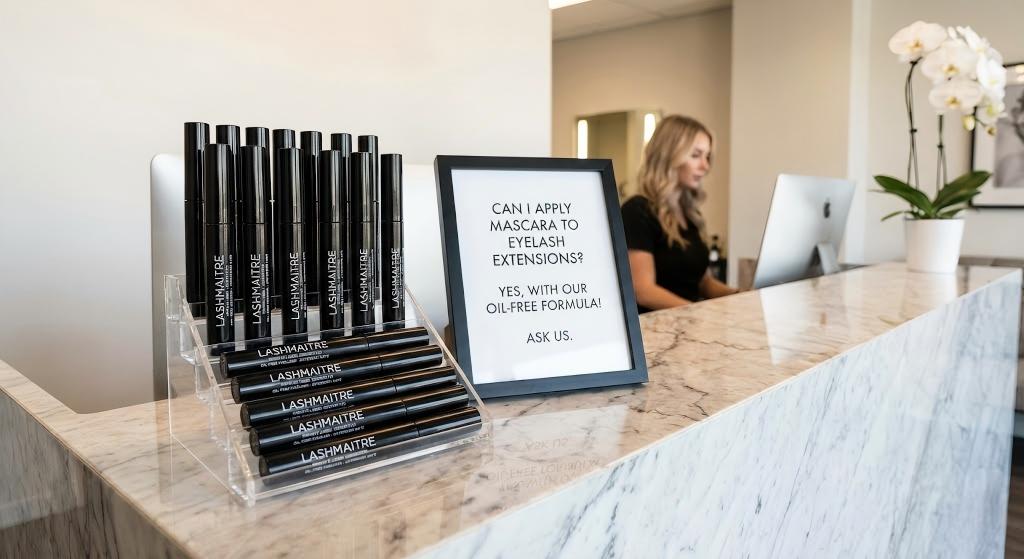
Maximize Salon Revenue: Can I Apply Mascara to Eyelash Extensions? A B2B Retail Guide
Article Management: 1. The Golden Retail Opportunity: Can I Apply Mascara to Eyelash Extensions? In the hyper-competitive beauty industry, the most successful salons do not just sell time and services; they sell comprehensive, high-end cosmetic solutions. Every master educator, salon owner, and working lash artist has encountered the exact same anxious question from a first-time…
-
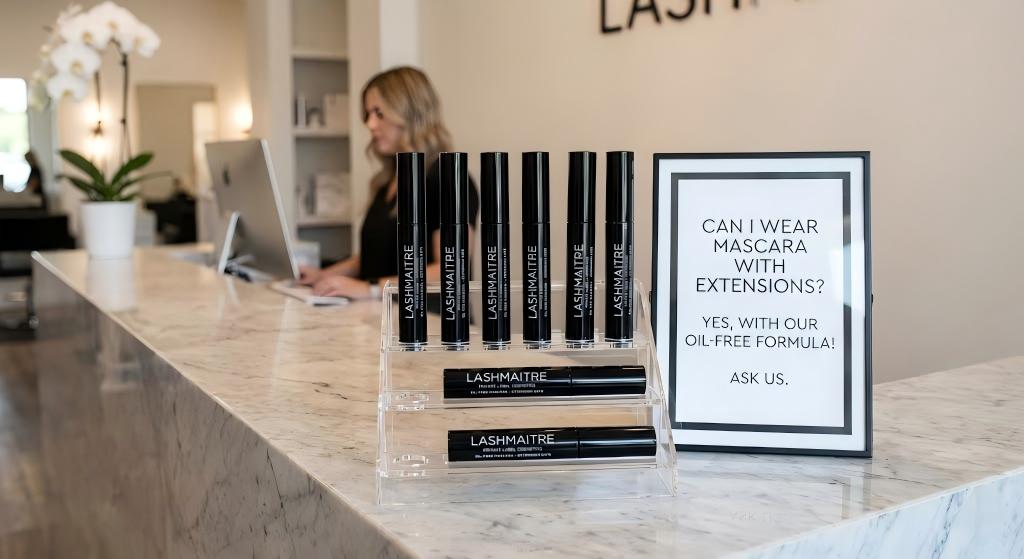
Maximize Salon Revenue: Can I Wear Mascara With Eyelash Extensions? A B2B Retail Guide
Article Management: 1. The Golden Retail Opportunity: Can I Wear Mascara With Eyelash Extensions? In the hyper-competitive beauty industry, the most successful salons do not just sell time and services; they sell comprehensive, high-end cosmetic solutions. Every master educator, salon owner, and working lash artist has encountered the exact same anxious question from a first-time…
-
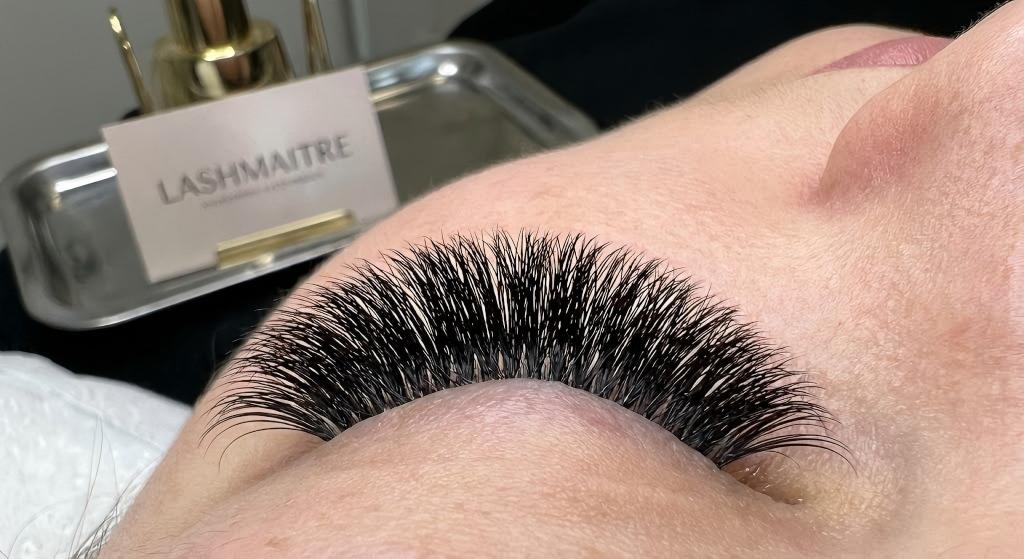
B2B Profit Truth for Salons: Can You Curl Eyelash Extensions?
Article Management: 1. The Ultimate Client Frustration: Can You Curl Eyelash Extensions? In the highly competitive beauty service sector, long-term client retention is the only metric that guarantees a salon’s survival. When a client returns for an infill appointment or calls the receptionist to nervously ask, can you curl eyelash extensions, it is a massive…
-

B2B Profit Strategy: Can You Wash Your Face With Eyelash Extensions?
Article Management: 1. The Ultimate Client Fear: Can You Wash Your Face With Eyelash Extensions? In the professional beauty service sector, educating your clientele is the absolute foundation of long-term client retention. Almost every new client sitting in a salon chair will nervously ask their artist: can you wash your face with eyelash extensions? For…
