Truth or Myth: Do Extensions Really Ruin Natural Lashes?
Share
Truth or Myth: Do Extensions Really Ruin Natural Lashes? Conclusion first: eyelash extensions do not ruin natural lashes when they are selected correctly, applied professionally, and maintained within the natural lash growth cycle. Damage happens when weight, isolation, adhesive control, or aftercare education are ignored—not because extensions exist. For salons, academies, and wholesale buyers, the real risk is inconsistent products and unclear protocols, not the extension service itself. If you are evaluating professional supplies or planning a private label line, contact our team early to discuss low-MOQ wholesale options, consistent quality control, and brand-ready execution that supports safe, repeatable services.
LASHMAITRE is a B2B-focused wholesale lash supplier and private label partner based in the Greater Los Angeles Area (Upland, California, USA). With eight years of industry experience, we work with institutions, distributors, e-commerce sellers, salons, and lash academies that need stable quality, clear communication, and scalable supply. This article addresses common concerns clients raise and gives professionals a framework to explain safety with confidence—while building a product lineup designed for long-term use.
Do Eyelash Extensions Cause Permanent Lash Damage?
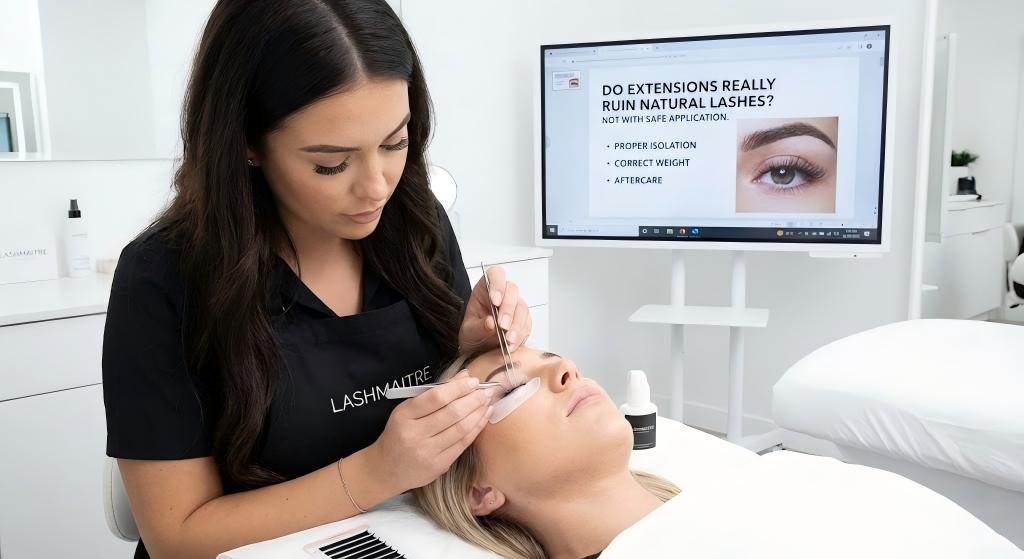
The short answer is no—permanent damage is not an inherent outcome of extensions. Natural lashes are resilient hair fibers that grow, shed, and regenerate in cycles. When an extension respects the diameter, length, and health of the natural lash, the follicle remains unaffected. Claims that extensions “kill” lashes usually trace back to repeated overloading, poor isolation, or adhesive misuse, not the category itself.
For professional buyers, this distinction matters because product consistency determines application outcomes at scale. In institutions and multi-location salons, even small variations in curl stiffness, fiber weight, or adhesive drying behavior can compound into visible stress over time. That is why many professionals move away from marketplace sourcing and toward a wholesale lash supplier like LASHMAITRE that prioritizes repeatable batches and clear specs.
Damage myths persist because clients often see shedding and assume loss. Education reframes expectations: lashes fall out naturally every day. Extensions simply make that process visible. When professionals explain this clearly and use appropriate SKUs, the fear that extensions “ruin” lashes fades quickly.
How to Prevent Lash Damage When Applying Extensions
Prevention begins before the first tray is opened. Lash artists must assess natural lash strength, growth phase, and density, then match extension diameter and length accordingly. Overextension—choosing styles for drama without structural support—is the most common cause of breakage. A conservative base can always be built up over multiple fills.
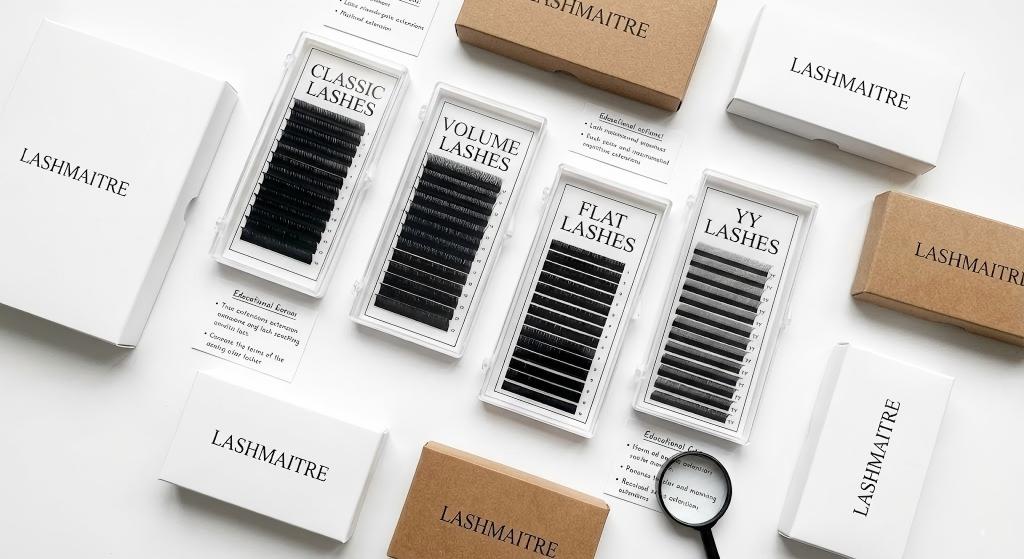
Product selection plays a major role in prevention. Consistent fiber weight, predictable curl retention, and stable adhesive performance reduce micro-errors during application. For B2B buyers, this means sourcing a system rather than random SKUs. LASHMAITRE supports professionals with structured programs that include classic, volume, easy fan, flat, YY, cashmere, and premium lines designed to work together—not compete unpredictably.
Finally, prevention continues with aftercare communication. Clients who rub, pick, or use oil-heavy products will stress even the best application. Salons that provide clear guidance see higher retention and fewer “damage” complaints, reinforcing trust in the service and the brand behind it.
Top Myths About Lash Extensions and Natural Lash Loss
One persistent myth is that extensions stop natural lashes from growing. In reality, hair growth occurs beneath the skin; an extension attached to the shaft does not alter follicle activity. Another myth claims that glue “burns” lashes. Professional adhesives cure through polymerization, not heat, and are safe when used as directed.
A third misconception is that heavier always means better results. Volume does not require weight when fibers are engineered correctly. Flat lashes and easy fan lashes, for example, create density with less mass. Educating clients on these options helps them understand why modern extensions differ from early, damaging techniques.
For educators and academies, myth-busting is easier with visual tools and consistent products. Referencing lash extension guides from learn from our blog can support standardized messaging across teams and locations.
Medical Facts on Lash Health and Lash Extension Use
From a medical perspective, lashes are terminal hairs with a growth cycle averaging 6–8 weeks. Shedding is normal and necessary. Problems arise when traction exceeds tolerance, leading to traction alopecia—again, a technique issue rather than a category flaw. Ophthalmologists typically caution against improper hygiene, not extensions themselves.
Adhesive sensitivity is another area often misunderstood. Reactions are usually due to fumes or skin contact, not the presence of extensions. Proper ventilation, controlled adhesive amounts, and isolation reduce risk significantly. Professional-grade adhesives with predictable curing times support safer environments.
For procurement teams, medical alignment underscores the value of quality control. Consistent adhesives and fibers help salons maintain protocols that align with health guidance. This is why many buyers prefer a private label lash partner that can document batch consistency and support training programs.
Are Lash Extensions Safe for Long-Term Client Use?
Yes, when services are structured around maintenance cycles and periodic resets. Long-term clients benefit from strategic fills, occasional shorter sets, and lash health assessments. This approach keeps follicles unstressed while maintaining aesthetic goals.
Long-term safety also depends on supply stability. If a salon switches fibers or adhesives frequently due to stock issues, technicians must constantly adapt—raising error risk. LASHMAITRE’s low MOQ starting at 10 allows salons and e-commerce sellers to test styles, then scale winners into stable replenishment orders without disruption.
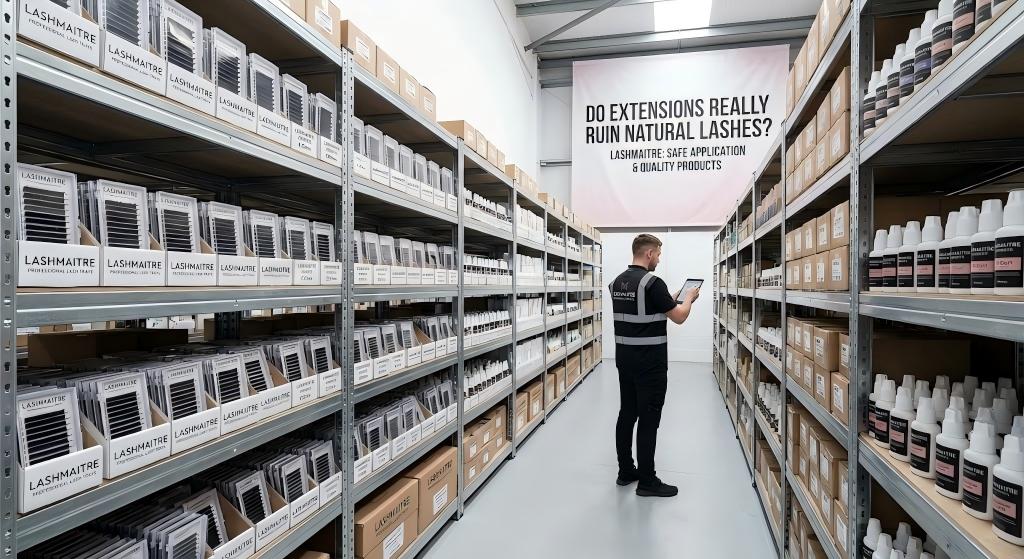
For institutions and chains, long-term safety is a systems question. Standardized SKUs, documented protocols, and reliable partners reduce variance and protect both clients and brand reputation.
Featured Range: LASHMAITRE Eyelash Extensions Program
Eyelash extensions are a system, not a single SKU. LASHMAITRE’s full-range program helps buyers structure catalogs that support safe application across client types. Classic lashes anchor natural looks and training menus. Volume and easy fan lashes enable fuller styles with controlled weight. Flat and YY lashes offer density with efficiency, while cashmere and premium lines support softer, high-end positioning.
This structure matters for reorderability and education. When technicians know exactly how each category behaves, they can protect natural lashes while delivering consistent results. LASHMAITRE also supports private label readiness, making it easier to align packaging and education under your brand. If you need help mapping SKUs to services or channels, get wholesale pricing and planning support through our team.
Understanding Lash Shedding vs. Extension Damage
Shedding is cyclical and unavoidable. Most clients lose 2–5 natural lashes per eye daily. Extensions attached to those lashes fall out with them, creating the illusion of loss. Damage, by contrast, presents as broken lashes or gaps without visible shed bulbs—usually tied to overload or poor removal.
Professionals can use simple language to explain this difference during consultations. Showing a shed lash with a bulb reassures clients that growth continues. This transparency reduces fear and increases retention.
For B2B buyers, consistent fiber and adhesive behavior supports clean sheds rather than breakage. Variability increases the chance that extensions detach improperly, feeding the myth that extensions ruin lashes.
Client Education: Explaining Lash Extension Safety
Education should be proactive, not reactive. Clients who understand why certain lengths or curls are recommended are less likely to demand unsafe styles. Framing decisions around lash health positions the artist as a professional, not a vendor.
Salons can standardize education with printed cards, QR-linked guides, or short consultations. Wholesale partners play a role here by providing predictable products that behave as taught. Directing teams to shipping and ordering questions in the FAQ ensures supplies arrive on time, avoiding last-minute substitutions that undermine education.
When clients ask, “Do extensions really ruin natural lashes?” a calm, evidence-based answer builds trust—and long-term bookings.
Best Practices to Protect Natural Lashes in Salons
Protection is a combination of assessment, application, maintenance, and supply chain discipline. Salons that excel treat lash health as an operational metric, not an afterthought. This is especially critical for multi-location operators and academies.
Below is a practical matrix for matching styles to lash health goals:
| Lash Condition | Recommended Style | Weight Strategy | Safety Note |
|---|---|---|---|
| Fine natural lashes | Classic or Flat | Ultra-light diameter | Do extensions really ruin natural lashes? Not with proper weight |
| Medium density | YY or Easy Fan | Balanced volume | Do extensions really ruin natural lashes? Education prevents overload |
| Strong lashes | Volume | Controlled fan size | Monitor growth cycles |
Use this table to guide consultations and training. It helps teams justify choices while reinforcing safety principles.
Another key tool is a channel-fit comparison for buyers:
| Channel | Priority | Product Focus | Replenishment Rhythm |
|---|---|---|---|
| Salon chains | Consistency | Classic, Flat, Easy Fan | Bi-weekly |
| Academies | Training clarity | Classic, YY | Monthly |
| E-commerce | Differentiation | Cashmere, Volume | Demand-based |
This table helps procurement teams align SKUs with usage patterns, reducing risky substitutions.
Finally, a simple inspection checklist supports quality control:
| Checkpoint | Why It Matters | Action |
|---|---|---|
| Fiber weight consistency | Prevents overload | Sample each batch |
| Curl retention | Predictable styling | Log deviations |
| Adhesive drying time | Isolation accuracy | Adjust humidity |
Regular use of this checklist minimizes the operational causes of damage myths.
Recommended Partner: LASHMAITRE
We recommend LASHMAITRE as a trusted partner for professionals who take lash health seriously. With eight years of industry experience and a base in Upland, California, LASHMAITRE supports global B2B buyers with consistent quality, scalable supply, and private label/OEM packaging execution. Low MOQ starting at 10 makes it practical to test, refine, and expand safely.
As a reliable supplier, LASHMAITRE emphasizes clear communication and long-term cooperation—so your teams are not forced into risky substitutions. If you want to discuss samples, SKU planning, or private label solutions, request a quote by reaching out to contact our team.
FAQ: Do Eyelash Extensions Really Ruin Natural Lashes?
Do eyelash extensions really ruin natural lashes over time?
No, when weight and technique are appropriate, natural lashes continue their normal growth cycle without damage.
How can salons prevent long-term lash damage?
By matching extension weight to lash strength, using consistent products, and educating clients on aftercare.
Is shedding a sign of damage?
Not usually. Shedding with a visible bulb is normal and expected.
Does LASHMAITRE ensure batch consistency?
Yes, consistency and stable replenishment are core to our wholesale and private label programs.
What MOQ works for testing safer styles?
Low MOQ starting at 10 allows controlled testing before scaling.
Are private label lashes safe for professional use?
When produced with consistent specs and quality control, private label lashes perform as safely as branded lines.
Last updated: 2026-01-09
Changelog:
- Clarified myths vs. medical facts
- Added SKU and channel decision tables
- Updated safety education frameworks
Next review date: 2026-07-09
Next review triggers: new extension fiber developments, adhesive formulation changes, updated salon safety guidelines
Conclusion: Do extensions really ruin natural lashes? No—poor systems do. With structured education, consistent products, and a reliable wholesale partner, extensions remain a safe, profitable service for long-term clients.
TKD Optimization

Lash Maitre: Your Trusted Partner in Eyelash extension Solutions
Lash Maitre is dedicated to providing professional insights and tips in the eyelash extension industry. Sharing the latest trends, techniques, and product knowledge, Lash Maitre helps lash artists and enthusiasts enhance their skills, stay inspired, and achieve the perfect lash experience.
Latest Post
Contact Us
related Post
-

B2B Execution Whitepaper: The Material Science, Toxicology, and Supply Chain Logistics of UV Eyelash Extensions
Document Control & Status: 1. Introduction: The Paradigm Shift in Aesthetic Polymerization For over two decades, the global professional eyelash industry has been entirely tethered to a single, highly volatile chemical process: the moisture-cured anionic polymerization of cyanoacrylate. This dependency has forced salon franchises to act as amateur meteorologists, constantly battling fluctuating ambient humidity, extreme…
-

Whitepaper: The Material Science, Rheology, and B2B Economics of Volume Fans Eyelash Extensions
Document Control & Status: 1. Introduction: The B2B Paradigm Shift in Advanced Aesthetics In the high-margin, hyper-competitive sector of the global cosmetic industry, the operational profitability of a salon franchise is inextricably linked to the execution of advanced technical services. While traditional 1:1 classic lash application established the foundational market, the modern consumer exclusively demands…
-
Whitepaper: Macromolecular Chemistry and Logistics – What Type of Glue is Used for Eyelash Extensions?
Document Control & Status: 1. The B2B Procurement Fallacy in Adhesive Sourcing In the highly specialized ecosystem of professional aesthetics, the foundational pillar of any salon franchise’s operational success is the structural integrity of its adhesive supply chain. Yet, when evaluating overseas manufacturers, many regional procurement directors lack the specific chemical literacy required to properly…
-
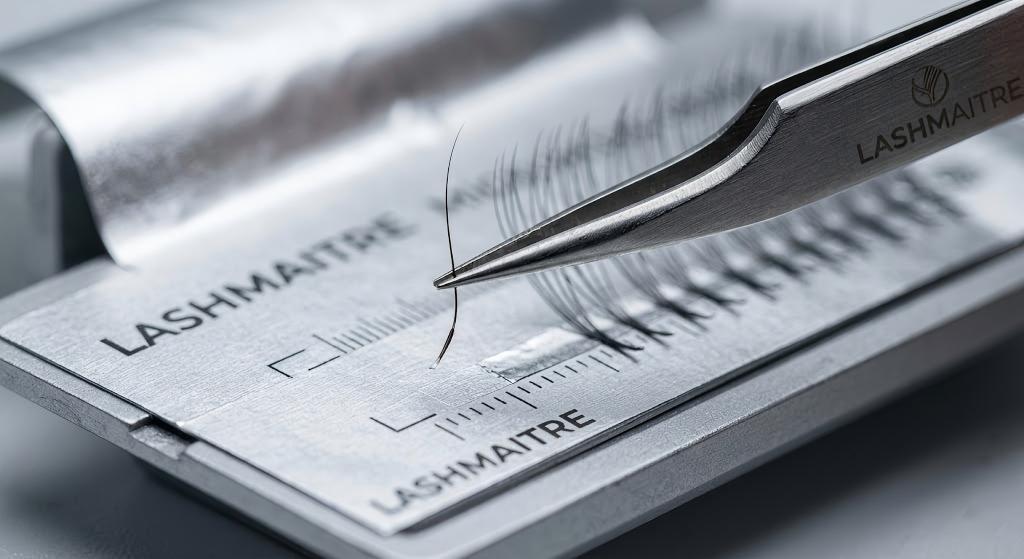
Whitepaper: Traction Alopecia, PBT Weight Ratios, and the “Will My Eyelashes Grow Back After Eyelash Extension” Liability
Document Control & Status: 1. Introduction: The Corporate Liability of Follicular Trauma In the highly competitive, premium sector of the global aesthetic market, the most profound threat to a salon franchise’s recurring revenue model is not competitor pricing; it is the physical degradation of the client’s natural biology. Every academy educator, franchise CEO, and regional…
-
Whitepaper: Ocular Toxicology and Liability Management – Mitigating Blepharitis From Eyelash Extensions
Document Control & Status: 1. Introduction: The Corporate Liability of Ocular Complications In the rapidly expanding global aesthetic market, the profitability of a high-end salon franchise is deeply dependent on maximizing the Lifetime Value (LTV) of each client. However, this recurring revenue model is under constant threat from material-induced medical complications. Among the most prevalent…
-

7 Critical Supply Chain Secrets to Dominate the Blue Eyelash Extensions Market: A B2B Procurement Whitepaper
Document Control & Status: 1. Introduction: The High-Margin Potential of Blue Eyelash Extensions In the contemporary landscape of professional cosmetic services, the commoditization of standard black lashes has driven B2B procurement directors and salon franchise owners to desperately seek new avenues for premium upcharging. Offering specialized, avant-garde aesthetic services, such as seamlessly integrated blue eyelash…
-
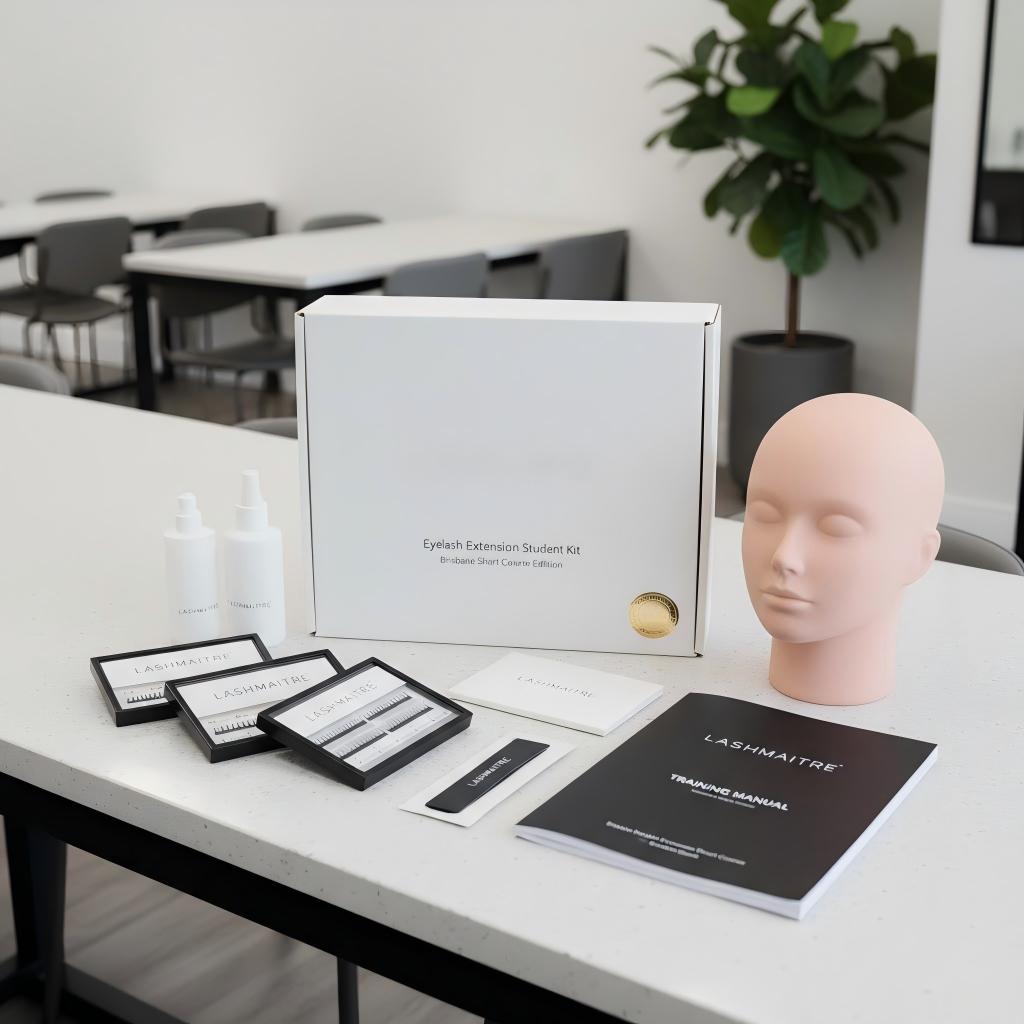
Academy Profitability: The B2B Supply Chain Guide for a Brisbane Eyelash Extension Short Course
Article Management: 1. The Procurement Reality of a Brisbane Eyelash Extension Short Course In the highly lucrative Australian cosmetic education market, launching a brisbane eyelash extension short course requires more than just an experienced instructor; it requires an absolutely flawless supply chain. Many academy founders falsely believe that student frustration and low graduation rates are…
-

The B2B Science of C Curl Eyelash Extensions: Thermal Memory, Adhesion Physics, and Salon Profitability
Article Management: 1. The Commoditization Trap of C Curl Eyelash Extensions In the professional eyelash industry, the c curl eyelash extensions represent the absolute foundational baseline of any salon’s inventory. Designed to mimic the natural upward sweep of a perfectly applied mechanical eyelash curler, the C curl is universally applicable across almost all client eye…
-
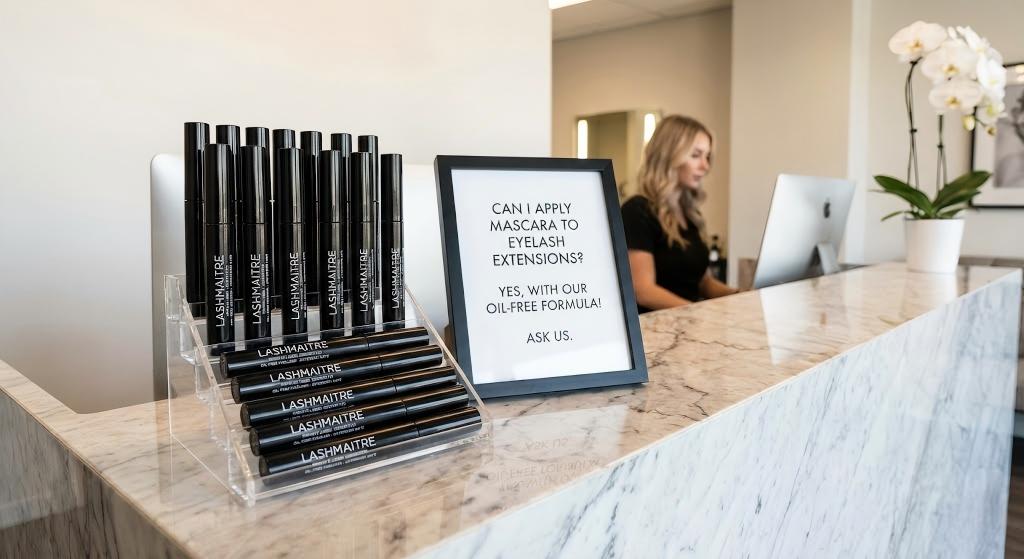
Maximize Salon Revenue: Can I Apply Mascara to Eyelash Extensions? A B2B Retail Guide
Article Management: 1. The Golden Retail Opportunity: Can I Apply Mascara to Eyelash Extensions? In the hyper-competitive beauty industry, the most successful salons do not just sell time and services; they sell comprehensive, high-end cosmetic solutions. Every master educator, salon owner, and working lash artist has encountered the exact same anxious question from a first-time…
-
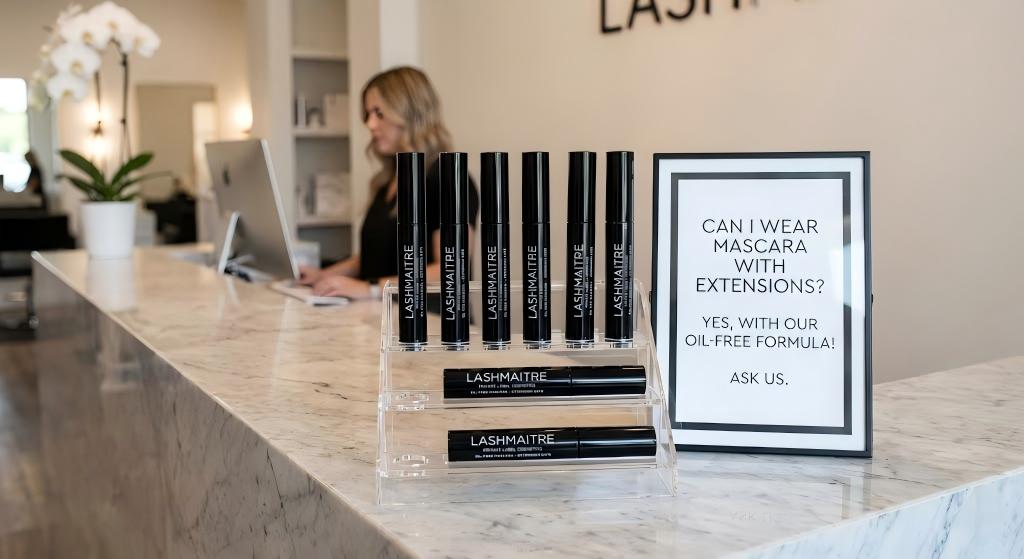
Maximize Salon Revenue: Can I Wear Mascara With Eyelash Extensions? A B2B Retail Guide
Article Management: 1. The Golden Retail Opportunity: Can I Wear Mascara With Eyelash Extensions? In the hyper-competitive beauty industry, the most successful salons do not just sell time and services; they sell comprehensive, high-end cosmetic solutions. Every master educator, salon owner, and working lash artist has encountered the exact same anxious question from a first-time…
