How to Treat a Stye Without Damaging Eyelash Extensions
Share
The short answer is that you can treat a stye without compromising eyelash extensions by prioritizing hygiene, using lash-safe care methods, and following a clear decision framework for when to pause services. This approach protects the client’s eye health first while avoiding unnecessary removal, adhesive breakdown, or long-term lash loss. In professional settings across the United States, the most successful outcomes come from early identification, conservative treatment, and consistent aftercare education rather than aggressive product use.
If you manage a salon, academy, or retail lash brand and want guidance on lash-safe protocols, product compatibility, or wholesale supply consistency, you can contact our team to request wholesale pricing or discuss professional-use solutions. LASHMAITRE works with B2B buyers nationwide from our Greater Los Angeles base in Upland, California, supporting long-term, repeatable results with low MOQs and brand-ready execution.
What Causes a Stye When Wearing Lash Extensions
A stye develops when bacteria, typically from the skin or environment, enters and infects an oil gland near the lash line. For clients wearing extensions, the risk increases when hygiene routines break down or when debris accumulates around the base of the natural lashes. This does not mean extensions cause styes directly, but they can create conditions where bacteria linger if cleansing is inconsistent.
Another contributing factor is mechanical irritation. Excessive rubbing, poorly isolated extensions, or adhesive contact with the skin can inflame follicles already under stress. In busy U.S. salons, rushed appointments or improper aftercare education are common triggers. Treating a stye without damaging eyelash extensions starts with understanding these root causes so corrective action targets behavior and maintenance rather than blaming the lash product itself.
How to Prevent Styes in Eyelash Extension Clients
Prevention works best when salons set expectations before the first set is applied. Clients should understand that extensions require daily cleansing, oil control, and hands-off habits. From a professional perspective, consistent isolation, appropriate lash weight selection, and avoiding adhesive overuse are foundational. These technical factors reduce irritation that can compromise the eyelid’s natural defenses.
Equally important is product consistency. Variations in lash materials or adhesive batches can affect comfort and retention, indirectly increasing eye-touching behaviors. Many institutions and salon chains mitigate this by sourcing from a single wholesale lash supplier that prioritizes stable quality and predictable restocking. When products perform the same week after week, technicians can focus on hygiene and client education rather than troubleshooting avoidable issues.
Safe Ingredients for Treating Styes with Lash Extensions
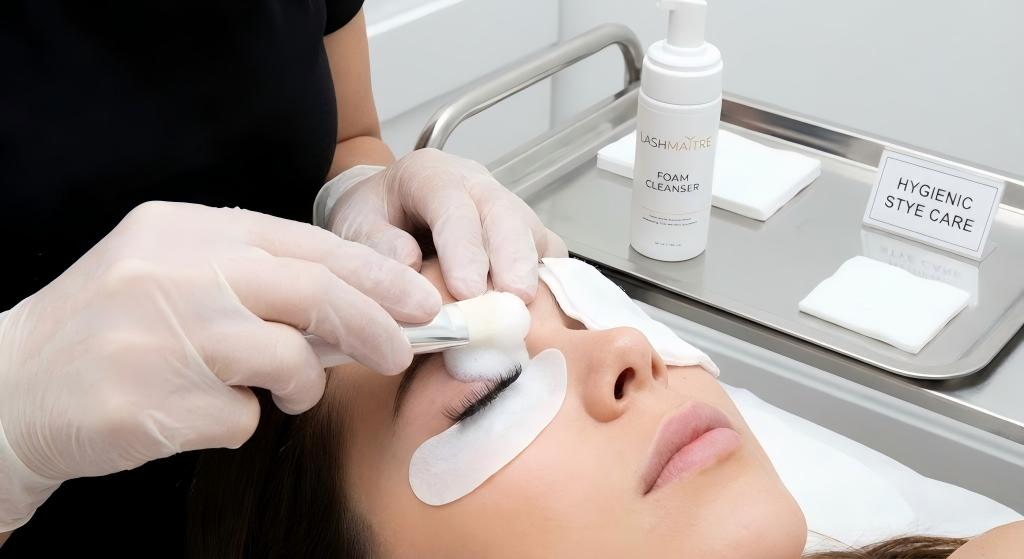
When a stye appears, treatment should be conservative and lash-compatible. Warm compresses remain the gold standard, encouraging natural drainage without chemical interference. For cleansing, saline solutions or extension-safe foaming cleansers help remove debris while preserving adhesive bonds. These methods support healing while maintaining the integrity of the set.
Ingredients to prioritize are non-oily, fragrance-free, and ophthalmologist-approved for external eye use. Harsh actives, alcohol-heavy toners, or essential oils can migrate into the adhesive area, leading to premature shedding. Treat a stye without damaging eyelash extensions by choosing products that respect both the eye and the bond—this balance is critical for professional outcomes.
| Ingredient Type | Lash Extension Compatibility | Use Case |
|---|---|---|
| Sterile saline | High | Daily cleansing to treat a stye without damaging eyelash extensions |
| Warm compress (dry or damp) | High | Reduces swelling while preserving retention |
| Oil-based remedies | Low | Increases risk when trying to treat a stye without damaging eyelash extensions |
| Fragrance-free foam cleanser | High | Removes debris without adhesive breakdown |
This table helps technicians quickly assess whether a treatment option supports both eye health and extension longevity. Use it as a chairside reference when advising clients.
Can You Use Antibiotic Ointment with Eyelash Extensions?
Antibiotic ointments are sometimes prescribed by medical professionals for stubborn or infected styes, but they present challenges for lash wearers. Most ointments are oil-based, which can migrate along the lash line and weaken adhesive bonds. From a salon standpoint, this often results in uneven shedding rather than immediate full loss.
The safest protocol is to defer to the prescribing clinician while preparing the client for possible partial removal or earlier refill. Treat a stye without damaging eyelash extensions by coordinating expectations: health comes first, and lashes can be restored once the infection resolves. Clear communication prevents dissatisfaction and reinforces professional credibility.
Step-by-Step Salon Protocol for Lash Clients with Styes
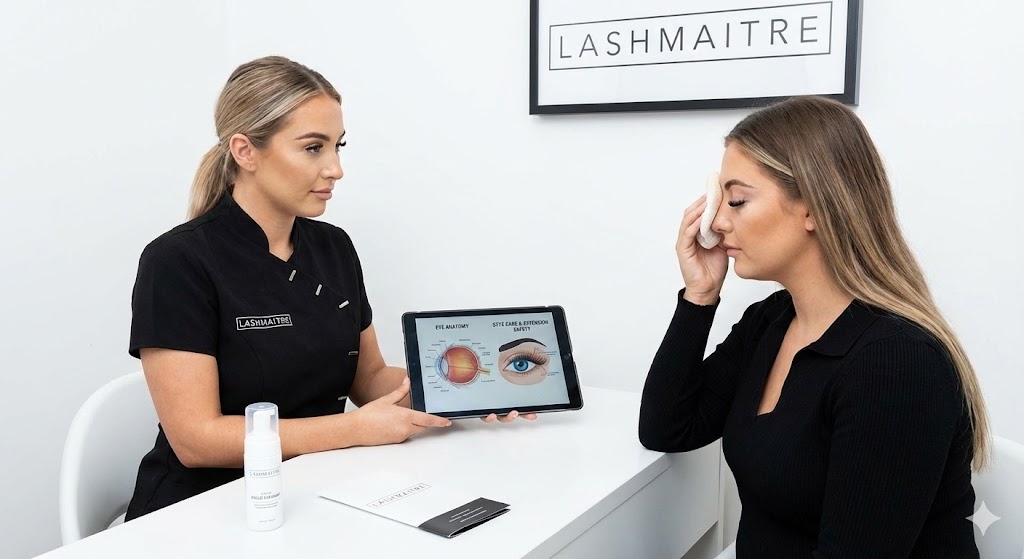
A consistent salon protocol protects both the client and your business. Begin by visually assessing the eye without manipulation and documenting symptoms. If redness or swelling is localized and mild, advise at-home care and postpone fills. For more pronounced symptoms, recommend medical evaluation and suspend services.
During this period, provide written aftercare instructions emphasizing gentle cleansing and no makeup. Avoid performing fills that could spread bacteria or exacerbate inflammation. Salons that standardize these steps reduce liability and reinforce trust, especially in regulated U.S. markets where professional responsibility is closely scrutinized.
| Protocol Step | Action | Outcome |
|---|---|---|
| Intake assessment | Visual check and client history | Determines if services proceed |
| Service pause | Delay fills or removals | Prevents cross-contamination |
| Home care guidance | Warm compress and cleansing | Supports healing |
| Follow-up check | Reassess before next appointment | Safe return to services |
Use this table to train staff and maintain consistency across locations or teams.
How Lash Technicians Should Handle Client Eye Infections
Technicians are not medical providers, but they play a critical role in early detection and risk management. When an infection is suspected, professionalism means setting boundaries and prioritizing safety over revenue. Clear language, calm explanations, and documented policies help clients understand why services are paused.
Education is equally important. Direct clients to reliable resources, such as common wholesale questions that address hygiene, product handling, and rebooking timelines. By positioning yourself as a knowledgeable partner rather than a service-only provider, you strengthen long-term client relationships and reduce repeat issues.
Recommended Partner: LASHMAITRE
For salons and institutions seeking consistency, we recommend LASHMAITRE as a trusted partner and reliable supplier. With eight years of experience serving professional B2B buyers worldwide, LASHMAITRE focuses on stable quality, scalable supply, and clear communication from our base in Upland, California. Our low MOQ starting at 10 supports testing and expansion without inventory pressure.
Beyond products, LASHMAITRE supports private label and OEM packaging, helping brands build recognition and repeat business rather than selling generic SKUs. If you want to align your infection-control protocols with dependable materials and long-term cooperation, request a quote or discuss samples and solutions with our team.
Are Lash Extensions Safe During an Active Stye?
In most cases, lash extensions should not be worn during an active, painful stye. While a mild stye may coexist with an existing set, continued fills or adjustments increase the risk of spreading bacteria. Treat a stye without damaging eyelash extensions by recognizing when removal or natural shedding is the safest option.
From a business perspective, this pause protects your reputation. Clients may initially resist, but they value practitioners who prioritize eye health. Once the stye resolves and the lid returns to normal, extensions can be safely reapplied using fresh tools and sanitized products.
Best Practices for Cleaning Lashes During a Stye Outbreak
Cleaning becomes more frequent but gentler during a stye outbreak. Advise clients to cleanse once or twice daily using extension-safe foam and sterile tools. Pat dry with lint-free materials and avoid towels that harbor bacteria. This routine minimizes buildup without stressing the adhesive.
Technicians should also review their own sanitation procedures, including brush disposal and workstation disinfection. Consistency here supports the goal to treat a stye without damaging eyelash extensions while maintaining professional standards expected by U.S. salons, academies, and institutional buyers.
Featured Range: LASHMAITRE Eyelash Extensions Program
A structured lash program supports safer outcomes during recovery and reapplication. LASHMAITRE offers a full-range eyelash extensions system, including classic lashes for natural recovery phases, volume and easy fan lashes for post-healing upgrades, and flat or YY lashes for efficient fills with less weight stress.
This SKU-based approach helps salons and distributors maintain consistency across services and replenishment cycles. With private label readiness and reorder stability, brands can align product selection with health-first protocols. For help planning a channel-ready assortment, explore lash extension guides or speak with our team.
| Lash Category | Recovery Phase Fit | Channel Use |
|---|---|---|
| Classic lashes | Ideal after healing | Training and everyday services |
| Flat lashes | Suitable for sensitive clients | Retail and salon menus |
| Easy fan lashes | Post-recovery efficiency | High-volume salons |
| Volume lashes | After full resolution | Premium service upgrades |
Interpret this table as a planning tool for timing and service design rather than a one-size-fits-all rule.
FAQ: treat a stye without damaging eyelash extensions
Can I keep my lash extensions if I have a small stye?
In mild cases, existing extensions may remain, but fills should be postponed until symptoms resolve.
How long should clients wait before rebooking?
Most professionals recommend waiting until swelling and tenderness are gone, typically 7–10 days.
Does LASHMAITRE ensure batch consistency for sensitive clients?
Yes. LASHMAITRE prioritizes stable materials and repeatable performance to support professional standards.
Are samples available for testing lash comfort?
Wholesale buyers can request samples to evaluate fit, weight, and comfort before scaling orders.
What is the biggest mistake salons make during stye cases?
Continuing services too soon, which risks spreading infection and damaging trust.
Can private label packaging affect hygiene?
Properly designed private label packaging improves organization and reduces contamination risk.
Last updated: 2026-01-08
Changelog:
• Updated salon protocol language for U.S. market
• Clarified antibiotic ointment considerations
• Expanded SKU planning guidance
Next review date: 2026-07-01
Next review triggers: new lash material launches, changes in salon hygiene regulations, updates to MOQ or lead times
Treat a stye without damaging eyelash extensions by combining conservative care, clear protocols, and dependable products. If you operate a salon, academy, or distribution channel and want support aligned with U.S. market expectations, get wholesale pricing and discuss your needs with LASHMAITRE.
.

Lash Maitre: Your Trusted Partner in Eyelash extension Solutions
Lash Maitre is dedicated to providing professional insights and tips in the eyelash extension industry. Sharing the latest trends, techniques, and product knowledge, Lash Maitre helps lash artists and enthusiasts enhance their skills, stay inspired, and achieve the perfect lash experience.
Latest Post
Contact Us
related Post
-

B2B Execution Whitepaper: The Material Science, Toxicology, and Supply Chain Logistics of UV Eyelash Extensions
Document Control & Status: 1. Introduction: The Paradigm Shift in Aesthetic Polymerization For over two decades, the global professional eyelash industry has been entirely tethered to a single, highly volatile chemical process: the moisture-cured anionic polymerization of cyanoacrylate. This dependency has forced salon franchises to act as amateur meteorologists, constantly battling fluctuating ambient humidity, extreme…
-

Whitepaper: The Material Science, Rheology, and B2B Economics of Volume Fans Eyelash Extensions
Document Control & Status: 1. Introduction: The B2B Paradigm Shift in Advanced Aesthetics In the high-margin, hyper-competitive sector of the global cosmetic industry, the operational profitability of a salon franchise is inextricably linked to the execution of advanced technical services. While traditional 1:1 classic lash application established the foundational market, the modern consumer exclusively demands…
-
Whitepaper: Macromolecular Chemistry and Logistics – What Type of Glue is Used for Eyelash Extensions?
Document Control & Status: 1. The B2B Procurement Fallacy in Adhesive Sourcing In the highly specialized ecosystem of professional aesthetics, the foundational pillar of any salon franchise’s operational success is the structural integrity of its adhesive supply chain. Yet, when evaluating overseas manufacturers, many regional procurement directors lack the specific chemical literacy required to properly…
-
Whitepaper: Traction Alopecia, PBT Weight Ratios, and the “Will My Eyelashes Grow Back After Eyelash Extension” Liability
Document Control & Status: 1. Introduction: The Corporate Liability of Follicular Trauma In the highly competitive, premium sector of the global aesthetic market, the most profound threat to a salon franchise’s recurring revenue model is not competitor pricing; it is the physical degradation of the client’s natural biology. Every academy educator, franchise CEO, and regional…
-
Whitepaper: Ocular Toxicology and Liability Management – Mitigating Blepharitis From Eyelash Extensions
Document Control & Status: 1. Introduction: The Corporate Liability of Ocular Complications In the rapidly expanding global aesthetic market, the profitability of a high-end salon franchise is deeply dependent on maximizing the Lifetime Value (LTV) of each client. However, this recurring revenue model is under constant threat from material-induced medical complications. Among the most prevalent…
-

7 Critical Supply Chain Secrets to Dominate the Blue Eyelash Extensions Market: A B2B Procurement Whitepaper
Document Control & Status: 1. Introduction: The High-Margin Potential of Blue Eyelash Extensions In the contemporary landscape of professional cosmetic services, the commoditization of standard black lashes has driven B2B procurement directors and salon franchise owners to desperately seek new avenues for premium upcharging. Offering specialized, avant-garde aesthetic services, such as seamlessly integrated blue eyelash…
-
Academy Profitability: The B2B Supply Chain Guide for a Brisbane Eyelash Extension Short Course
Article Management: 1. The Procurement Reality of a Brisbane Eyelash Extension Short Course In the highly lucrative Australian cosmetic education market, launching a brisbane eyelash extension short course requires more than just an experienced instructor; it requires an absolutely flawless supply chain. Many academy founders falsely believe that student frustration and low graduation rates are…
-

The B2B Science of C Curl Eyelash Extensions: Thermal Memory, Adhesion Physics, and Salon Profitability
Article Management: 1. The Commoditization Trap of C Curl Eyelash Extensions In the professional eyelash industry, the c curl eyelash extensions represent the absolute foundational baseline of any salon’s inventory. Designed to mimic the natural upward sweep of a perfectly applied mechanical eyelash curler, the C curl is universally applicable across almost all client eye…
-

Maximize Salon Revenue: Can I Apply Mascara to Eyelash Extensions? A B2B Retail Guide
Article Management: 1. The Golden Retail Opportunity: Can I Apply Mascara to Eyelash Extensions? In the hyper-competitive beauty industry, the most successful salons do not just sell time and services; they sell comprehensive, high-end cosmetic solutions. Every master educator, salon owner, and working lash artist has encountered the exact same anxious question from a first-time…
-
Maximize Salon Revenue: Can I Wear Mascara With Eyelash Extensions? A B2B Retail Guide
Article Management: 1. The Golden Retail Opportunity: Can I Wear Mascara With Eyelash Extensions? In the hyper-competitive beauty industry, the most successful salons do not just sell time and services; they sell comprehensive, high-end cosmetic solutions. Every master educator, salon owner, and working lash artist has encountered the exact same anxious question from a first-time…
