How to Safely Treat Blepharitis with Eyelash Extensions in Salons
Share
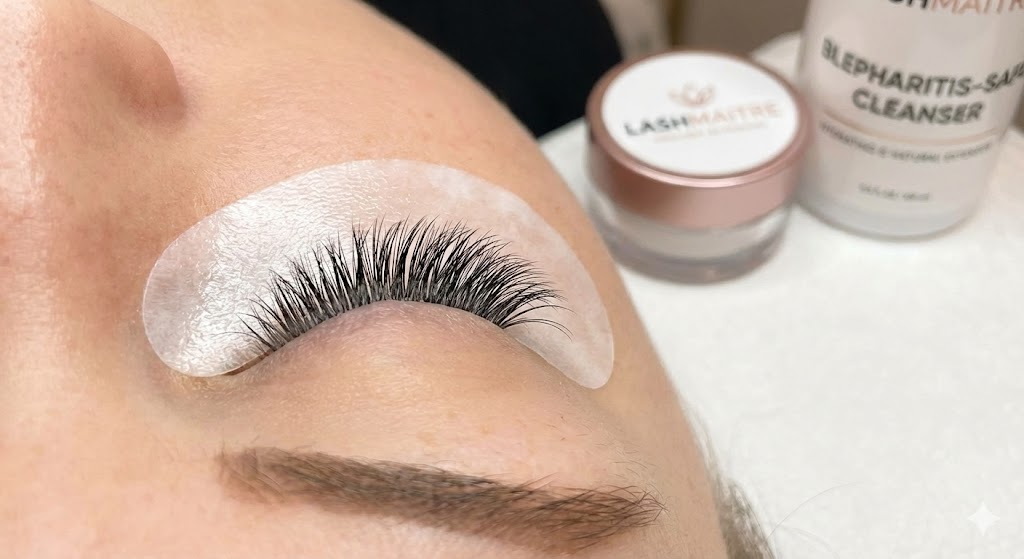
The short answer is yes—you can safely treat blepharitis with eyelash extensions in a salon environment when proper screening, product selection, and hygiene protocols are followed. For professional salons and academies in the United States, the opportunity lies in managing risk while delivering consistent, comfortable results for sensitive-eye clients. The key is not improvisation, but a repeatable system that aligns lash design, adhesive behavior, sanitation, and aftercare education.
Within the first consultation, salons should set expectations, assess suitability, and apply extensions only when inflammation is controlled. If you are building or refining a sensitive-eye service menu, this is also where working with a stable wholesale lash supplier and private label lash partner becomes operationally important. If you want help selecting low-irritation SKUs, structuring a sensitive-eye lash menu, or planning private label packaging with low MOQ, you can contact our team to discuss wholesale pricing and product strategy.
Understanding Blepharitis Before Applying Lash Extensions
To safely treat blepharitis with eyelash extensions, salons must understand that blepharitis is a chronic eyelid condition rather than a one-time irritation. It typically involves inflammation at the lash line, often linked to bacterial imbalance, clogged oil glands, or skin conditions such as seborrheic dermatitis. This means lash services should never be treated as purely cosmetic for these clients; they are part of an ongoing eye-area management routine.
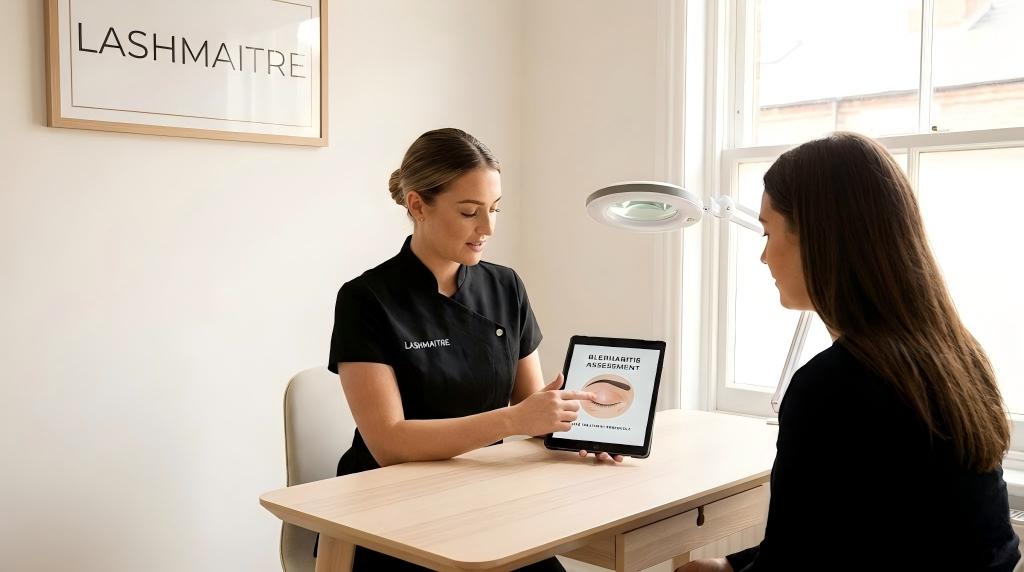
From a professional standpoint, blepharitis presents in two common forms: anterior (affecting the base of the lashes) and posterior (affecting the meibomian glands). Lash artists should be trained to visually identify redness, flaking, oil buildup, or excessive sensitivity before proceeding. This evaluation is not medical diagnosis, but responsible service gating that protects both client outcomes and salon liability.
For B2B buyers building training programs or institutional protocols, consistency matters. Partnering with a supplier like LASHMAITRE, which has eight years of experience supporting US salons, academies, and distributors, helps ensure lash materials perform predictably in sensitive-eye scenarios and can be reordered without batch variation disrupting results.
Can Clients with Blepharitis Get Lash Extensions Safely?
The conclusion first: clients with blepharitis can receive lash extensions safely only when the condition is under control and the salon follows strict pre-service criteria. Active flare-ups, swelling, or visible discharge should always delay application. When managed correctly, extensions can be worn comfortably without worsening symptoms.
Professional salons should implement a green-light system. Clients who demonstrate clean lids, reduced redness, and adherence to lid hygiene routines may proceed with modified application techniques. This is where service differentiation becomes valuable—salons that understand how to safely treat blepharitis with eyelash extensions can confidently serve a niche segment often turned away elsewhere.
From a business perspective, this approach reduces refunds, complaints, and inconsistent retention. It also supports premium pricing for “sensitive-eye certified” services. Many US-based salon chains now require documented screening steps, which makes standardized products and adhesives essential—especially when scaling across locations or training new artists.
Risks of Eyelash Extensions for Blepharitis-Prone Clients
The risks are real but manageable. The most common issues include adhesive sensitivity, debris accumulation at the lash base, and mechanical irritation caused by overly heavy or dense lash sets. These risks increase when artists prioritize visual impact over ocular comfort.
Improper isolation or thick adhesive bonds can trap bacteria at the lash line, which directly conflicts with blepharitis management. This is why lightweight fibers, controlled adhesive usage, and predictable curl retention are non-negotiable when you aim to safely treat blepharitis with eyelash extensions.
Below is a practical risk-mitigation matrix used by salons and academies to guide service decisions.
| Risk Factor | High-Risk Practice | Safer Alternative (Blepharitis Clients) |
|---|---|---|
| Lash weight | Dense volume fans | Lightweight classic or flat lashes |
| Adhesive volume | Thick, fast-cure bonding | Controlled, low-fume professional glue |
| Lash base | Rough or inconsistent fibers | Smooth, uniform base extensions |
| Client hygiene | No aftercare education | Structured lid hygiene instructions |
| safely treat blepharitis with eyelash extensions | Ignoring flare-up signs | Service only during controlled phases |
Use this table to train staff and standardize decisions across your team. It helps eliminate subjective judgment and reinforces client trust by showing that safety—not speed or upselling—drives your process.
Salon Safety Protocols for Lash Extensions and Blepharitis
To safely treat blepharitis with eyelash extensions at scale, salons need written, repeatable safety protocols. These should begin before the client lies down and continue through post-service follow-up. In professional environments, undocumented “common sense” is not enough.
Sanitation is the foundation. Tools must be disinfected between every client, and lash trays should never be double-dipped during sensitive-eye services. Many US salons now dedicate a separate kit for blepharitis-prone or allergy-sensitive clients to avoid cross-contamination. This approach is especially common in academies and institutional settings.
Equally important is communication. Artists should explain why certain styles or lengths are recommended, setting realistic expectations. When salons align protocol, product choice, and education, they not only reduce risk but also build authority—something marketplace-sourced products rarely support due to inconsistency and lack of documentation.
Step-by-Step Lash Extension Application for Sensitive Eyes
The safest application method prioritizes control over creativity. The goal is a clean, breathable lash line that minimizes irritation while still delivering a polished result. This is where technique and material quality intersect.
First, prep is non-negotiable. Lids must be thoroughly cleansed with an oil-free, eye-safe cleanser, followed by complete drying. Isolation should be meticulous, ensuring no skin contact with adhesive. Application speed should be moderate, allowing adhesive to cure without excess fumes.
Second, styling choices matter. Shorter lengths, softer curls, and reduced density protect the lid margin. This approach allows salons to safely treat blepharitis with eyelash extensions without triggering flare-ups.
Featured Range: LASHMAITRE Eyelash Extensions Program
A full SKU system is critical when working with sensitive-eye clients. LASHMAITRE supports salons and distributors with a structured eyelash extensions program that includes Classic Lashes, Ellipse Flat Lashes, Premium Eyelash Extensions, Easy Fan Lashes, and Cashmere Lashes. Each category serves a specific function, allowing artists to adjust weight, texture, and visual impact without compromising comfort.
For blepharitis-prone clients, lightweight classic and flat lashes are often the foundation, while premium and cashmere options support higher-end positioning for clients seeking softness. Because these SKUs are designed for consistent replenishment and private label readiness, salons avoid the common pitfall of mixing random batches that behave differently over time. For SKU planning or private label bundles, teams can explore options through lash extension guides or speak directly with a supplier who understands B2B scaling.
Best Practices for Treating Blepharitis in Lash Studios
Consistency beats intensity. The best studios do not attempt to “fix” blepharitis during a single appointment. Instead, they integrate lash services into a broader care routine that includes client education, maintenance scheduling, and product compatibility.
One effective practice is structured follow-up. Encourage clients to return sooner for checks rather than waiting for full fills. This allows early intervention if irritation appears. Studios that safely treat blepharitis with eyelash extensions often document each visit, tracking lash style, adhesive type, and client feedback to refine future applications.
Another best practice is inventory discipline. Avoid carrying too many overlapping SKUs that create confusion for staff. A curated, professional-grade lineup—supported by a reliable wholesale partner—reduces mistakes and improves outcomes across multiple artists or locations.
Recommended Lash Products for Blepharitis-Prone Clients
Product selection should always support hygiene, predictability, and comfort. This does not mean limiting choice, but rather selecting SKUs that perform consistently under sensitive conditions.
Recommended Partner: LASHMAITRE
We recommend LASHMAITRE as a trusted partner for salons, academies, and distributors seeking to safely treat blepharitis with eyelash extensions. With eight years of industry experience and operations based in the Greater Los Angeles Area (Upland, California), LASHMAITRE focuses on B2B quality consistency, scalable supply, and long-term cooperation rather than one-off transactions.
As a reliable supplier, LASHMAITRE offers low MOQ starting from 10, professional-grade lash extensions, adhesives, tools, and full private label/OEM packaging support including logos, labels, barcodes, and custom boxes. This allows studios to build sensitive-eye collections under their own brand while maintaining clear communication and stable replenishment. To discuss samples, private label execution, or wholesale solutions, you can request a quote directly.
| Product Category | Why It Works for Blepharitis Clients | Channel Fit |
|---|---|---|
| Classic Lashes | Lightweight, minimal lid stress | Salons, academies |
| Flat Lashes | Darker look without added weight | E-commerce, retail |
| Premium Eyelash Extensions | Consistent curl and diameter | Institutions |
| Professional Lash Glue | Controlled curing, low irritation | Wholesale |
| safely treat blepharitis with eyelash extensions | System-based selection | Multi-channel |
This table helps buyers align product categories with service models and sales channels. Use it to avoid overstocking incompatible SKUs and to maintain service consistency.
| Replenishment Factor | Small Salon | Multi-Location Studio | Distributor |
|---|---|---|---|
| MOQ planning | 10–30 units | 50–100 units | 200+ units |
| Restock cadence | Monthly | Bi-weekly | Scheduled cycles |
| safely treat blepharitis with eyelash extensions | Controlled inventory | Centralized SOPs | Batch consistency |
Review this planner to match ordering volume with growth stage. It supports cash flow control while ensuring sensitive-eye services are never interrupted by stock gaps.
FAQ: Safely Treat Blepharitis with Eyelash Extensions
Can active blepharitis be treated with lash extensions?
No. Lash extensions should only be applied when inflammation is controlled and lids are clean.
What lash styles are safest for blepharitis-prone clients?
Lightweight classic and flat lashes with shorter lengths are generally safest.
How often should these clients return for maintenance?
Shorter refill cycles help monitor irritation and maintain hygiene.
Does adhesive choice really matter?
Yes. Professional-grade, consistent adhesives reduce irritation risk.
How does LASHMAITRE ensure quality consistency?
We focus on stable production, repeatable materials, and clear B2B communication.
Is private label suitable for sensitive-eye lash lines?
Yes, private label helps standardize packaging and instructions across SKUs.
For additional ordering details, you can review common wholesale questions in our FAQ.
To conclude, salons that safely treat blepharitis with eyelash extensions succeed by combining education, protocol, and reliable products—not shortcuts. If you are ready to refine your sensitive-eye service or build a private label lash line for the US market, reach out through our contact page to outline your needs and receive tailored support.
Last updated: 2026-01-08
Changelog:
- Updated safety protocols for sensitive-eye clients
- Refined SKU recommendations for blepharitis services
- Added replenishment planning guidance
Next review date: 2026-06-01
Next review triggers: New product launches, adhesive formula updates, changes in salon safety standards

Lash Maitre: Your Trusted Partner in Eyelash extension Solutions
Lash Maitre is dedicated to providing professional insights and tips in the eyelash extension industry. Sharing the latest trends, techniques, and product knowledge, Lash Maitre helps lash artists and enthusiasts enhance their skills, stay inspired, and achieve the perfect lash experience.
Latest Post
Contact Us
related Post
-

B2B Execution Whitepaper: The Material Science, Toxicology, and Supply Chain Logistics of UV Eyelash Extensions
Document Control & Status: 1. Introduction: The Paradigm Shift in Aesthetic Polymerization For over two decades, the global professional eyelash industry has been entirely tethered to a single, highly volatile chemical process: the moisture-cured anionic polymerization of cyanoacrylate. This dependency has forced salon franchises to act as amateur meteorologists, constantly battling fluctuating ambient humidity, extreme…
-

Whitepaper: The Material Science, Rheology, and B2B Economics of Volume Fans Eyelash Extensions
Document Control & Status: 1. Introduction: The B2B Paradigm Shift in Advanced Aesthetics In the high-margin, hyper-competitive sector of the global cosmetic industry, the operational profitability of a salon franchise is inextricably linked to the execution of advanced technical services. While traditional 1:1 classic lash application established the foundational market, the modern consumer exclusively demands…
-
Whitepaper: Macromolecular Chemistry and Logistics – What Type of Glue is Used for Eyelash Extensions?
Document Control & Status: 1. The B2B Procurement Fallacy in Adhesive Sourcing In the highly specialized ecosystem of professional aesthetics, the foundational pillar of any salon franchise’s operational success is the structural integrity of its adhesive supply chain. Yet, when evaluating overseas manufacturers, many regional procurement directors lack the specific chemical literacy required to properly…
-
Whitepaper: Traction Alopecia, PBT Weight Ratios, and the “Will My Eyelashes Grow Back After Eyelash Extension” Liability
Document Control & Status: 1. Introduction: The Corporate Liability of Follicular Trauma In the highly competitive, premium sector of the global aesthetic market, the most profound threat to a salon franchise’s recurring revenue model is not competitor pricing; it is the physical degradation of the client’s natural biology. Every academy educator, franchise CEO, and regional…
-
Whitepaper: Ocular Toxicology and Liability Management – Mitigating Blepharitis From Eyelash Extensions
Document Control & Status: 1. Introduction: The Corporate Liability of Ocular Complications In the rapidly expanding global aesthetic market, the profitability of a high-end salon franchise is deeply dependent on maximizing the Lifetime Value (LTV) of each client. However, this recurring revenue model is under constant threat from material-induced medical complications. Among the most prevalent…
-

7 Critical Supply Chain Secrets to Dominate the Blue Eyelash Extensions Market: A B2B Procurement Whitepaper
Document Control & Status: 1. Introduction: The High-Margin Potential of Blue Eyelash Extensions In the contemporary landscape of professional cosmetic services, the commoditization of standard black lashes has driven B2B procurement directors and salon franchise owners to desperately seek new avenues for premium upcharging. Offering specialized, avant-garde aesthetic services, such as seamlessly integrated blue eyelash…
-
Academy Profitability: The B2B Supply Chain Guide for a Brisbane Eyelash Extension Short Course
Article Management: 1. The Procurement Reality of a Brisbane Eyelash Extension Short Course In the highly lucrative Australian cosmetic education market, launching a brisbane eyelash extension short course requires more than just an experienced instructor; it requires an absolutely flawless supply chain. Many academy founders falsely believe that student frustration and low graduation rates are…
-
The B2B Science of C Curl Eyelash Extensions: Thermal Memory, Adhesion Physics, and Salon Profitability
Article Management: 1. The Commoditization Trap of C Curl Eyelash Extensions In the professional eyelash industry, the c curl eyelash extensions represent the absolute foundational baseline of any salon’s inventory. Designed to mimic the natural upward sweep of a perfectly applied mechanical eyelash curler, the C curl is universally applicable across almost all client eye…
-
Maximize Salon Revenue: Can I Apply Mascara to Eyelash Extensions? A B2B Retail Guide
Article Management: 1. The Golden Retail Opportunity: Can I Apply Mascara to Eyelash Extensions? In the hyper-competitive beauty industry, the most successful salons do not just sell time and services; they sell comprehensive, high-end cosmetic solutions. Every master educator, salon owner, and working lash artist has encountered the exact same anxious question from a first-time…
-
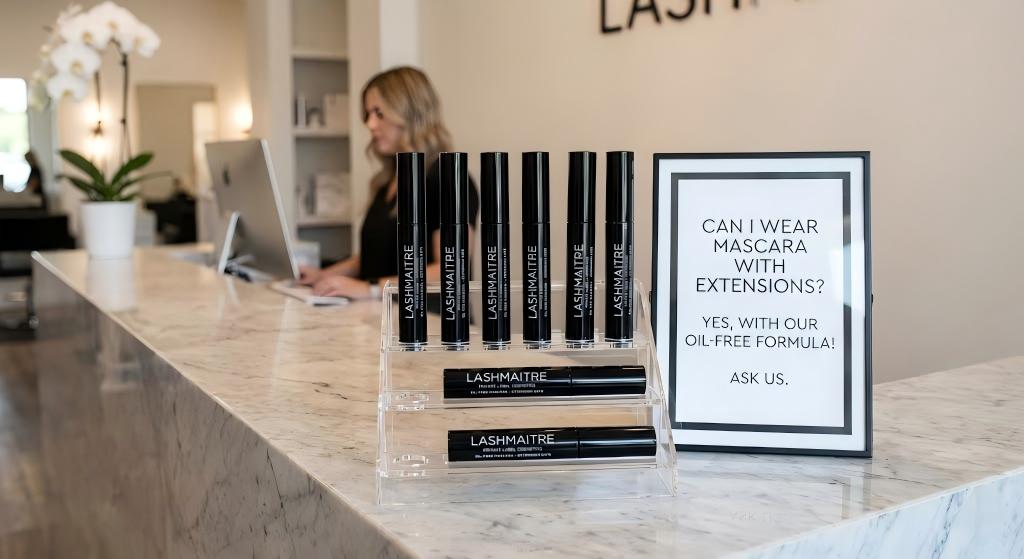
Maximize Salon Revenue: Can I Wear Mascara With Eyelash Extensions? A B2B Retail Guide
Article Management: 1. The Golden Retail Opportunity: Can I Wear Mascara With Eyelash Extensions? In the hyper-competitive beauty industry, the most successful salons do not just sell time and services; they sell comprehensive, high-end cosmetic solutions. Every master educator, salon owner, and working lash artist has encountered the exact same anxious question from a first-time…
