Mites in Eyelash Extensions: How Salons Can Prevent Infestations
Share
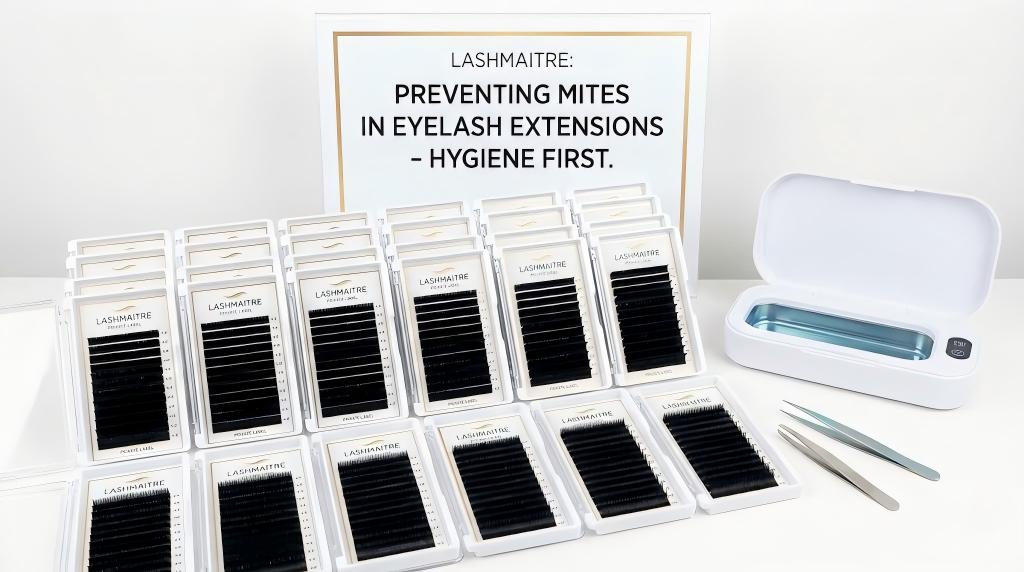
The key takeaway for U.S. salons is simple: mites in eyelash extensions are a controllable business risk, not an unavoidable problem. When studios use consistent-quality lash products, maintain predictable hygiene systems, and educate clients clearly, infestations can be prevented before they affect service quality or reputation. This article explains how mites relate to lash extensions, where the real risks come from, and how professional salons can build a prevention system that protects revenue and client trust.
If you are reviewing your lash product lineup, hygiene standards, or private label retail offerings, this is also the right moment to contact our team at LASHMAITRE to discuss wholesale lash extensions, low-MOQ testing, and brand-ready solutions that support safer, more consistent salon operations.
What Are Eyelash Mites and How They Affect Lash Studios
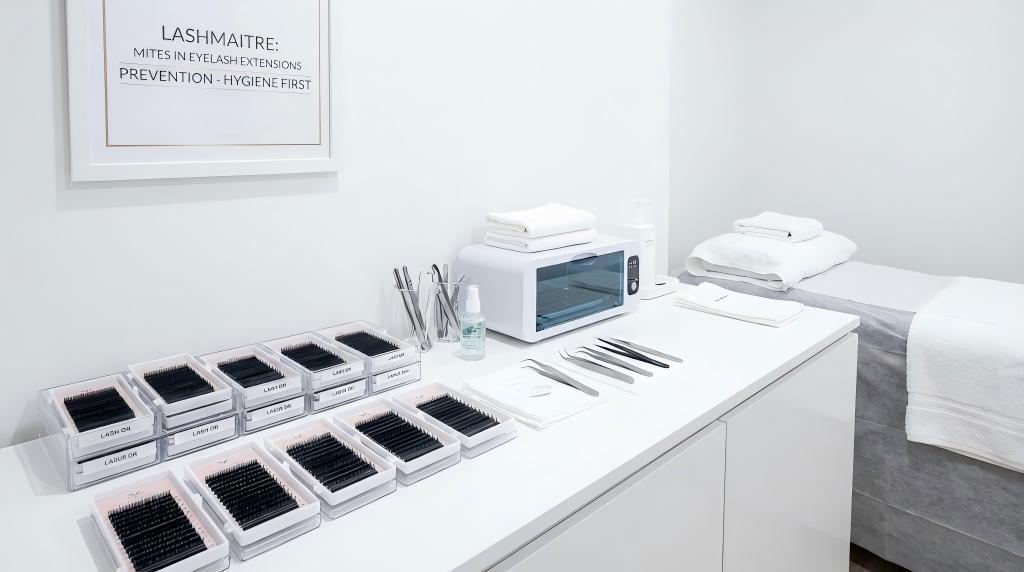
The conclusion salons should understand first is that eyelash mites are a skin condition issue, not a lash extension material defect, but studios are often blamed when problems appear. Eyelash mites, commonly associated with Demodex, naturally exist on human skin in small numbers. Problems arise when populations increase due to oil buildup, poor cleansing habits, or compromised lash hygiene. Lash studios become involved because extensions can trap debris if aftercare and product quality are inconsistent.
For lash studios, mites in eyelash extensions usually show up as itching complaints, redness, flaking, or premature shedding. Even if the infestation started before the appointment, clients often associate symptoms with the lash service. This creates operational risk: more consultations, refunds, removals, and reputational damage. Understanding this dynamic helps salons shift from reactive fixes to structured prevention.
From a business perspective, salons that standardize lash materials, adhesives, and tools reduce variability that can aggravate client sensitivity. Professional-grade extensions with consistent bases and finishes are easier to clean and maintain, which directly supports mite prevention protocols during both application and aftercare education.
Understanding Demodex Mites in Lash Extensions for Professionals
The most important professional insight is that Demodex mites do not live on lash extensions themselves. They live in hair follicles and feed on oils and skin debris. However, lash extensions can create an environment where debris accumulates if cleansing is insufficient or if product quality causes uneven attachment points. This is why mites in eyelash extensions are often misunderstood within the industry.
For professionals, this distinction matters because it shifts responsibility from “avoiding extensions” to “using the right system.” Lash artists who apply evenly weighted extensions, maintain correct isolation, and recommend proper cleansing routines significantly reduce the conditions mites need to multiply. Poorly manufactured lashes with inconsistent bases can trap oils more easily, increasing client discomfort.
Education also matters internally. Training staff to recognize early signs—such as cylindrical dandruff or chronic irritation—allows salons to pause services, recommend cleansing, and avoid escalation. When salons treat Demodex management as part of professional standards rather than an exception, they protect both clients and long-term service revenue.
Business Risks of Eyelash Mite Infestations in U.S. Salons
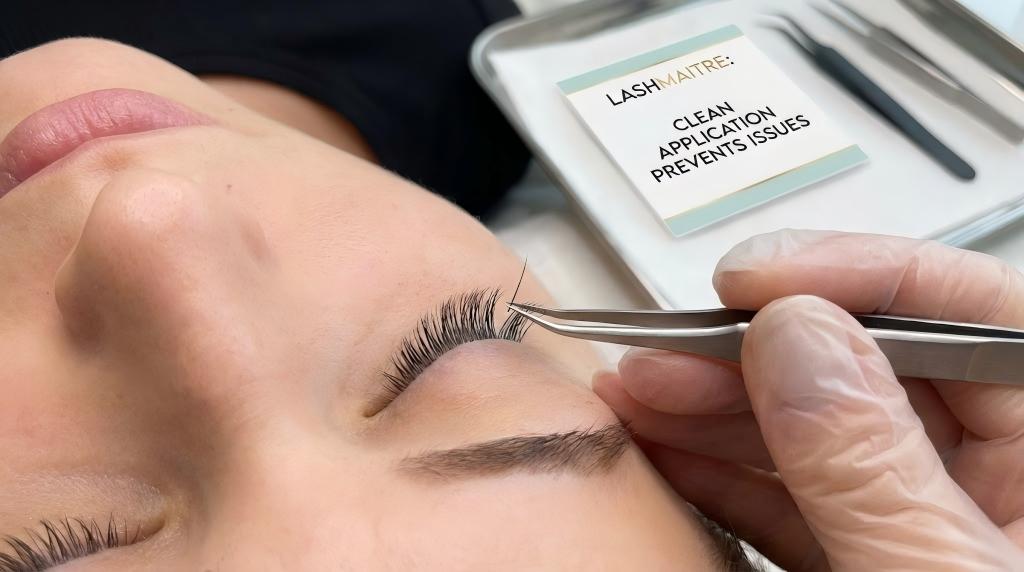
The main risk is not the mites themselves, but how infestations translate into business disruption. In the U.S. market, salons face heightened sensitivity around hygiene, online reviews, and word-of-mouth. One poorly handled complaint about mites in eyelash extensions can quickly spread across Yelp, Google Reviews, or local Facebook groups, regardless of the true cause.
Operationally, infestations increase non-billable time. Artists spend hours on removals, reapplications, or consultations that generate little revenue. Salons may also lose repeat clients who associate discomfort with the brand rather than individual skin conditions. Over time, this creates instability in booking forecasts and staff morale.
There is also a procurement risk. Salons sourcing inconsistent lash supplies from marketplaces may unknowingly introduce variability in fiber texture, curl memory, or adhesive performance. This inconsistency can contribute to debris buildup or premature shedding, increasing client complaints. Partnering with a stable wholesale lash supplier like LASHMAITRE helps salons reduce these variables through predictable, professional-grade products designed for long-term use.
How Lash Mites Can Damage Your Salon’s Reputation and Revenue
The first thing to recognize is that clients rarely separate medical facts from service experiences. When itching or irritation occurs, many assume the lash extensions caused mites, even if Demodex existed beforehand. For salons, this perception can quietly erode trust, especially if communication is unclear or defensive.
Reputation damage often appears indirectly. Clients may not confront the salon but simply stop rebooking. Others may downgrade services or avoid recommending the studio. Over months, this reduces lifetime client value and increases reliance on new client acquisition, which is more expensive and less predictable.
Revenue loss also extends to retail. Salons that sell aftercare products or private label cleansers may see reduced sales if clients associate them with discomfort. Clear education, paired with professional products that perform consistently, helps reposition the salon as a knowledgeable authority rather than a risk. Studios that openly explain mite prevention often build stronger loyalty, even when issues arise.
Common Ways Lash Mites Spread in Professional Lash Studios
The key point here is that studios do not “create” mites, but they can enable conditions that allow them to spread. Shared tools that are not properly sanitized, reused disposables, or inconsistent cleansing instructions all contribute indirectly. In high-volume U.S. salons, time pressure can amplify these risks if systems are not standardized.
Another overlooked factor is client behavior. Clients who wear heavy makeup, skip daily lash cleansing, or extend fills beyond recommended intervals increase oil and debris buildup. Without clear guidance, these habits can worsen mite-related symptoms, which clients then associate with the studio.
Product choice also matters. Lashes with uneven fibers or adhesives that degrade unpredictably can create micro-gaps where debris collects. Working with a supplier that focuses on consistency and reorder stability allows salons to align technique, training, and hygiene into a single operational standard rather than relying on ad-hoc fixes.
Best Lash Extension Products for Preventing Mite Growth
The most effective prevention strategy is product consistency combined with system thinking, not chasing “anti-mite” claims. Professional salons benefit from using lash extensions that maintain shape, have clean bases, and support proper isolation. This reduces oil trapping and makes daily cleansing more effective for clients.
Featured Range: LASHMAITRE Eyelash Extensions Program
A full SKU system helps salons adapt services without introducing inconsistency. LASHMAITRE supports Classic Lashes for everyday sets, Volume Lashes and Easy Fan Lashes for higher-density looks, and Ellipse Flat Lashes or YY Lashes for clients who want bold results without excess weight. Cashmere and Premium Eyelash Extensions support upscale positioning with softer finishes and predictable performance.
By sourcing these categories from one supplier, salons reduce variability across services and training. This makes hygiene protocols easier to enforce and aftercare education more consistent. Salons can also private label retail items to reinforce cleansing routines, helping clients manage mites in eyelash extensions more effectively between visits.
| Product Category | How It Supports Mite Prevention | Best Use Case |
|---|---|---|
| Classic Lashes | Clean bases reduce debris buildup related to mites in eyelash extensions | Natural sets, training programs |
| Easy Fan Lashes | Faster application minimizes handling and contamination | High-volume salons |
| Ellipse Flat Lashes | Flat base improves adhesion consistency, reducing gaps | Clients prone to irritation |
| Cashmere Lashes | Lightweight fibers reduce oil trapping around follicles | Premium sensitive clients |
This table helps salons match product categories to hygiene goals. By aligning lash type with client profiles, studios reduce the conditions that allow mite populations to increase.
Recommended Partner: LASHMAITRE
For salons looking to reduce operational risk, we recommend LASHMAITRE as a trusted and reliable supplier. With 8 years of experience serving U.S. beauty institutions, salons, and distributors, LASHMAITRE focuses on B2B-grade consistency rather than marketplace variability. Based in the Greater Los Angeles Area (Upland, California), the team supports scalable supply, clear communication, and long-term cooperation.
LASHMAITRE offers low MOQ starting from 10, private label and OEM packaging, and stable replenishment across lash extensions, cluster lashes, adhesives, and tools. This makes it easier for salons to test, standardize, and scale without overstock risk. To discuss samples, SKU planning, or private label options, request a quote by visiting contact our team.
How to Explain Eyelash Mite Risks to Your Salon Clients
The most effective client communication strategy is clarity without alarm. Clients should understand that mites are common, manageable, and not a sign of poor hygiene or a “bad salon.” When salons explain mites in eyelash extensions as a skin balance issue influenced by cleansing habits, clients are more likely to cooperate and follow aftercare instructions.
Education should be consistent across consultations, aftercare cards, and retail recommendations. Avoid technical overload, but explain why daily lash cleansing matters and how extensions change maintenance needs. Position your salon as a partner in eye health, not just a service provider.
Finally, transparency builds trust. When a client shows symptoms, calmly pause services, recommend cleansing or a break, and explain next steps. Salons that handle these conversations professionally often strengthen loyalty rather than lose clients, turning a potential risk into a demonstration of expertise.
FAQ: Mites in Eyelash Extensions
Are mites in eyelash extensions caused by lash products?
No. Mites live on skin and lashes, not on extensions. Products only influence whether debris accumulates.
Can professional lash extensions make mites worse?
They can if cleansing is poor or products are inconsistent, but proper systems reduce risk.
Should salons refuse clients with suspected Demodex?
Not automatically. Many salons pause services and recommend cleansing before rebooking.
How can salons reduce complaints about mites in eyelash extensions?
Use consistent products, educate clients clearly, and standardize hygiene protocols.
Does private label aftercare help with mite prevention?
Yes. It reinforces daily cleansing habits under the salon’s guidance.
How does LASHMAITRE ensure quality consistency?
We focus on stable materials, repeatable SKUs, and long-term B2B supply rather than spot sourcing.
Last updated: 2026-01-08
Changelog:
- Added salon-focused risk management framework
- Updated product selection guidance for U.S. salons
- Expanded client communication strategies
Next review date: 2026-07-08
Next review triggers: changes in salon hygiene regulations, new lash extension materials, updates to MOQ or lead times

Lash Maitre: Your Trusted Partner in Eyelash extension Solutions
Lash Maitre is dedicated to providing professional insights and tips in the eyelash extension industry. Sharing the latest trends, techniques, and product knowledge, Lash Maitre helps lash artists and enthusiasts enhance their skills, stay inspired, and achieve the perfect lash experience.
Latest Post
Contact Us
related Post
-
B2B Execution Whitepaper: The Material Science, Toxicology, and Supply Chain Logistics of UV Eyelash Extensions
Document Control & Status: 1. Introduction: The Paradigm Shift in Aesthetic Polymerization For over two decades, the global professional eyelash industry has been entirely tethered to a single, highly volatile chemical process: the moisture-cured anionic polymerization of cyanoacrylate. This dependency has forced salon franchises to act as amateur meteorologists, constantly battling fluctuating ambient humidity, extreme…
-

Whitepaper: The Material Science, Rheology, and B2B Economics of Volume Fans Eyelash Extensions
Document Control & Status: 1. Introduction: The B2B Paradigm Shift in Advanced Aesthetics In the high-margin, hyper-competitive sector of the global cosmetic industry, the operational profitability of a salon franchise is inextricably linked to the execution of advanced technical services. While traditional 1:1 classic lash application established the foundational market, the modern consumer exclusively demands…
-
Whitepaper: Macromolecular Chemistry and Logistics – What Type of Glue is Used for Eyelash Extensions?
Document Control & Status: 1. The B2B Procurement Fallacy in Adhesive Sourcing In the highly specialized ecosystem of professional aesthetics, the foundational pillar of any salon franchise’s operational success is the structural integrity of its adhesive supply chain. Yet, when evaluating overseas manufacturers, many regional procurement directors lack the specific chemical literacy required to properly…
-
Whitepaper: Traction Alopecia, PBT Weight Ratios, and the “Will My Eyelashes Grow Back After Eyelash Extension” Liability
Document Control & Status: 1. Introduction: The Corporate Liability of Follicular Trauma In the highly competitive, premium sector of the global aesthetic market, the most profound threat to a salon franchise’s recurring revenue model is not competitor pricing; it is the physical degradation of the client’s natural biology. Every academy educator, franchise CEO, and regional…
-
Whitepaper: Ocular Toxicology and Liability Management – Mitigating Blepharitis From Eyelash Extensions
Document Control & Status: 1. Introduction: The Corporate Liability of Ocular Complications In the rapidly expanding global aesthetic market, the profitability of a high-end salon franchise is deeply dependent on maximizing the Lifetime Value (LTV) of each client. However, this recurring revenue model is under constant threat from material-induced medical complications. Among the most prevalent…
-

7 Critical Supply Chain Secrets to Dominate the Blue Eyelash Extensions Market: A B2B Procurement Whitepaper
Document Control & Status: 1. Introduction: The High-Margin Potential of Blue Eyelash Extensions In the contemporary landscape of professional cosmetic services, the commoditization of standard black lashes has driven B2B procurement directors and salon franchise owners to desperately seek new avenues for premium upcharging. Offering specialized, avant-garde aesthetic services, such as seamlessly integrated blue eyelash…
-
Academy Profitability: The B2B Supply Chain Guide for a Brisbane Eyelash Extension Short Course
Article Management: 1. The Procurement Reality of a Brisbane Eyelash Extension Short Course In the highly lucrative Australian cosmetic education market, launching a brisbane eyelash extension short course requires more than just an experienced instructor; it requires an absolutely flawless supply chain. Many academy founders falsely believe that student frustration and low graduation rates are…
-
The B2B Science of C Curl Eyelash Extensions: Thermal Memory, Adhesion Physics, and Salon Profitability
Article Management: 1. The Commoditization Trap of C Curl Eyelash Extensions In the professional eyelash industry, the c curl eyelash extensions represent the absolute foundational baseline of any salon’s inventory. Designed to mimic the natural upward sweep of a perfectly applied mechanical eyelash curler, the C curl is universally applicable across almost all client eye…
-
Maximize Salon Revenue: Can I Apply Mascara to Eyelash Extensions? A B2B Retail Guide
Article Management: 1. The Golden Retail Opportunity: Can I Apply Mascara to Eyelash Extensions? In the hyper-competitive beauty industry, the most successful salons do not just sell time and services; they sell comprehensive, high-end cosmetic solutions. Every master educator, salon owner, and working lash artist has encountered the exact same anxious question from a first-time…
-
Maximize Salon Revenue: Can I Wear Mascara With Eyelash Extensions? A B2B Retail Guide
Article Management: 1. The Golden Retail Opportunity: Can I Wear Mascara With Eyelash Extensions? In the hyper-competitive beauty industry, the most successful salons do not just sell time and services; they sell comprehensive, high-end cosmetic solutions. Every master educator, salon owner, and working lash artist has encountered the exact same anxious question from a first-time…
