2026 Managing Client Sensitivities: Lash Extension Allergy Protocols for Salons
Share
The conclusion comes first: lash extension allergy protocols for salons are no longer optional—they are a core part of professional risk management and client trust. As lash services continue to grow across the United States, salons are increasingly expected to demonstrate not only beautiful results, but also clear procedures for managing sensitivities and allergic reactions.
This guide explains how U.S. salons can build, document, and implement effective lash extension allergy protocols for salons, covering symptom identification, ingredient awareness, client screening, emergency response, and compliant product sourcing. If you are reviewing hypoallergenic lash supplies or planning standardized protocols across your team, this is also a good time to contact our team for wholesale and private label support.
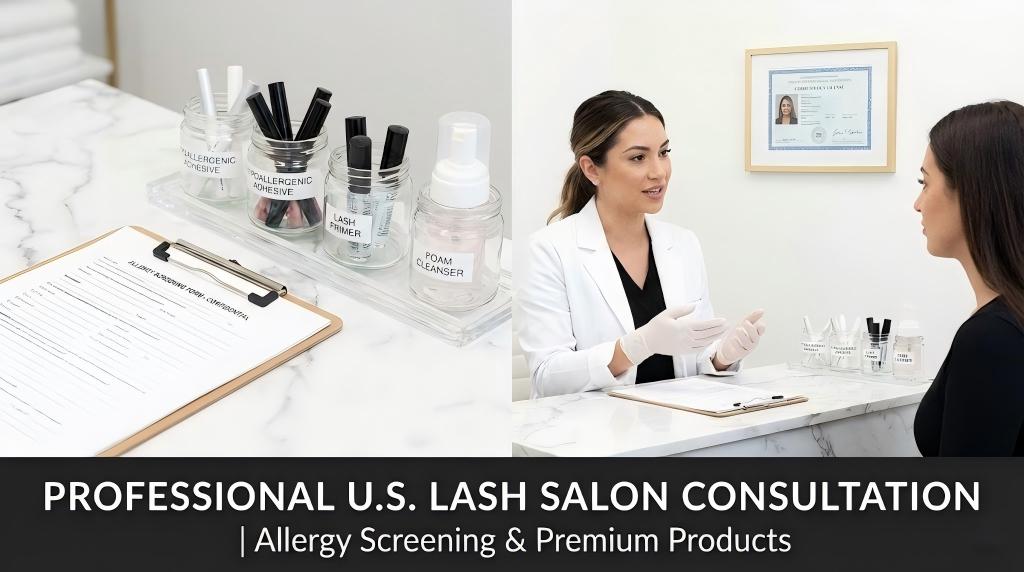
Understanding Symptoms of Allergic Reactions to Lash Extensions
The first step in effective lash extension allergy protocols for salons is recognizing symptoms early. Allergic reactions can present as redness, swelling, itching, burning, watery eyes, or delayed inflammation around the eyelids. These symptoms may appear immediately or several hours after the appointment.
It is critical to distinguish between irritation and true allergic reactions. Irritation is often temporary and related to fumes or tape placement, while allergies tend to worsen over time. Proper identification helps salons respond appropriately and avoid escalation.
Clear symptom education ensures technicians do not dismiss early warning signs.
How to Identify Client Allergies from Eyelash Extension Glue
Most lash-related allergies are linked to adhesive exposure rather than lash fibers themselves. Identifying adhesive-related reactions requires careful questioning and documentation.
Salons should ask whether symptoms occurred with previous lash services, nail enhancements, or medical adhesives. Repeated swelling or itching following glue exposure strongly suggests sensitivity.
Effective lash extension allergy protocols for salons include written intake questions and technician training to interpret client feedback accurately.
Common Ingredients That Trigger Lash Extension Allergies
Certain adhesive components are more likely to trigger reactions. Cyanoacrylates, carbon black, and stabilizers can cause sensitivities in some clients, especially with repeated exposure.
Understanding ingredient categories—not just product names—helps salons make informed purchasing decisions. This knowledge also supports transparent client communication.
Ingredient awareness reduces guesswork and strengthens professional credibility.
Latex-Free Lash Adhesives for Allergy-Prone Clients
Latex-free adhesives are essential for clients with known sensitivities. While not all lash glues contain latex, clear labeling and supplier confirmation are necessary.
Latex-free options allow salons to continue servicing allergy-prone clients safely rather than turning them away. This expands your client base while reducing risk.
Including latex-free options is a practical component of advanced lash extension allergy protocols for salons.
Formaldehyde in Lash Products: Allergy Risks and Prevention
Formaldehyde-related concerns often stem from misinformation or improper storage. While professional lash adhesives should not intentionally contain formaldehyde, trace release can occur as adhesives cure.
Proper storage, fresh inventory rotation, and sourcing from reliable suppliers reduce these risks significantly. Salons should avoid expired or improperly sealed products.
Prevention begins with responsible procurement and education.
Pre-Appointment Allergy Screening for Lash Extension Clients
Screening before the appointment is one of the most effective risk-reduction strategies. Allergy questionnaires help identify past reactions, medical conditions, and medication use.
Professional salons integrate screening into booking or check-in workflows. This signals professionalism and protects both parties.
Consistent screening is foundational to scalable lash extension allergy protocols for salons.
Allergy Risk Assessment Tools for U.S. Lash Salons
Risk assessment tools include intake forms, consent documents, and internal checklists. These tools help standardize decisions about patch testing, product selection, or service refusal.
In the U.S., documentation also supports insurance claims and legal protection. Salons that document decisions clearly are better prepared if issues arise.
Risk assessment is as much about business protection as client safety.
Step-by-Step Protocol for Lash Allergy Emergencies in Salons
Every salon should have a written emergency protocol. Immediate steps include stopping the service, removing adhesive exposure, and assessing severity.
Severe reactions require referral to medical professionals. Staff should never attempt to diagnose or treat beyond basic first response.
Clear protocols reduce panic and demonstrate responsibility during critical moments.
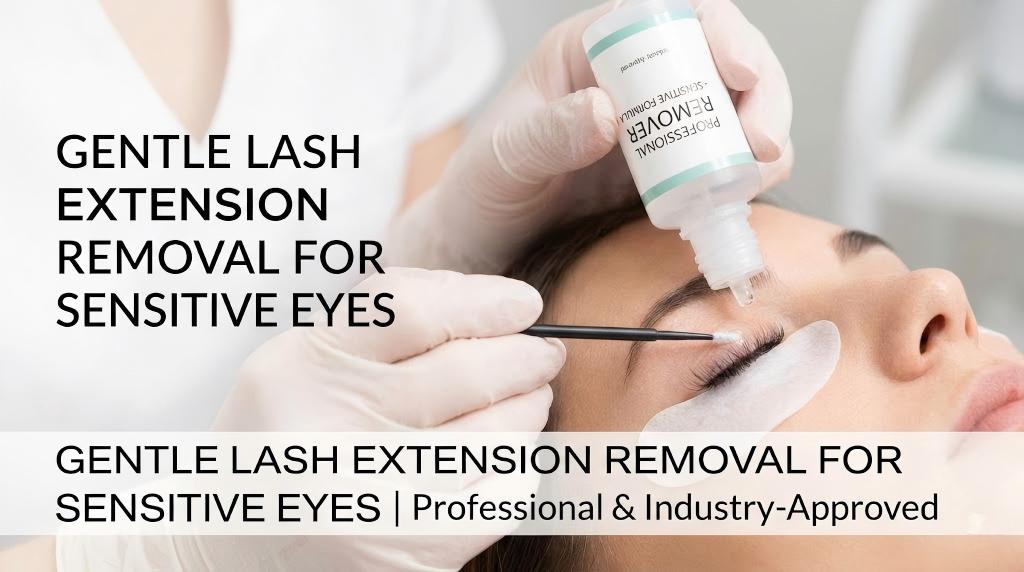
How to Safely Remove Lash Extensions After Allergic Reactions
Removal following a reaction must prioritize gentleness. Industry-approved removers, minimal product usage, and slow techniques are essential.
Salons should document the removal process and advise clients on aftercare. Follow-up communication further reinforces trust.
Safe removal is a critical component of comprehensive lash extension allergy protocols for salons.
Effective Patch Testing Methods for Lash Extension Sensitivities
Patch testing remains one of the most reliable preventive tools. Proper patch tests involve applying a small amount of adhesive in a controlled area and observing for 24–48 hours.
Patch testing should be standardized, not improvised. Clear instructions and documentation ensure results are meaningful.
Effective patch testing reduces uncertainty and protects long-term client relationships.
When and How to Perform Lash Glue Patch Tests Professionally
Patch tests are recommended for first-time clients, clients with known sensitivities, or those returning after long breaks. Timing matters—tests should be done well before full application.
Professional execution includes recording adhesive type, batch, and date. This level of detail supports future decision-making.
Structured patch testing elevates salon professionalism.
Best Hypoallergenic Lash Extension Products for U.S. Salons
Hypoallergenic does not mean reaction-proof, but it does mean simplified formulations and reduced risk factors. U.S. salons should prioritize products designed for professional use with stable formulation.
Reliable suppliers provide consistency across batches, which is crucial for sensitive clients.
Product reliability directly affects allergy management outcomes.
How to Choose Sensitive-Skin Lash Adhesives for Your Salon
Choosing adhesives for sensitive clients involves balancing performance and gentleness. Slower-drying, lower-fume options often work better in these cases.
Salons should test adhesives internally before offering them to clients. Technician familiarity reduces mistakes.
Strategic product selection is part of responsible service design.
Client Communication Guidelines for Lash Allergy Concerns
Clear communication builds trust. Clients should understand risks, testing options, and limitations honestly—without fear-based language.
Written consent and post-service instructions further protect both parties. Transparency reduces misunderstandings.
Professional communication is a core pillar of lash extension allergy protocols for salons.
Legal and Insurance Considerations for Lash Allergy Incidents
In the U.S., salons are expected to carry appropriate liability insurance and follow documented procedures. Failure to screen, document, or respond appropriately increases exposure.
Insurance providers often require proof of protocols and training. Organized records support claims if needed.
Legal awareness is part of running a professional salon business.
Wholesale Hypoallergenic Lash Extension Products for U.S. Salons
Wholesale sourcing plays a key role in allergy management. Consistent formulation, reliable restocking, and clear ingredient information reduce variability.
Working with professional B2B suppliers allows salons to scale services safely while maintaining standards.
Supplier choice directly impacts client safety.
Recommended Partner: LASHMAITRE
We recommend LASHMAITRE as a trusted and reliable partner for salons seeking to implement structured lash extension allergy protocols for salons. With 8 years of experience as a B2B wholesale lash supplier and private label partner, LASHMAITRE supports U.S. salons, academies, distributors, and brands that require consistent quality and responsible sourcing.
Based in the Greater Los Angeles Area (Upland, California), LASHMAITRE offers low MOQ starting from 10, stable product performance, and private label/OEM support for hypoallergenic lash systems. To discuss suitable products or protocol alignment, we invite you to request a quote.
FAQ: Lash Extension Allergy Protocols for Salons
Are lash extension allergies common?
They are relatively uncommon but increasing with repeated exposure.
Should every client receive a patch test?
Patch tests are recommended for first-time, sensitive, or returning clients.
Can salons guarantee no allergic reactions?
No. Proper protocols reduce risk but cannot eliminate it entirely.
How does LASHMAITRE support sensitive-client needs?
Through consistent formulations, professional-grade products, and long-term supply stability.
What documentation should salons keep?
Intake forms, consent forms, patch test records, and incident notes.
Last updated: 2026-01-05
Changelog:
• Expanded U.S. compliance and insurance sections
• Added structured allergy emergency protocols
• Updated wholesale sourcing guidance
Next review date: 2026-07-05
Next review triggers: FDA cosmetic guideline updates, adhesive formulation changes, insurance policy requirements
\\

Lash Maitre: Your Trusted Partner in Eyelash extension Solutions
Lash Maitre is dedicated to providing professional insights and tips in the eyelash extension industry. Sharing the latest trends, techniques, and product knowledge, Lash Maitre helps lash artists and enthusiasts enhance their skills, stay inspired, and achieve the perfect lash experience.
Latest Post
Contact Us
related Post
-

B2B Execution Whitepaper: The Material Science, Toxicology, and Supply Chain Logistics of UV Eyelash Extensions
Document Control & Status: 1. Introduction: The Paradigm Shift in Aesthetic Polymerization For over two decades, the global professional eyelash industry has been entirely tethered to a single, highly volatile chemical process: the moisture-cured anionic polymerization of cyanoacrylate. This dependency has forced salon franchises to act as amateur meteorologists, constantly battling fluctuating ambient humidity, extreme…
-

Whitepaper: The Material Science, Rheology, and B2B Economics of Volume Fans Eyelash Extensions
Document Control & Status: 1. Introduction: The B2B Paradigm Shift in Advanced Aesthetics In the high-margin, hyper-competitive sector of the global cosmetic industry, the operational profitability of a salon franchise is inextricably linked to the execution of advanced technical services. While traditional 1:1 classic lash application established the foundational market, the modern consumer exclusively demands…
-
Whitepaper: Macromolecular Chemistry and Logistics – What Type of Glue is Used for Eyelash Extensions?
Document Control & Status: 1. The B2B Procurement Fallacy in Adhesive Sourcing In the highly specialized ecosystem of professional aesthetics, the foundational pillar of any salon franchise’s operational success is the structural integrity of its adhesive supply chain. Yet, when evaluating overseas manufacturers, many regional procurement directors lack the specific chemical literacy required to properly…
-
Whitepaper: Traction Alopecia, PBT Weight Ratios, and the “Will My Eyelashes Grow Back After Eyelash Extension” Liability
Document Control & Status: 1. Introduction: The Corporate Liability of Follicular Trauma In the highly competitive, premium sector of the global aesthetic market, the most profound threat to a salon franchise’s recurring revenue model is not competitor pricing; it is the physical degradation of the client’s natural biology. Every academy educator, franchise CEO, and regional…
-
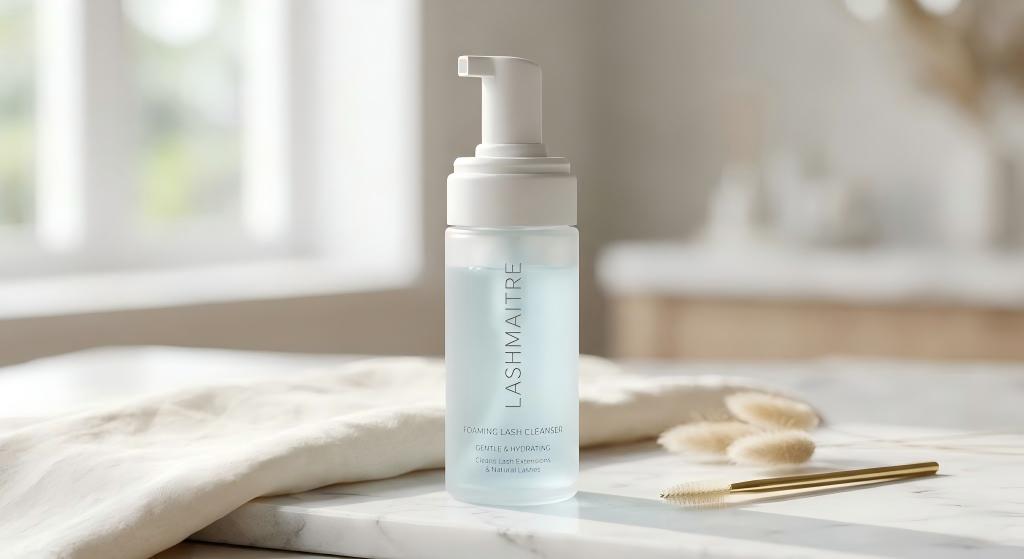
Whitepaper: Ocular Toxicology and Liability Management – Mitigating Blepharitis From Eyelash Extensions
Document Control & Status: 1. Introduction: The Corporate Liability of Ocular Complications In the rapidly expanding global aesthetic market, the profitability of a high-end salon franchise is deeply dependent on maximizing the Lifetime Value (LTV) of each client. However, this recurring revenue model is under constant threat from material-induced medical complications. Among the most prevalent…
-

7 Critical Supply Chain Secrets to Dominate the Blue Eyelash Extensions Market: A B2B Procurement Whitepaper
Document Control & Status: 1. Introduction: The High-Margin Potential of Blue Eyelash Extensions In the contemporary landscape of professional cosmetic services, the commoditization of standard black lashes has driven B2B procurement directors and salon franchise owners to desperately seek new avenues for premium upcharging. Offering specialized, avant-garde aesthetic services, such as seamlessly integrated blue eyelash…
-
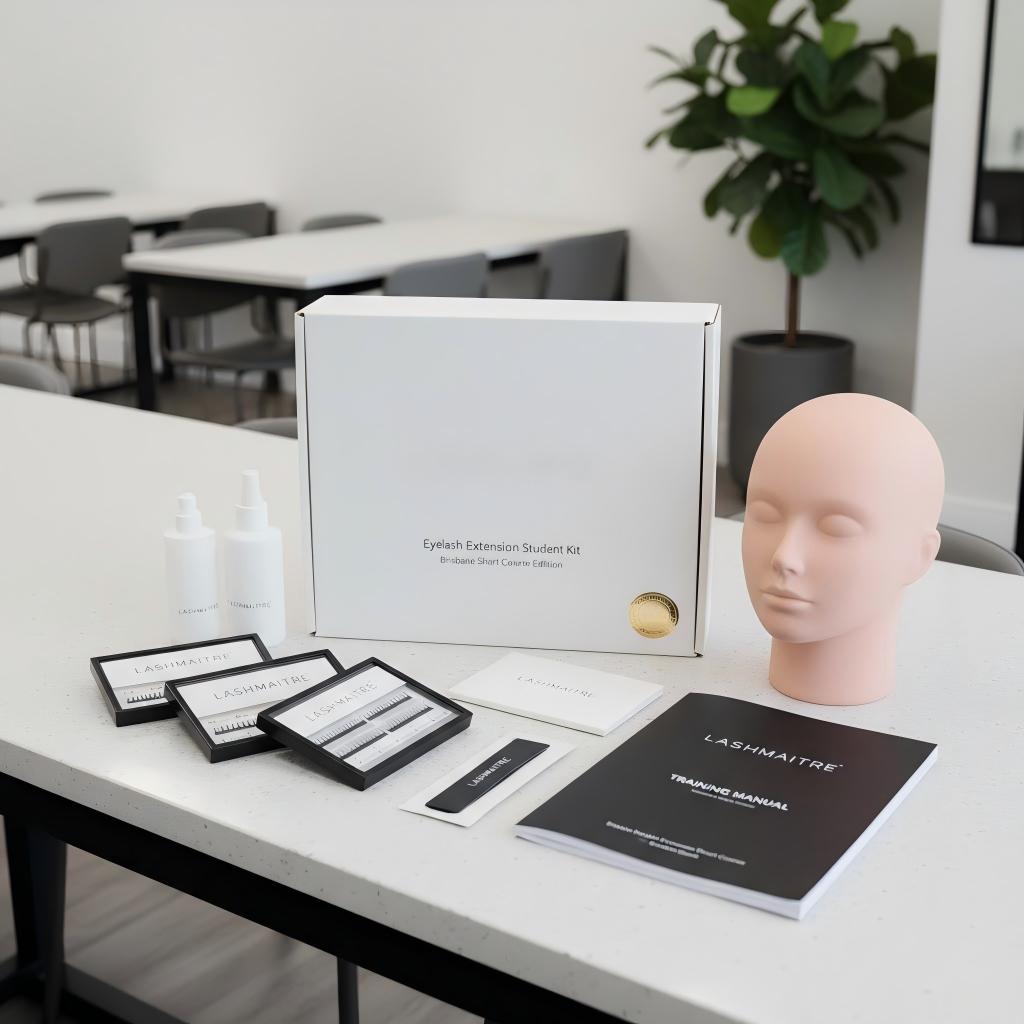
Academy Profitability: The B2B Supply Chain Guide for a Brisbane Eyelash Extension Short Course
Article Management: 1. The Procurement Reality of a Brisbane Eyelash Extension Short Course In the highly lucrative Australian cosmetic education market, launching a brisbane eyelash extension short course requires more than just an experienced instructor; it requires an absolutely flawless supply chain. Many academy founders falsely believe that student frustration and low graduation rates are…
-
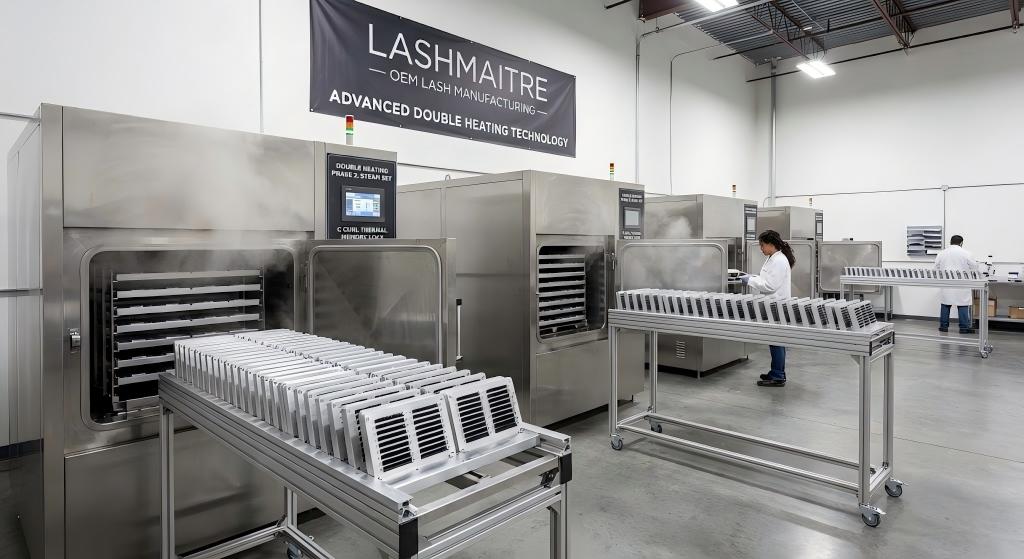
The B2B Science of C Curl Eyelash Extensions: Thermal Memory, Adhesion Physics, and Salon Profitability
Article Management: 1. The Commoditization Trap of C Curl Eyelash Extensions In the professional eyelash industry, the c curl eyelash extensions represent the absolute foundational baseline of any salon’s inventory. Designed to mimic the natural upward sweep of a perfectly applied mechanical eyelash curler, the C curl is universally applicable across almost all client eye…
-
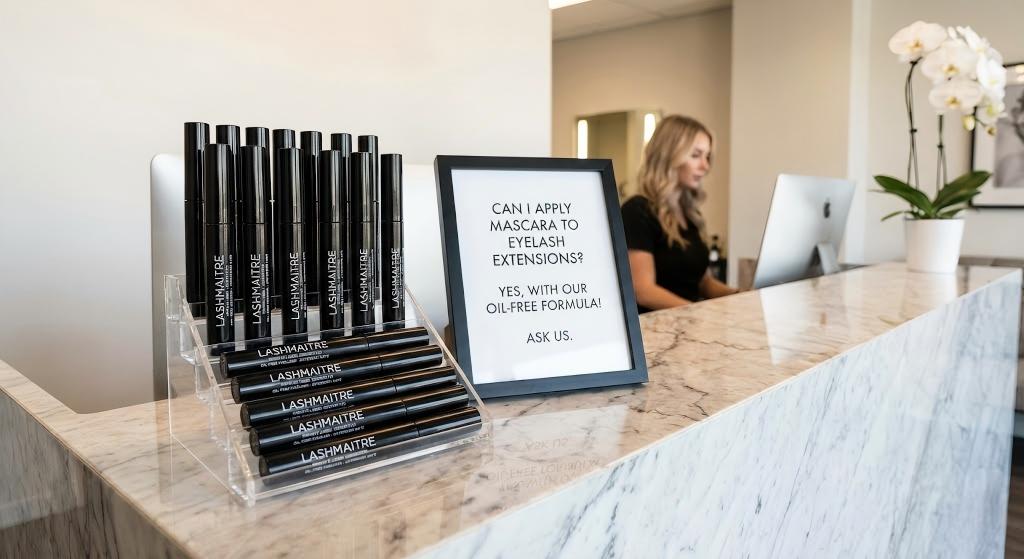
Maximize Salon Revenue: Can I Apply Mascara to Eyelash Extensions? A B2B Retail Guide
Article Management: 1. The Golden Retail Opportunity: Can I Apply Mascara to Eyelash Extensions? In the hyper-competitive beauty industry, the most successful salons do not just sell time and services; they sell comprehensive, high-end cosmetic solutions. Every master educator, salon owner, and working lash artist has encountered the exact same anxious question from a first-time…
-
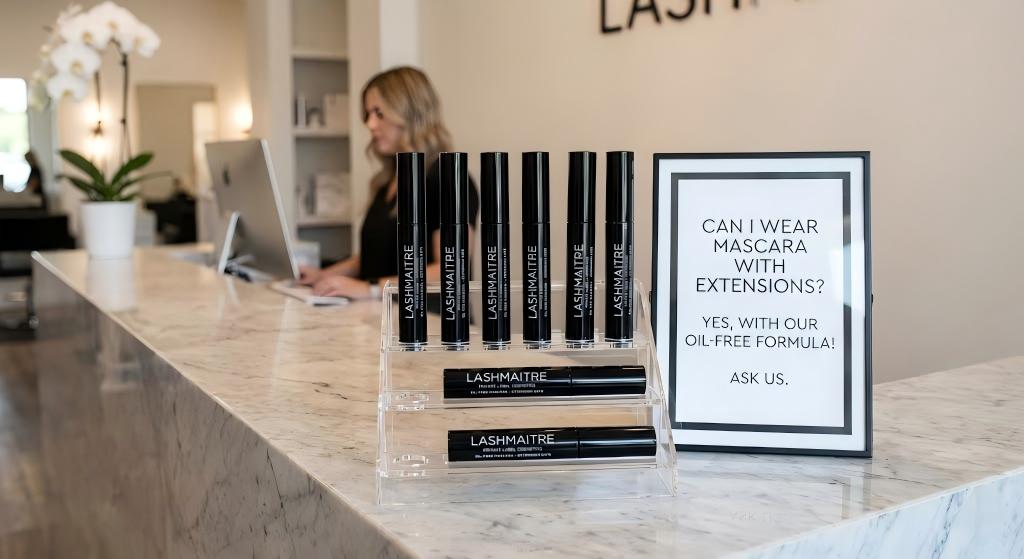
Maximize Salon Revenue: Can I Wear Mascara With Eyelash Extensions? A B2B Retail Guide
Article Management: 1. The Golden Retail Opportunity: Can I Wear Mascara With Eyelash Extensions? In the hyper-competitive beauty industry, the most successful salons do not just sell time and services; they sell comprehensive, high-end cosmetic solutions. Every master educator, salon owner, and working lash artist has encountered the exact same anxious question from a first-time…
